Why is rowing fun? One reason is that it provides a challenge in learning technique to be as efficient as possible while working everything from your head to your toes. Elsewhere in sports and training, if you’ve tried the Pose Method of running you may understand the beauty of focusing on technique and the perception of what your body is doing in space. Focusing on form and technique gives your mind something to work toward rather than complaining about how much your legs burn.
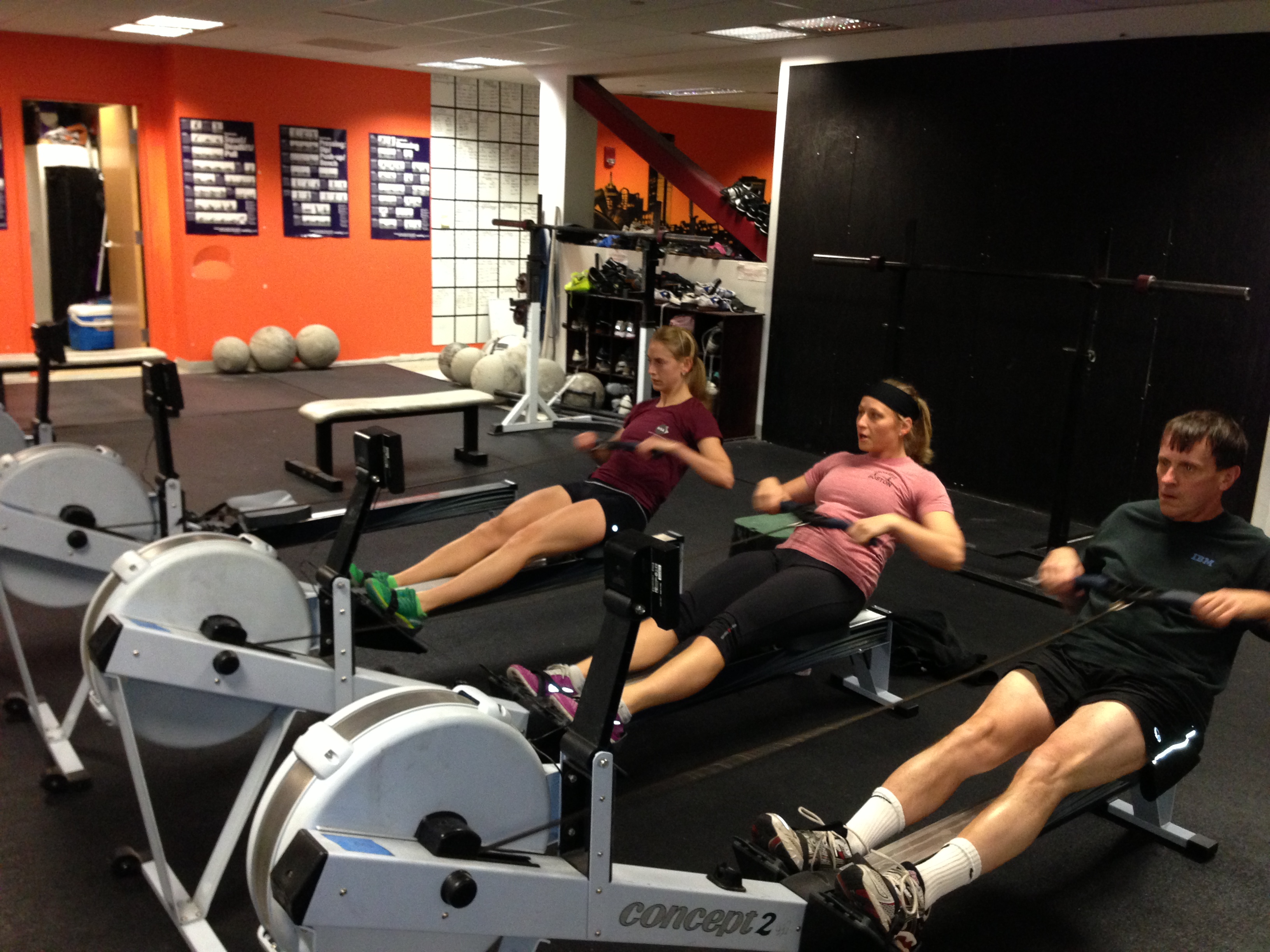
Today’s Rowing WOD is a good opportunity to focus on one or two form fixes but get after it as well. Set the monitor for Intervals Variable and enter the work/rest accordingly. This WOD has the potential to build your confidence in longer pieces. Come up with a plan and execute. Be consistent with your splits and stroke ratings for all three. If possible go a little bit faster on each piece. Vets might try for a pace of 2k+5, 2k+4, 2k+3 for each successive piece with a stroke rating of 28-32. Find your efficient stroke. Novices should focus on one form fix for each piece and work hard.
Post your Average 500m Splits to Comments along with an answer to these questions…
Why is Rowing Fun? and Who’s Ready for the Boston Marathon?
When rowing on the water balance and single leg strength come into play much more than rowing indoors on the erg. Exercises like the pistol (single leg squat) really help develop the sense of balance and power needed to move a boat. Think about making a big turn in a sculling shell mid race, like any of the turns in the Head of the Charles. A sculler must be able to balance (a.k.a. set) the boat and transfer force to the water. Those that do this well maintain boat speed around turns and can walk through opponents. If you can’t do a pistol yet substitute goblet squats.
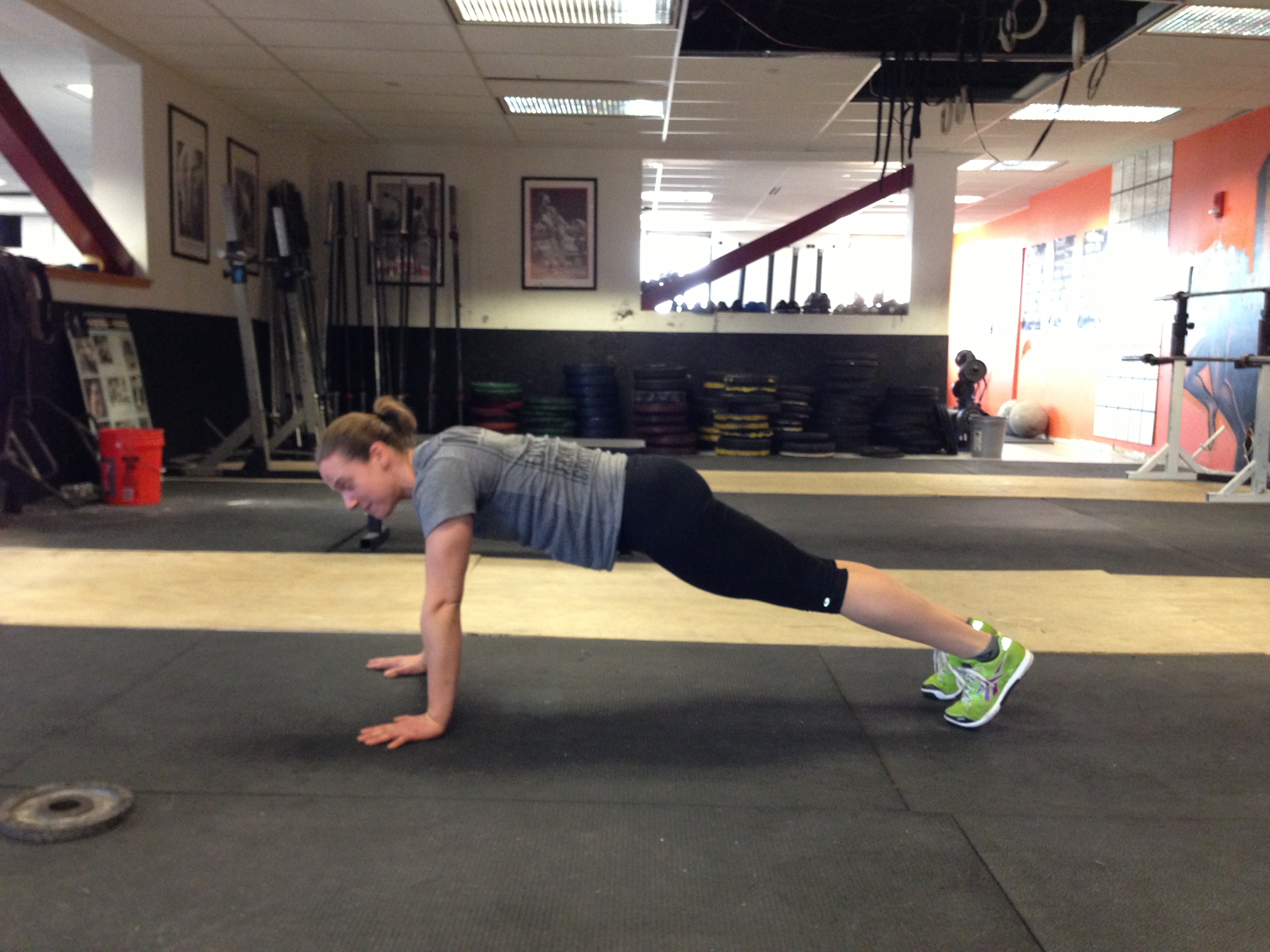
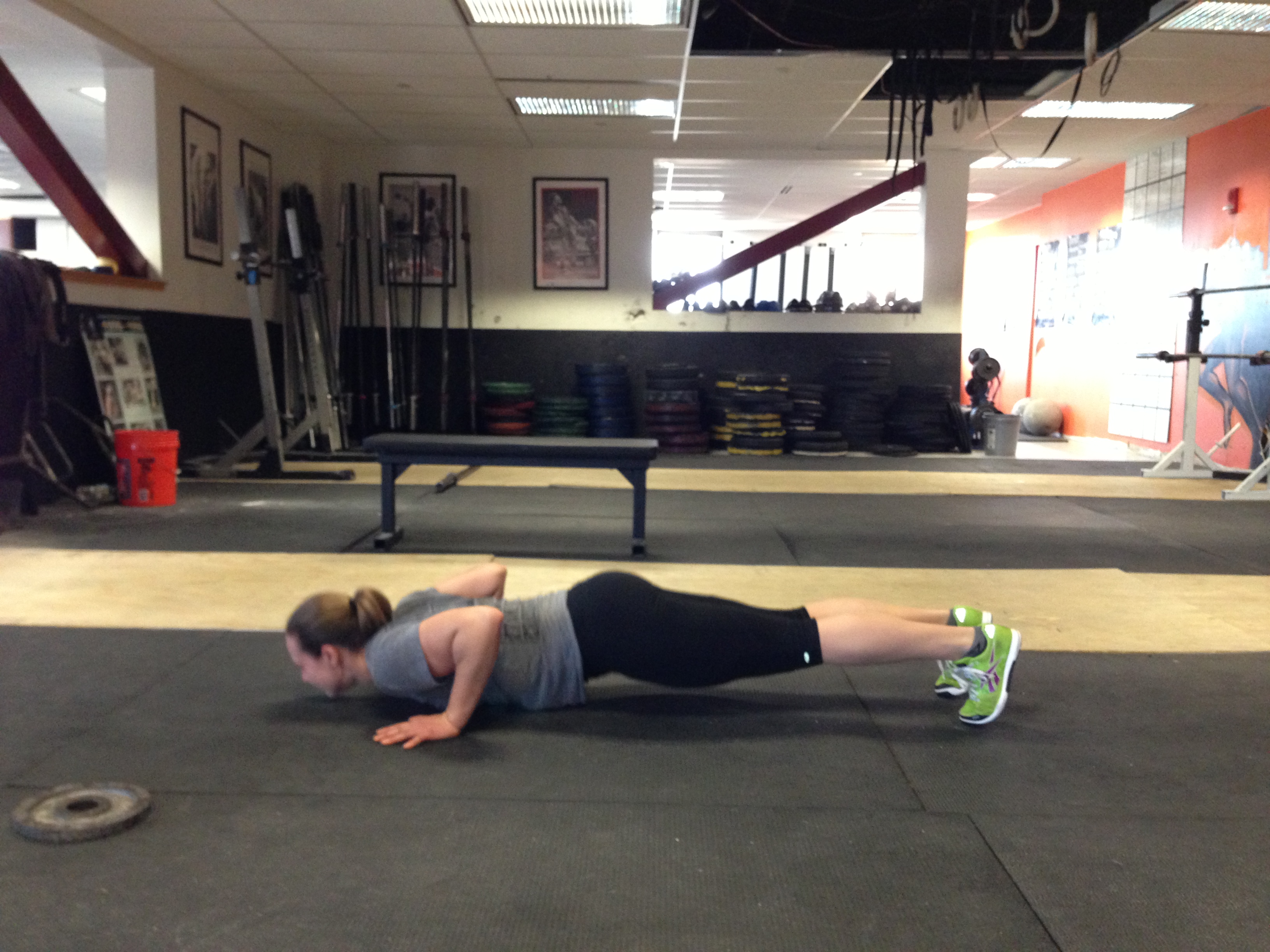
The inch worm is a great stabilizing exercise if you try to keep the hips and torso quiet. Then when you add the push up, connection of the feet and hands come into play. Keep that core firm and ensure everything touches and leaves the ground at the same time. Last but not least there is the kettle bell swing. Really focus on driving through the heels and activating the glutes and hamstrings while keeping a solid core.
Now hold up! What about all of the athletes out there that are using rowing as a cross training tool? You’re in luck. If you can piece together good efficient movement in the first three exercises then you should be able to crush the row for calories at the end of each round.
Your goal should be consistent, efficient strokes. For those that have been working on suspension and have tried a drill like the strap drill, you’ll want to fully suspend throughout each stroke in order to get done in as few strokes as possible. If you suspend well and can maintain a nice ratio then the rowing part of this workout will become active rest and allow you to breathe. Don’t get me wrong, 10 calories is not much and you should be pushing the pace, but work on suspension and make the rowing as effortless as possible so you can crush the rest of this Rowing WOD.
Post your time and the fewest number of strokes it took to complete 10 calories!
When’s the last time you went for a row on the water or in the gym? When’s the last time you warmed up for rowing? When’s the last time you used Rowing as a warmup for something else? For many of you rowing is either your main sport or a foundational training tool that you use to get in wicked good shape. Regardless, anytime you pick up that handle you should be rowing with purpose and taking deliberate strokes. So how do we develop purpose and deliberate practice? A good place to start is the Reverse Pic Drill.
Every time I prescribe a rowing warmup I usually kick things off with the Reverse Pic Drill. It’s a drill that includes 4 progressions:
Reverse Pic Drill:
1. Half Legs – Taking short strokes at the front end using the first 3 inches of the leg drive.
2. Full Legs – Slightly longer strokes pushing the legs all the way down.
3. Legs and Bodies – Longer strokes adding in the swing of the body.
4. Full Strokes – Full length strokes with the arms finishing the stroke.
When done well and with awareness this drill allows us to focus on three important skills with regards to rowing:
1. Posture – The Torso should be stacked and strong in a neutral and braced position at all points in time during the stroke.
2. Control – As the seat slides forward toward the catch it maintains a constant speed and does not accelerate into the catch. With good control you should be able to stop at any point in time during the stroke and be in a strong position.
3. Connection – The hips and the hands move together into and out of the catch as if connected by a cable. If the hips move, the hands should move the same distance, no more no less. If you are connected you can also focus on your shoulders. The hips, hands, and shoulders all move together in the first three inches of the drive.
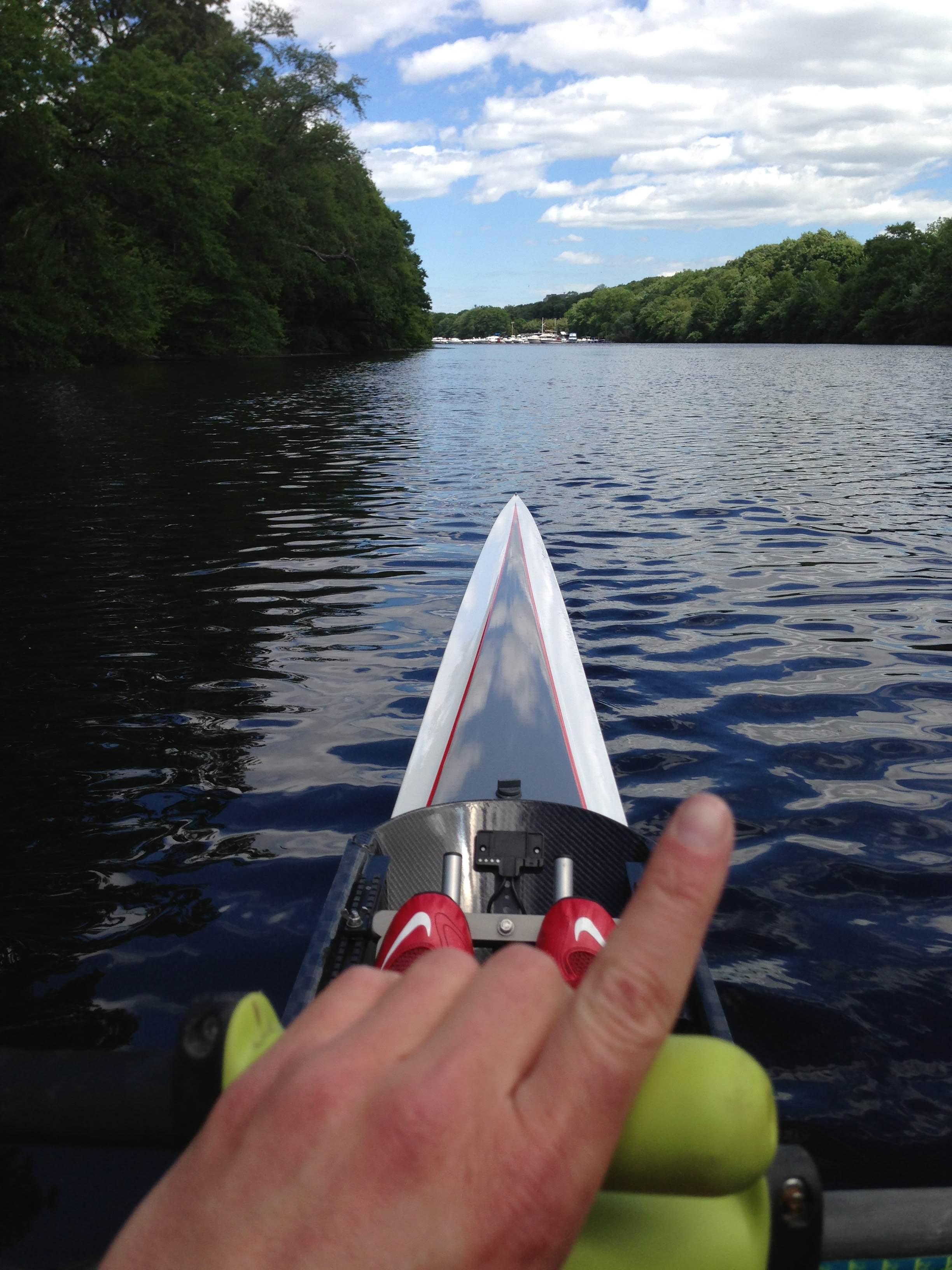
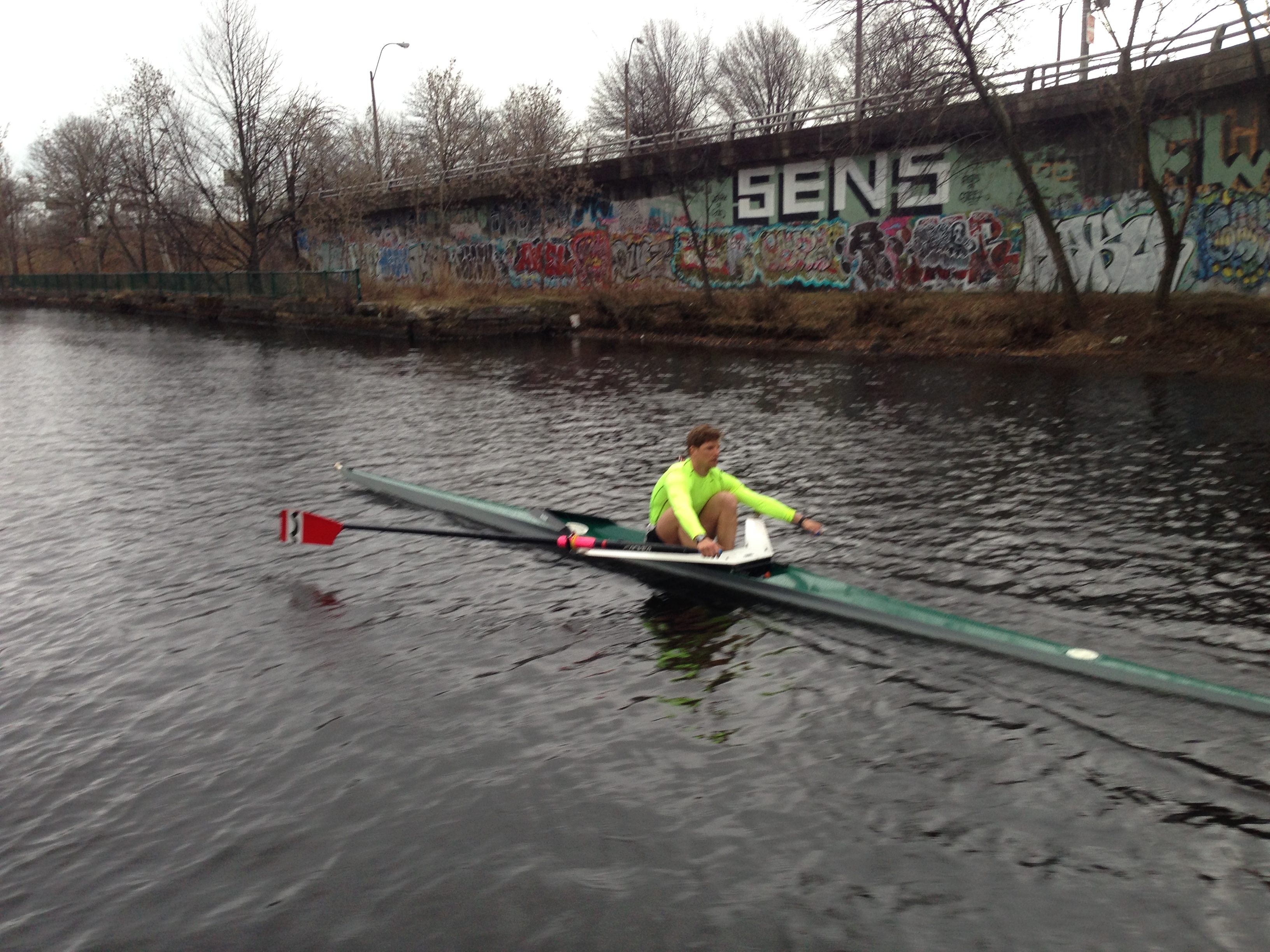
I believe that if you can learn to do the Reverse Pic Drill correctly in your warm up, you can and will become a better rower. The key is how you execute each progression and what you focus on. Here is a video review of an elite rower I’m working with. This is what the Reverse Pic Drill looks like in a single on the water. Check out what he’s doing well and what you can start to focus on every time you row.
If you’re interested in getting on the water, I will be organizing a sculling group to row out of Community Rowing Inc. in Brighton every Monday and Wednesday evening from 6:30pm – 8pm. If you can fit that into your schedule I’d love to get you on the water. We will be starting in May. Shoot me an email (pat@renegaderowing.com) now and let me know if you’re interested. I’ll keep you updated and get you setup to join us.
Let us know if you have any questions or thoughts in the comments!
Today’s Rowing WOD is another long burner to build up your muscular endurance as well as your cardiovascular and respiratory endurance. Fight to go unbroken in all the movements and be sure to get a good mobility session afterwards to begin rebuilding and realigning all of your muscle fibers. Be efficient in your movement, keep a constant pace, and keep breathing.
Don’t forget to checkout the Renegade Rowing Training Plan for this week and choose which blocks you will hit – RR Training Plan 4-13-15
Rowing WOD:
5 x 800m w/ 2min Rest
1st @24 s/m (2k+5)
2nd @26 (2k+3)
3rd @28 (2k+1)
4th @30 (2k)
5th @32 (2k-1)
Some of our best results are found when training at high intensity. In order to develop as an athlete you’ll need to develop an ability to go hard and bring your “A” game. Today’s Rowing WOD provides an opportunity for just that. Set the monitor for 800m of work and 2 minutes of rest. While the stroke rating starts out low, there should be a focus on power per stroke and solid intensity across all five pieces. The increasing stroke rating will give you a chance to see where you’re most effective. Ideally whenever the stroke rating is increased the split should decrease. Try to pick a split for each stroke rating and commit for the whole piece. The last 3 should be around race pace.
Post your Average 500m Splits for each piece to comments.



 Renegade Rowing