Rest Day 12/12/13: Video Review: What do you think of your form?

Video Review

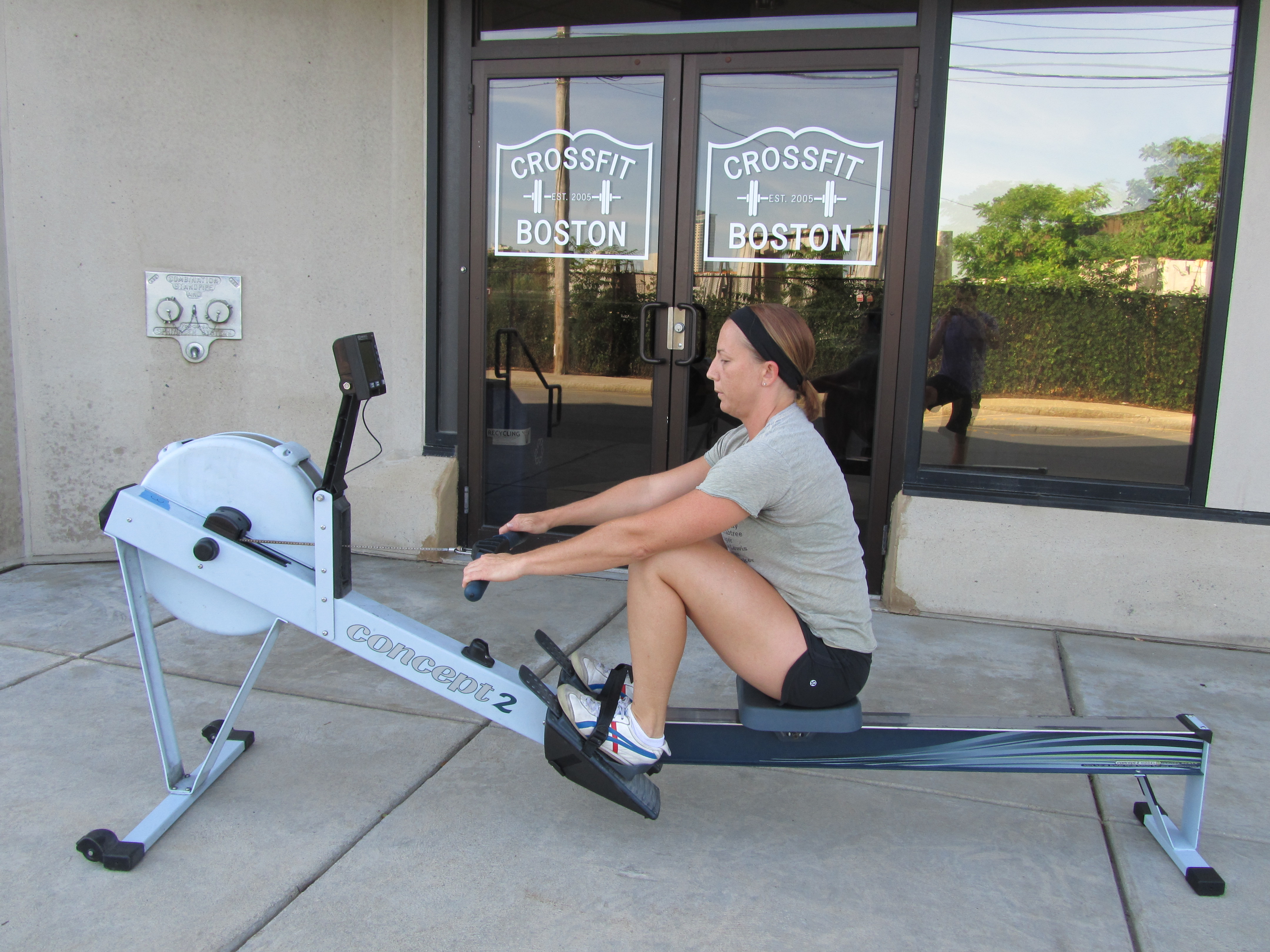
From time to time it can be beneficial to look at yourself on camera.  No we don’t care about the aesthetics or the fashion.  We’re looking to gain feedback and a mental picture.  We’re looking for just one or two cues that might give us a smoother, more powerful stroke.  What’s going right?  What’s going wrong?  What can we do better?

You should be asking yourself, “What do I look like now?  How do I move now? What could use some extra focus and improvement next time?”  Don’t dwell on to many things at a time, just find one or two things that might make your life on the erg or in the boat a little better.  Go work on them.  Then reassess in a couple of weeks.

The Renegade Rowing Club has agreed to help everyone by taking a look at their strokes. If you’d like feedback similar to this, post a 20 second clip of you rowing to YouTube and share it with us in the comments of this post.  I’ll do my best to give you a couple of things to work on!

For each of the following videos I’ll be ranking each rower on their posture, control, and connection.  I’ll use a five point scale where 1 = poor and 5 = perfect.  When dealing with posture we’re looking for the torso to be stacked and strong at all times.  When talking about control we are looking at the smoothness of the recovery and how the seat moves toward the catch.  Does it rush forward for the next stroke?  Is there control in the last few inches of the slide to change direction without pushing the boat backwards?  Last and most important, connection, are the seat and handle connected and moving together into and out of the catch as if connected by a belt.

Take a look and share what you might focus on next time you row!

Posture: 3, Control: 3, Connection: 2

Feedback: Nice job getting the body over.  Don’t let the seat stop at the catch.  Be ready to push with the legs the second you hit the catch and keep the seat and hands connected.


____________________

Posture: 3, Control: 3, Connection: 4

Feedback: Nice horizontal hands.  Don’t let the handle pause at the finish.  Focus on quicker hands away as if there were opposing magnets on the handle and your chest trying to push those hands away out of the finish.


____________________

Posture: 4, Control: 3, Connection: 3

Feedback: Great posture and nice job getting the body over.  Try not to be so rigid and don’t break the elbows as you initiate the drive.  Relax a little on the recovery and make everything smooth.

____________________

Posture: 3, Control: 2, Connection: 3

Feedback: Nice job getting the arms extended and ready for the catch.  Try to not be so robotic and rigid at the finish.  Focus on quick and smooth hands away.  The handle should always be moving.

____________________

Posture: 4, Control: 3, Connection: 2

Feedback: Good posture and nice horizontal hands.  Don’t let the shoulders and torso reach for more at the catch.  Focus on staying connected as you approach the catch.  See if you can get the body over and find that reach earlier in the recovery, before you get to half slide.

____________________

Posture: 3, Control: 4, Connection: 2

Feedback: Great work getting your body over on the recovery and getting prepared by half slide.  Don’t let your posture go as you approach the catch.  Focus on bringing the handle with you as you push the knees down.  The first inch or two of the drive you are shooting the slide, so keep a big chest and solid abs/back as you push.

____________________

Posture: 3, Control: 3, Connection: 2

Feedback: Nice power and push on the drive.  Try to keep your hands on one level plain and don’t let them drop coming into the catch.  Focus on pointing the toes as you finish and then getting the proper sequence of arms away first, bodies over, and then knees come up during the recovery.  Everything blends, but that’s the order of firing in terms of sequence.

Rowing WOD 12/6/13: “Sculler X” – Post Time and Strokes

The Humbling Pistol

The Humbling Pistol

Rowing WOD 12/6/13:

“Sculler X”

5 Rounds For Time:

10 Pistols (5 each leg)

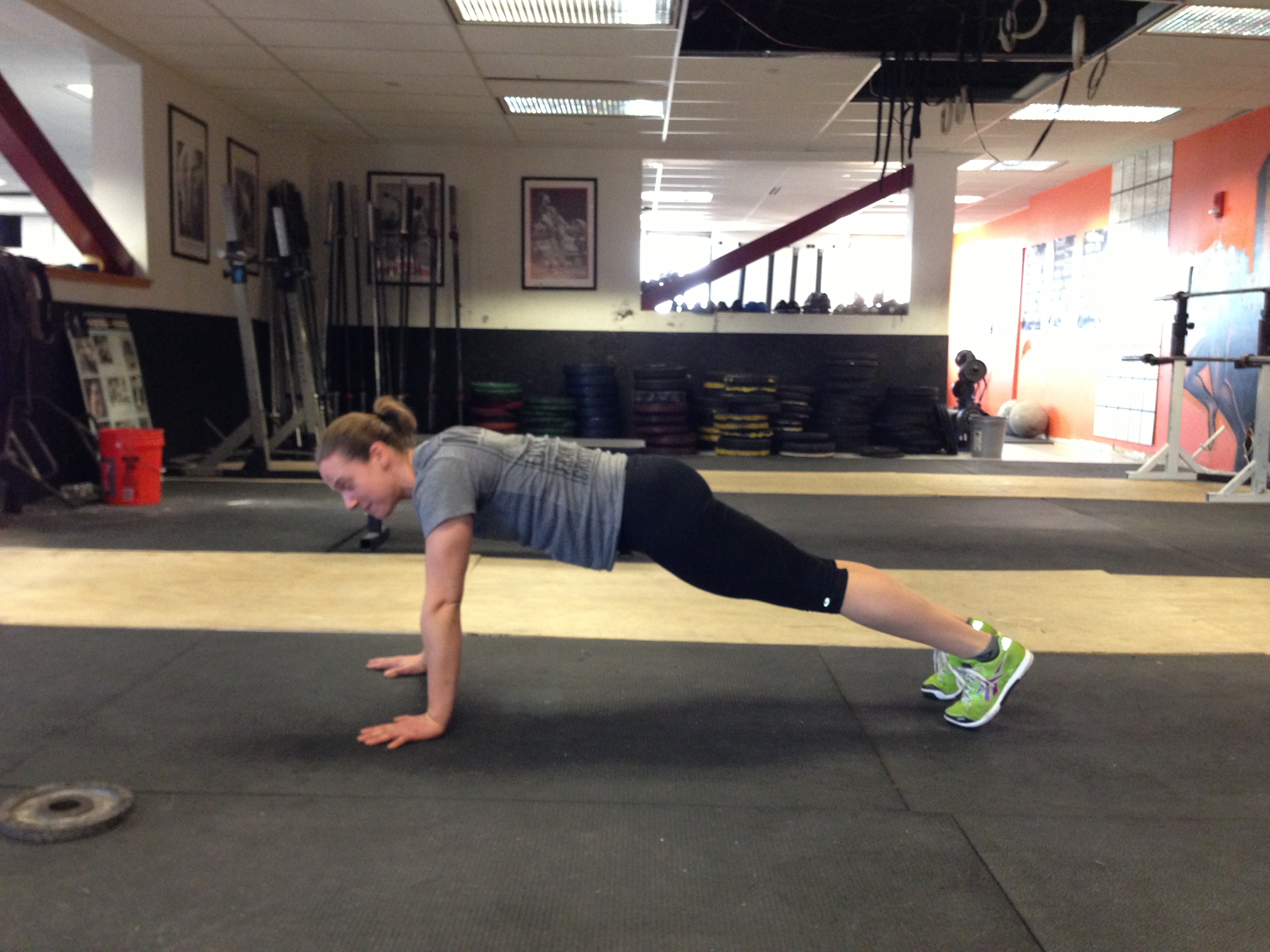
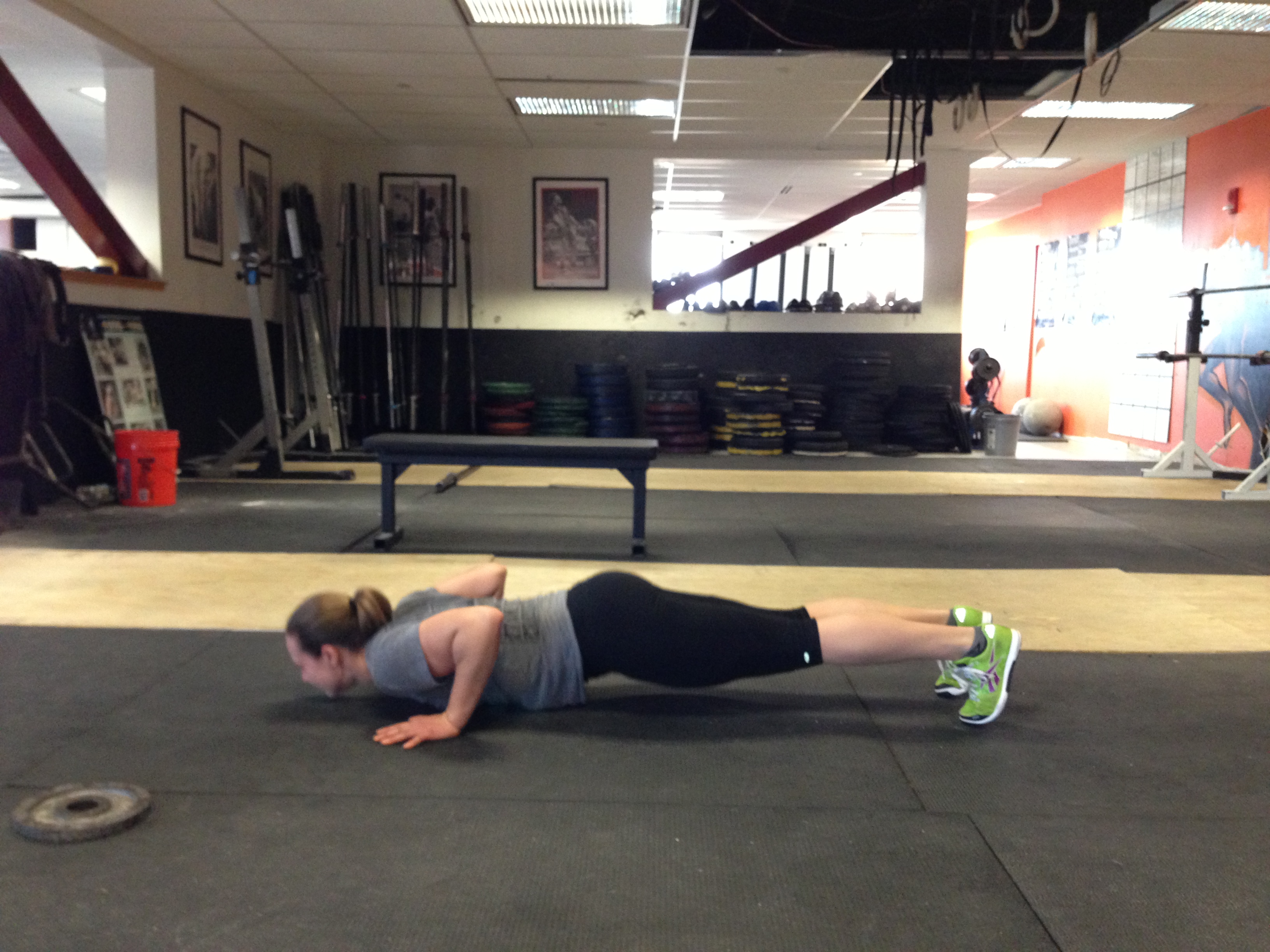
10 Inch Worm Push Ups

10 Kettle Bell Swings (2/1.5 Pood)

10 Calories on the Erg

  • (HOW MANY STROKES WILL THIS TAKE YOU?)
Walk the hands out

Walk the hands out

When rowing on the water balance and single leg strength come into play much more than rowing indoors on the erg.  Exercises like the pistol (single leg squat) really help develop the sense of balance and power needed to move a boat.  Think about making a big turn in a sculling shell mid race, like any of the turns in the Head of the Charles.  A sculler must be able to balance (a.k.a. set) the boat and transfer force to the water.  Those that do this well maintain boat speed around turns and can walk through opponents.  If you can’t do a pistol yet substitute goblet squats.

Keep a firm core

Keep a firm core

The inch worm is a great stabilizing exercise if you try to keep the hips and torso quiet.  Then when you add the push up, connection of the feet and hands come into play.  Keep that core firm and ensure everything touches and leaves the ground at the same time.  Last but not least there is the kettle bell swing.  Really focus on driving through the heels and activating the glutes and hamstrings while keeping a solid core.

Full depth push up!

Full depth push up!

Now hold up!  What about all of the athletes out there that are using rowing as a cross training tool?  You’re in luck.  If you can piece together good efficient movement in the first three exercises then you should be able to crush the row for calories at the end of each round.

Your goal should be consistent, efficient strokes.  For those that have been working on suspension and have tried a drill like the strap drill, you’ll want to fully suspend throughout each stroke in order to get done in as few strokes as possible.  If you suspend well and can maintain a nice ratio then the rowing part of this workout will become active rest and allow you to breathe.  Don’t get me wrong, 10 calories is not much and you should be pushing the pace, but work on suspension and make the rowing as effortless as possible so you can crush the rest of this Rowing WOD.

Post your time and the fewest number of strokes it took to complete 10 calories!

Rowing WOD 11/16/13: 5x500m w/ 1:30 Rest – Post Splits and Favorite Drag Factor

Rowing WOD 11/16/13:

Suspension Drills

Recover to Strength in order to Suspend!

Recover to Strength in order to Suspend!

5 x 500m w/ 1:30 Rest

  1. @2k+5, Damper Set at 6
  2. @2k+5, Damper Set at 5
  3. @2k+5, Damper Set at 4
  4. @2k+5, Damper Set at 3
  5. @2k+5, Damper Set at 2

Check Drag Factor

Recently we’ve been reviewing the fundamental skills of posture, control, and connection.  Today we’ll take the idea of connection one step further as we feel what it means to suspend from the oar handle.  Suspension is all about using our body weight to hang on the oar and help accelerate the handle all the way through the drive.  The key is not to create any force Upward off the seat, but to just become weightless off your seat while keeping in contact with it.  Everything – forces, handle height, chain – needs to be HORIZONTAL when we row!  NO need to do extra Work (W = mgh) by moving stuff up and down every stroke, keep it horizontal!

Drills we’ll cover include the Stand Up/Sit Down drill to get the feeling of suspending above the seat.  Remember this is an exaggeration to get the correct sensation and feeling of good connection.  We will also do the Strap Drill where we statically hang and suspend from the handle while maintaining our body angles and strong postures.  Then we’ll do the Strap Drill dynamically by letting the strap out slowly and trying to hold suspension all the way through the drive.

In today’s Rowing WOD we’ll be varying the damper to find where we’re most efficient.  Over the next week play around with the damper to find where you’re most comfortable/efficient .  When you find a damper setting you like, check the drag factor so you can begin using a consistent drag factor.  For more information on Drag Factors read this article: http://www.concept2.com/indoor-rowers/training/tips-and-general-info/damper-setting-101

For today’s 500m pieces, try to focus on good connection and suspension while keeping a consistent split for all 5 pieces.  After you’re done look back at the memory to see what your average stroke rating was for each piece.  Whatever piece felt comfortable/efficient and was done at a stroke rating of 28-32 might be a good drag factor for you.  Take a couple of minutes to set the damper to that number and check the drag factor on the monitor.  Remember that drag factor and try to use it next time you row to see if you still like it.

Post your average splits and favorite drag factor to comments!

********** IMPORTANT *************

The biggest thing to focus on and practice right now is the fundamentals!!!  Body Preparation by Half Slide is Key and Connection to move the handle with the seat out of the Catch is key!  If you can Prep and Connect, the suspension will come.  Whenever focusing on suspension ensure your abs are engaged and you have a solid hollow body!  Protect those discs!

If you have any questions let me know!

Here is a quick video of the strap drill.  It’s a fun challenge to do dynamically. If you like what you see, come try it and train with the Renegade Rowing Club!  The Renegade Rowing Club starts December 2nd at 6:30pm at CrossFit Boston.  Let me know if you’re planning on coming… pat@renegaderowing.com

Rest Day 11/14/13: Got Skills? …Row and Get Some!

Jodie from the 7am class challenging the BC Men's Crew Team!

Jodie from the 7am class challenging the BC Men’s Crew Team!

Rest Day 11/14/13:

How do you Master Skills?

As Winter starts to set in and you start working toward your goals, be aware of how you recover and master skills.  One goal you’ll probably set for the Winter is to master a new skill, like double unders, hand stand push-ups, or muscle ups.  I want to draw your attention to how you attack these skills and actually master them.

To master a skill is to know and have full control over every piece of a skill, both physically and mentally, when your fresh and your fatigued.  Lately we’ve been pushing the intensity in the gym and many people have found themselves sore and out of it for a few days.  One example would be Coach Tito and Carla of CrossFit Boston competing at the Southie Throwdown this past weekend.  They literally were crushed from back to back competition days.  What would you do on the Monday following a weekend like that?

The days following a hard training day are perfect for mastering a new skill through active recovery.  Rather than going back for a second or third hard training day and not performing at full intensity, commit to an active recovery day focused on mastery of the skills you’d like to develop.  Carla did just that on Monday.

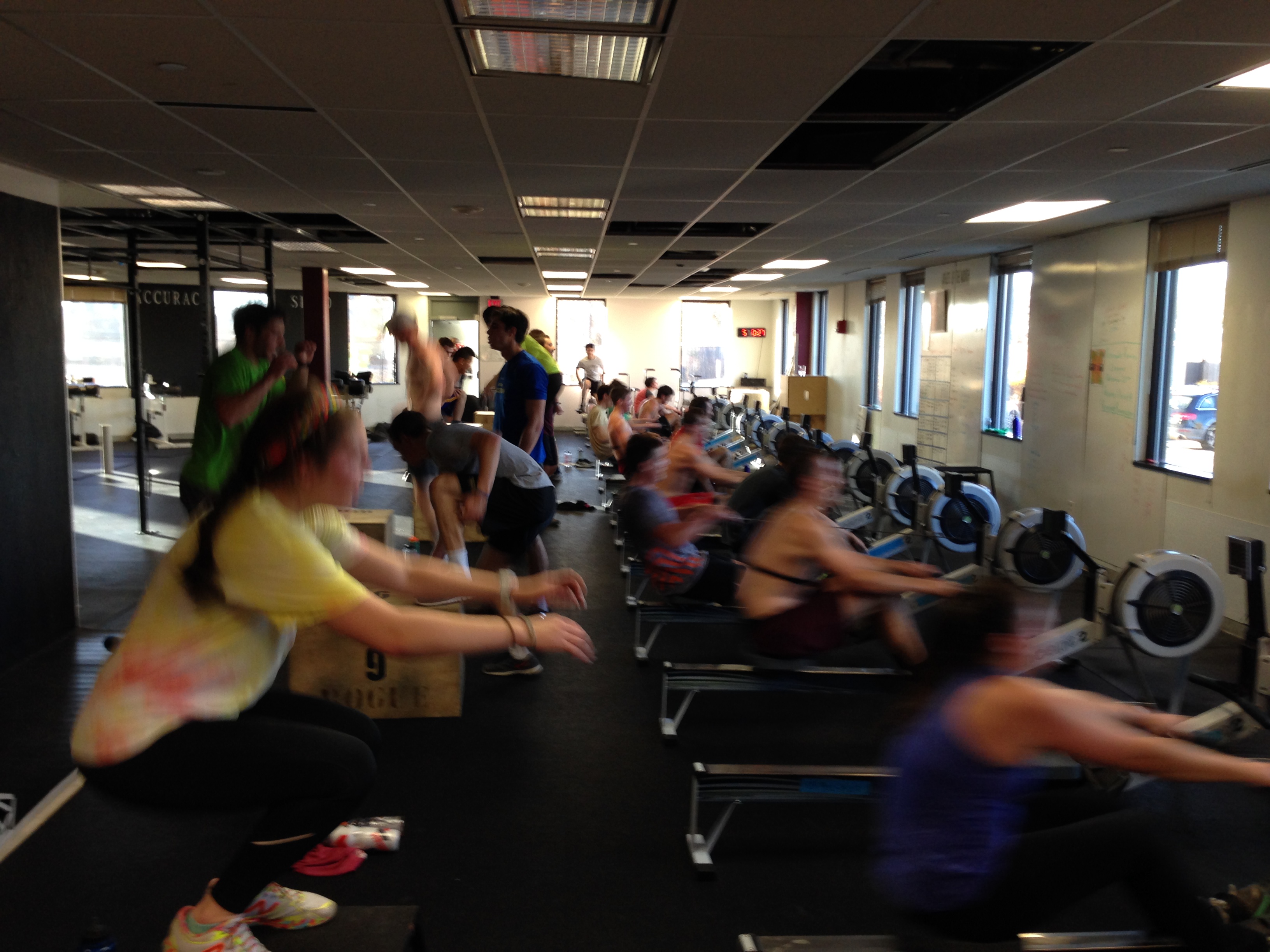
Coxswains pushing hard right alongside their rowers!

Coxswains pushing hard right alongside their rowers!

Rather than join in on the 7am class at CFB, Carla took 1 hour out of her day to actively recover, rather than sitting around and feeling sore.  She set the erg for 2,000m of work and 10min of rest.  She rowed an easy 2k and then spent 10 minutes working on her goats, handstand push ups, pull ups, and Toes to Bar.  Three sets of this active recovery interval scheme gave her confidence with her skills and prepared her for a hard training day on Tuesday.

The erg is a great tool to use as active recovery.  A few hard training days back to back will leave your body depleted and full of metabolic waste.  In order to replenish your energy and clear out the metabolic waste it helps to eat well, move, and keep the blood flowing.  The erg provides a stable platform and is low impact,  perfect for recovery at a sub-maximal effort.  Next time you’re feeling sore or a workout absolutely crushes you, go sit down on the erg and row for 10 minutes.  It doesn’t have to be hard.  Enjoy it!  Row at about 40% effort, just hard enough to breathe a little bit.  You should be able to maintain sentences and tell your training partner what you’ll be doing to master your next skill!

If you have any fun methods to master skills please share!

Rowing WOD 11/12/13: 1k, 6x250m, 4x:45 On, :15 Off – Post # of Strokes at Goal Split

Rowing WOD 11/12/13:

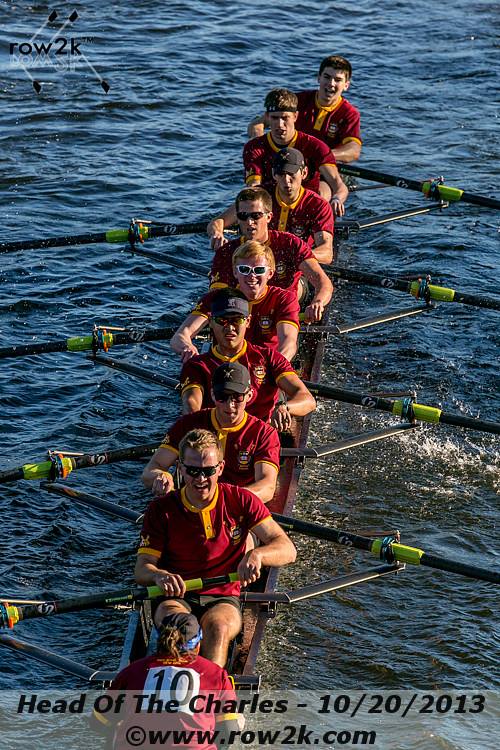
c/o Row2k.com

c/o Row2k.com

1. 1k Row @26 s/m

– Moderate Intensity (Row like you’re out for a steady jog)

*Note your average split for 1k

2. 6 x 250m Row w/ :30 Rest

– Row each piece at the average split from the 1k above

– Stroke Ratings are as follows:

@25 s/m, @23 s/m, @21 s/m, @26 s/m, @28 s/m, @30 s/m

3. 4 x :45 On, :15 Off

**Practice each piece as if it were the start of a 2k

**When you settle count the # of strokes where you hold your goal 2k split

For the first part of today’s Rowing WOD, row at an intensity similar to Jogging focusing on Smooth Form and Body Preparation by 1/2 Slide.  Try to incorporate the ideas and skills of Posture, Control, and Connection.  Today we’ll be working on ratio at different stroke ratings and varying the pressure we exert each stroke.  At lower stroke ratings like 20 − 24, the ratio should be 1:2 or 1:3, 1 count on the drive, 2 or 3 counts on the recovery.  By controlling our seat as it slides forward we can make sure we’re preparing our bodies for the catch.  The goal is to turn our force and momentum around without any extra effort.  Remember, we want to drive our body weight backwards toward the finish line, not throw it forward toward the Catch/Start of the Race.

When varying stroke rating during a piece use the pressure with the legs on the drive and the speed of the hands through the finish to vary the rating.  If you want to increase the stroke rating and maintain power, think “drive the legs down faster and quick hands away” out of the finish.  If you want to decrease the stroke rating without losing power, keep the same pressure on the drive and hand speed through the finish, but slow the seat down as it slides forward on the recovery, this is what I mean by “Control the Recovery”.

The goal for these pieces is to learn how to vary the pressure at different stroke ratings while maintaining the same split.  The idea being that eventually we’ll find an optimal stroke rating where you just keep spinning the flywheel every stroke without letting it slow down to much and thus save energy and avoid fatigue.  What we’re ultimately working towards is Efficiency!  Instead of slogging along and duking it out at a slower stroke rating like a 24 for our 2k, we want to be able to row quick and light between a 28 − 32 when needed.

For the third part of the workout you’ll row like the start of a 2k race.  Perform a 3 stroke starting sequence (Half Stroke, 3/4 Stroke, Full Stroke) then a High 10, then settle to your 2k race pace for each of the 4 pieces.  The goal is to learn how to get the flywheel moving and the split down without jacking up your legs.  Then the even bigger goal is learning how to settle immediately to you’re race pace and be consistent.  Count how many strokes you can take at your 2k pace once you settle, no higher, no lower.
In terms of preparing to race 2,000 meters, the goal is to continue building our confidence in maintaining a consistent split as well as develop the ability to change our Ratio/Rhythm as we row at different Stroke Ratings.  We want to get a taste of what the start will be like and what is required to settle to race pace so we don’t Fly and Die!
Post your best :45 second start and settle.  How many strokes did you take at your goal 2k split?