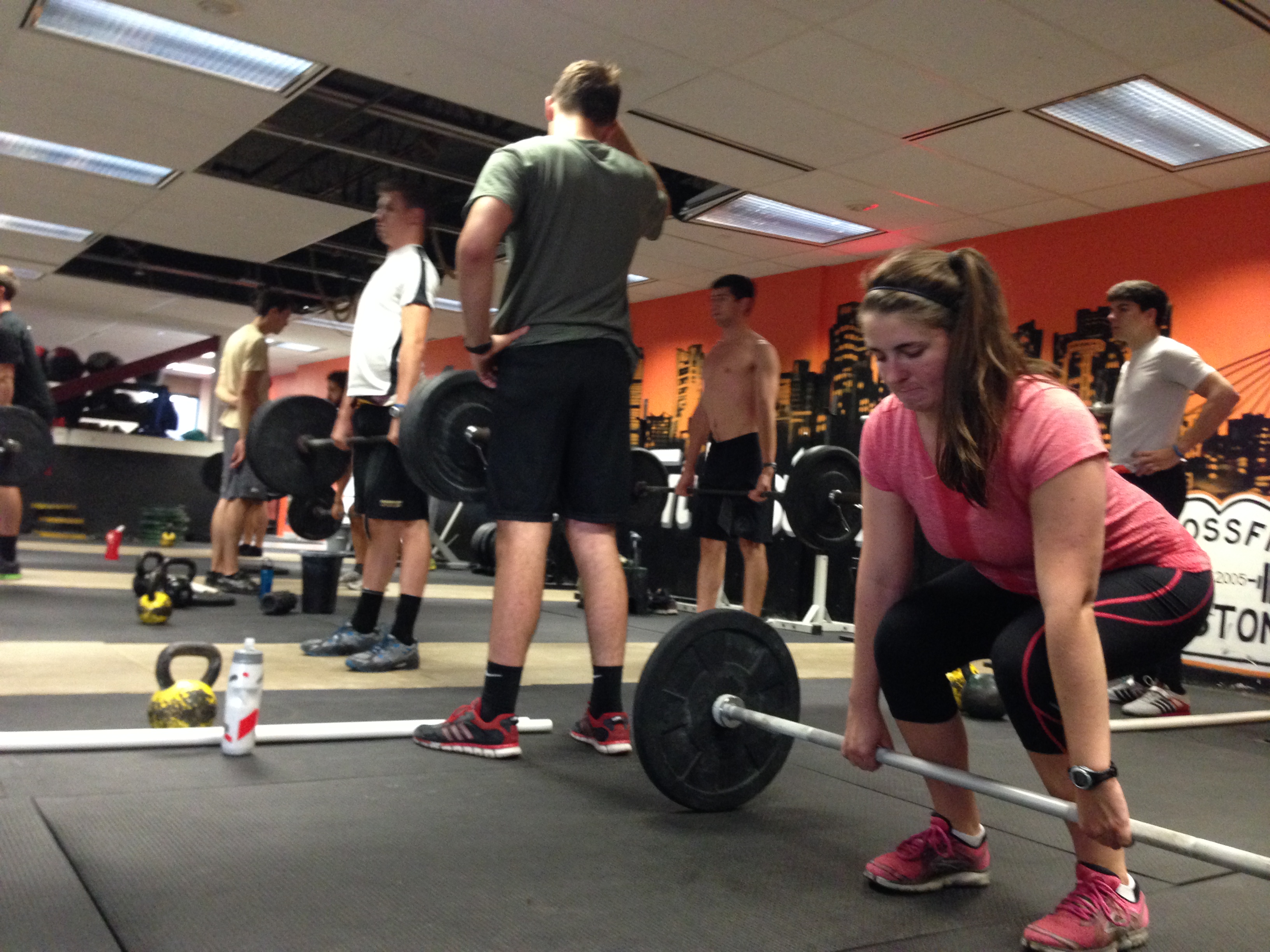
Video Review: Coach Pat – The Deadlift and Rowing – Can you row without deadlifting?

Coxswains getting after the Deadlift last winter!When’s the last time you performed a Deadlift?  When’s the last time you picked the boat up out of the water?  For many of you in Boston and the Northern states it’s been a while, but that ice is almost gone and regular water practices will be happening in no time.  Regardless, anytime you pick something up you should be deadlifting, because that’s what a deadlift is.  It’s the strongest, most efficient, most powerful way to pick something up off the floor or out of the water.

I believe that if you can learn to hip hinge and deadlift correctly you can and will become a better rower.  The key is how you deadlift and what you focus on.  Here is a little video review of a pre-elite rower I’ve started working with.  This is her form before any coaching. Check out what she’s doing well and what she can do better.

Now take a look at my hip hinge and deadlift below.  What parts of the deadlift can we tie to the rowing stroke?  I always teach the skills of 1. Posture, 2. Control, and 3. Connection whether it’s rowing or weightlifting.

1. Posture – How am I doing at maintaining a solid brace through my torso?  Is there any movement within the vertebrae of the spine?

2. Control – Is the bar traveling in a straight line over the middle of my foot?  Am I in control of my body and the bar? Can I stop at any point in time and be in a strong position?

3. Connection – How am I connected to the bar?  How am I connected to the floor?  Are my hips, hands, and shoulders connected when the bar is below the knee?

After taking a look and answering some of these questions, think about your own stroke.  In the front end of your stroke, from 1/2 slide up to the catch and back, how do your joints move in relation to one another and what does your body angle look like?  Does it stay the same?  When does your body start to swing open?  Do you feel or see any similarities when you deadlift and row back to back?  Can perfecting one movement help improve the other?

Please share your thoughts to comments and I’ll get back to you with feedback.
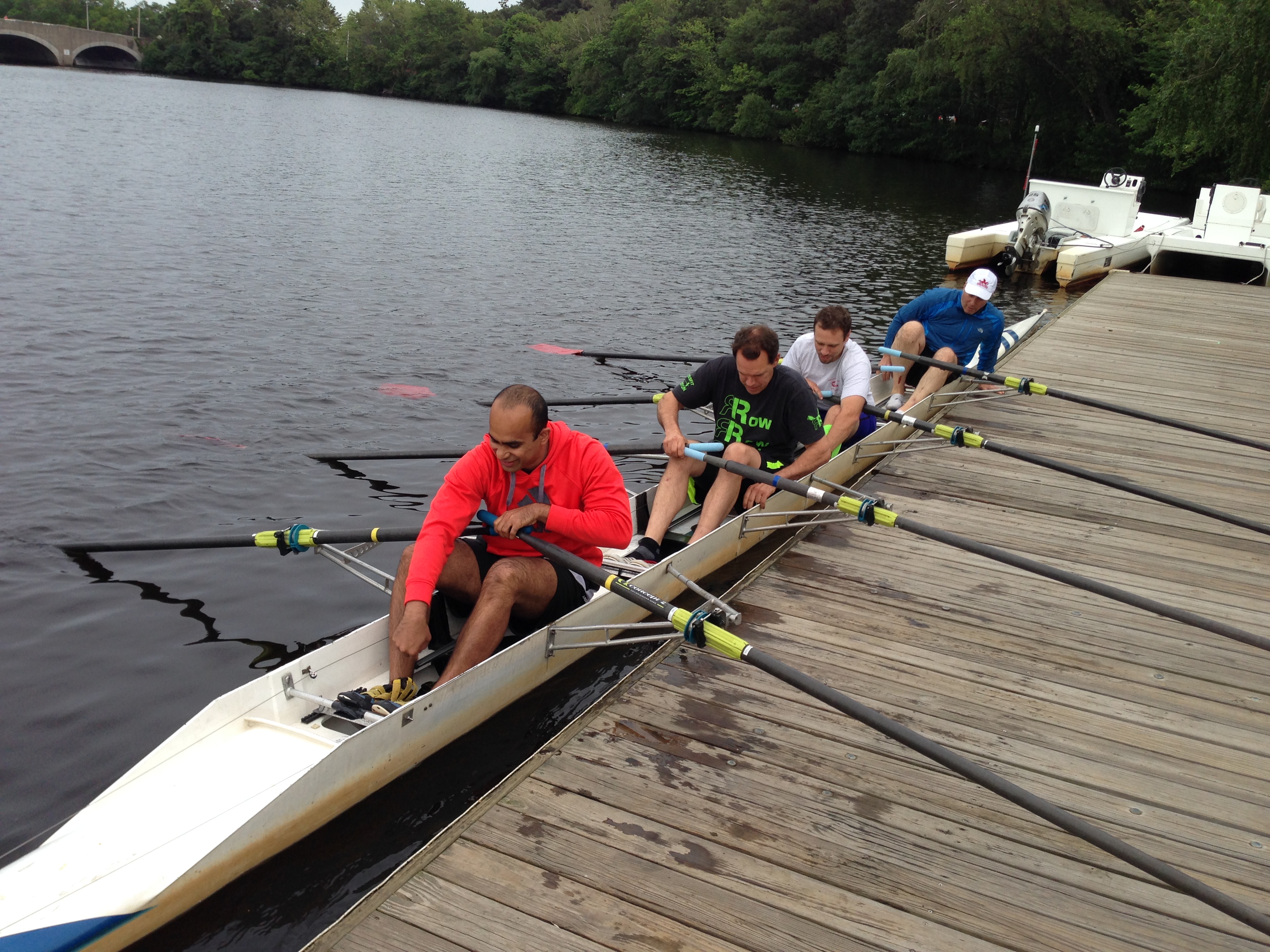
Video Review: Rhythm and Things to Look At on Concept2 Sliders

Are you pumped to be out on the water rowing now that it’s finally Summer?  We sure are in Boston and the Charles River is busier than ever.  Sometimes land work on Concept2 Sliders can help you with finding rhythm in the boat.  Perhaps on the next nasty day you stay inside and master rhythm with your rowing partner.  I’m sharing a video of some slider work we did earlier this year.  We were using sliders to find rhythm and ratio. Take a look and see how they might help you.  What are they doing well?  What do they need to work on?  Are you focused on rowing on the erg as if you were going to row on the water?  Please share your thoughts in the comments section.

Join Renegade Rowing on the Water this Summer! – Sign Up Here!

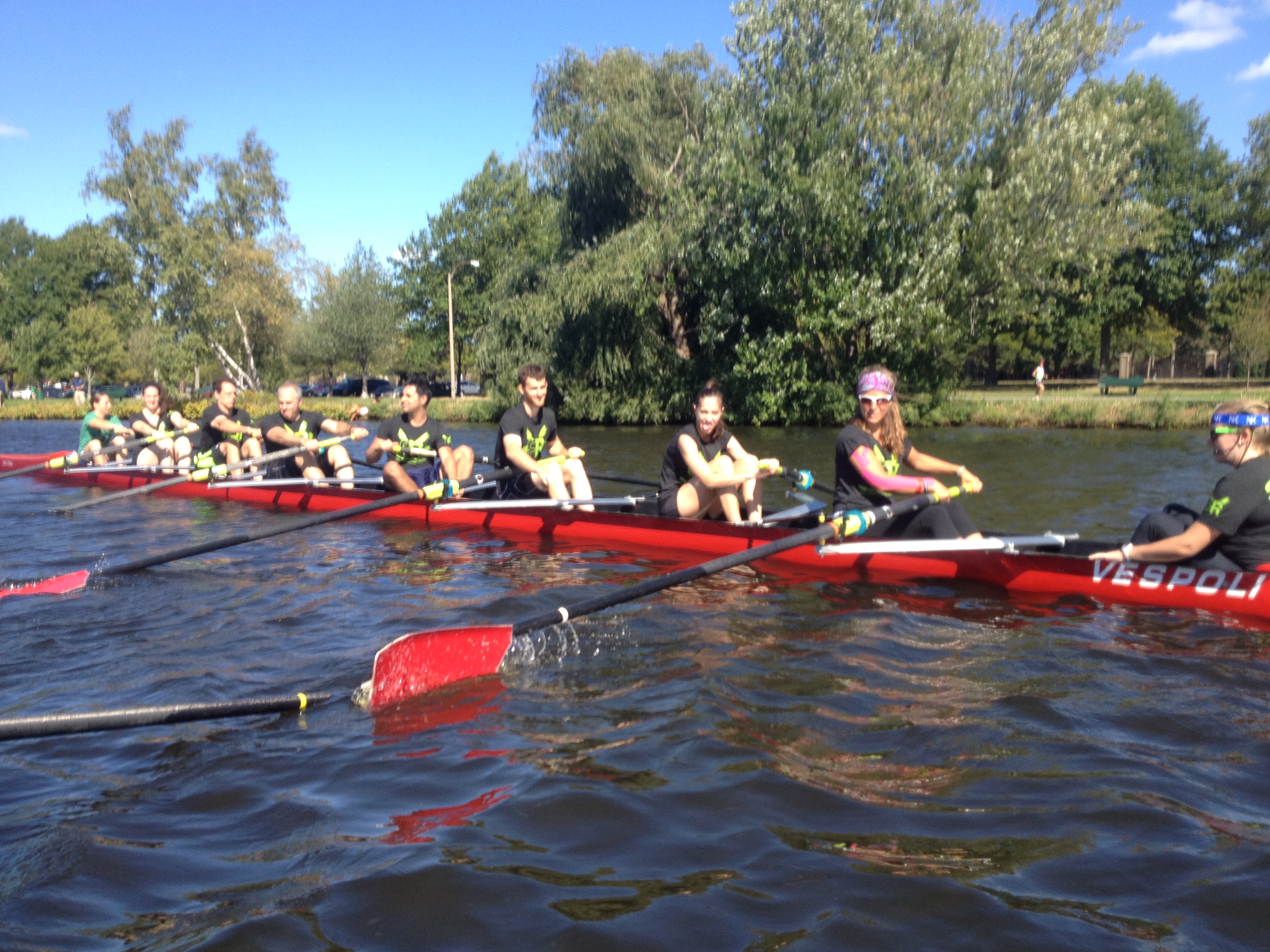
RRT Prepping for there epic end of term Renegade Rowing WOD last year.

RRT Prepping for their epic end of term Renegade Rowing WOD last year.

Renegade Rowing Team

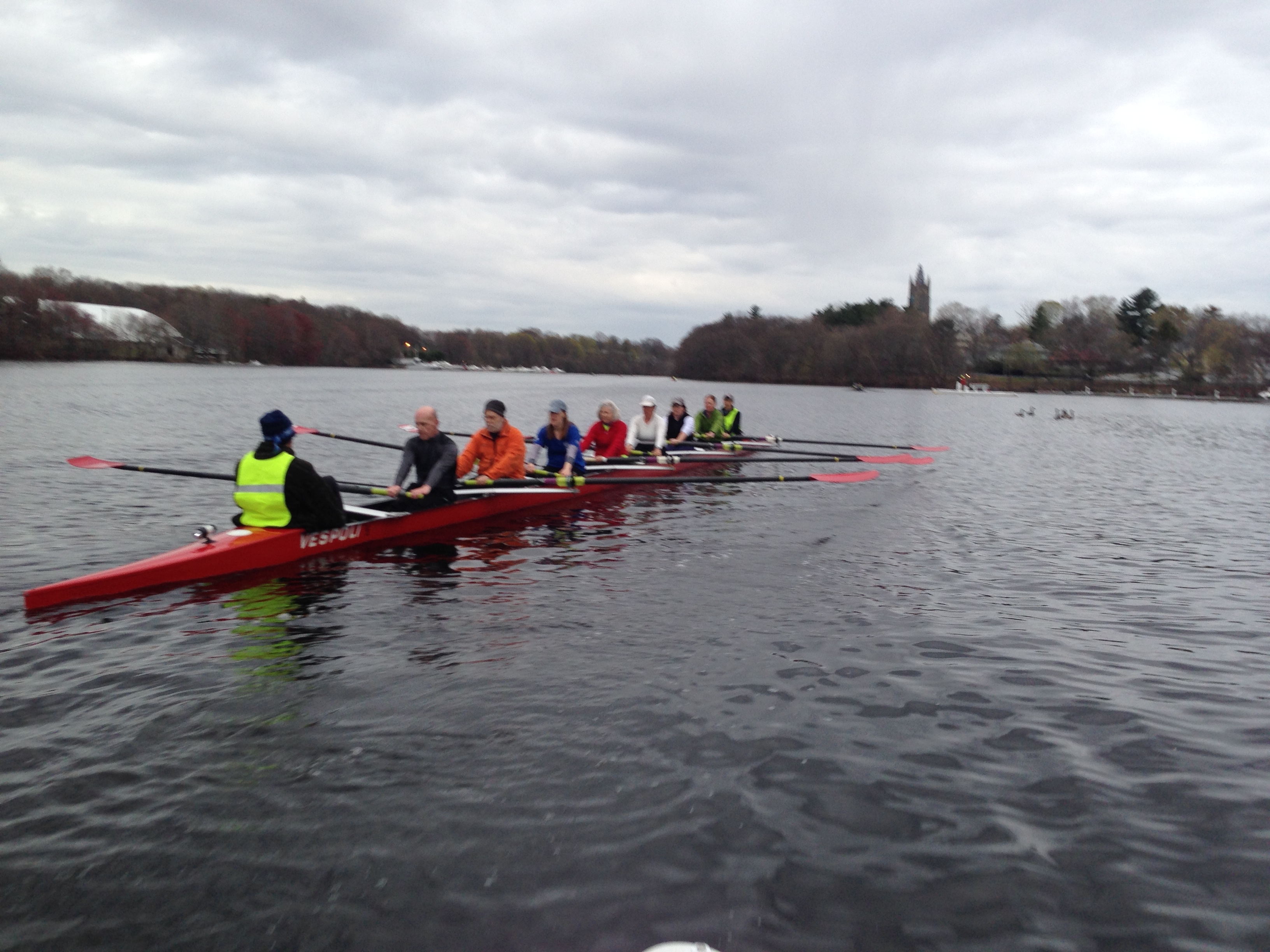
The Renegade Rowing Team is an opportunity to take your training to the next level and have some fun with other athletes outside of the gym.  The Renegade Rowing Team will practice two nights a week from 6:45pm − 8:15pm on Tuesdays and Thursdays starting in June.  Practices are held at Community Rowing’s Harry Parker Boathouse in Brighton, MA. Our goal is to learn to scull in quads on the water and become competitive enough to race this Fall. Each member of the RenegadeRowing Team will be expected to set goals both as individuals and as a team.  Joining the Renegade Rowing Team is an opportunity to improve your training as well as everyone else’s.  Learn to row and race with your friends!

Renegade Rowing Team

Get Strong, Get Fit, and Row Fast with Renegade Rowing!

How can you go faster? Try slowing down… thoughts on Super Slow Motion Training

Letting it run at Bodies Over!

Letting it run at Bodies Over!

I’ve always loved sports, especially when it comes to learning and competing at new sports that I don’t get to play often.  Whenever we learn something new it’s far to easy to try to learn a couple of basics and then go full speed.  Whether it’s golf, tennis, running, olympic lifting, rowing, or any other sport.  The thrill of competition and grace in motion that sports played at full speed creates is amazing.  Full speed competition elicits that feeling of joy and excitement that we all live for.  However, a couple of problems usually arise at one point or another in our performance at full speed, especially if we take it up to full speed to quickly.

1. We lose form and things get sloppy.  Basically the wheels come off.

2. We need more speed to out perform our competition, but it’s just not there.

Drew's new Catch Positioning

Drew’s new Catch Positioning

Over the past couple of weeks I’ve experienced this situation with many of the athletes I coach, both on the water rowing and in the gym training.  We’re always fighting for more intensity and boat speed, but too often something falls apart and our true potential is never reached.

Personally, I’ve experienced a similar situation while learning the piano.  I currently take lessons once a week and have worked up to playing 4 songs and almost all of the scales, but my progress tends to stumble when I go to fast.  It seems easy when I play a scale or a song slowly, so why not pick up the speed and just figure out how to not make mistakes playing faster?  Well because it just gets sloppy and I never really learn what I’m doing wrong or better yet, what I can be doing better.

After being turned on to two great blog posts on slow motion practice, one from the music world and one from the golf world, I decided to share this idea with the rowing and strength training world that I hope you all partake in.

Is Slow Practice Really Necessary? by 

Slow is Beautiful by Daniel Coyle

First, read through the above two blog posts and think about how slow is super slow.  To often we think we’re going slow, but we could be going slower.  Then, go out and practice super slow motion movements in your warmup.  Be mindful, find the points where your focus lapses or you make a mistake, figure out how you can be more efficient, smoother, and more consistent.  If you can take at least 20 minutes to practice this I guarantee you will find more boat speed, achieve more power, and perform at a higher level.

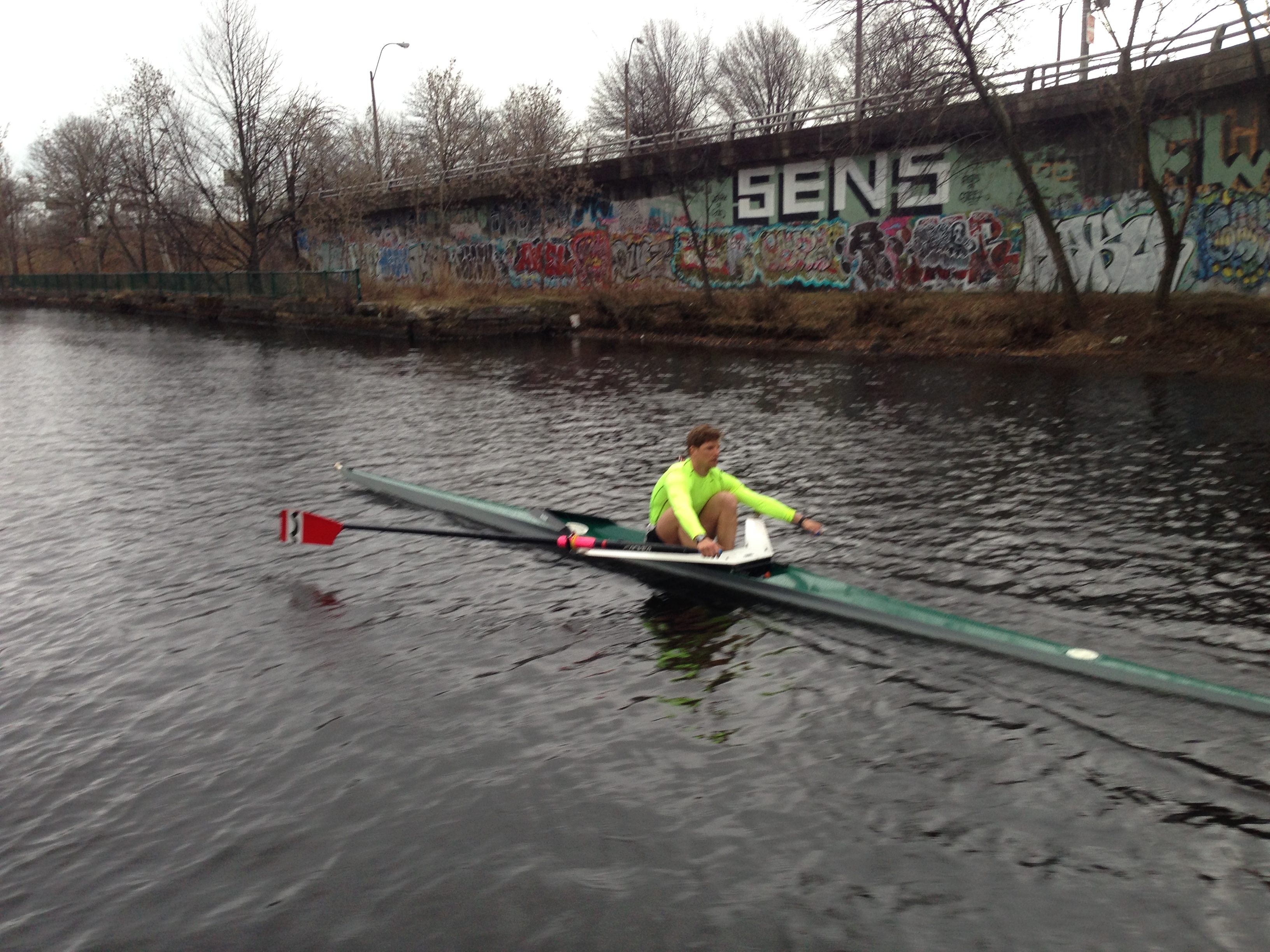
Here is Drew performing the Reverse Pic Drill in a single.  Think about how many hours of slow motion practice, balance, and boat feel it has taken for him to get to this point.  Look at where he slows things down to find better balance, feel, and connection to the boat and water.  For him to make this better and go faster at full speed, he will probably need to practice this even slower.  Now it’s your turn, get on an erg, setup a barbell, or get in a boat and master your movement skills with super slow motion.  It’s harder than you think.

Share your thoughts and experience to comments.

Video Review: The Reverse Pic Drill in a Single – What do you focus on when you Row?

Drew about to place the blades in at the catch.

Drew about to place the blades in at the catch.

When’s the last time you went for a row on the water or in the gym?  When’s the last time you warmed up for rowing?  When’s the last time you used Rowing as a warmup for something else?  For many of you rowing is either your main sport or a foundational training tool that you use to get in wicked good shape.  Regardless, anytime you pick up that handle you should be rowing with purpose and taking deliberate strokes.  So how do we develop purpose and deliberate practice?  A good place to start is the Reverse Pic Drill.

Every time I prescribe a rowing warmup I usually kick things off with the Reverse Pic Drill.  It’s a drill that includes 4 progressions:

Reverse Pic Drill:

1. Half Legs – Taking short strokes at the front end using the first 3 inches of the leg drive.

2. Full Legs – Slightly longer strokes pushing the legs all the way down.

3. Legs and Bodies – Longer strokes adding in the swing of the body.

4. Full Strokes – Full length strokes with the arms finishing the stroke.

When done well and with awareness this drill allows us to focus on three important skills with regards to rowing:

1. Posture – The Torso should be stacked and strong in a neutral and braced position at all points in time during the stroke.

2. Control – As the seat slides forward toward the catch it maintains a constant speed and does not accelerate into the catch.  With good control you should be able to stop at any point in time during the stroke and be in a strong position.

3. Connection – The hips and the hands move together into and out of the catch as if connected by a cable.  If the hips move, the hands should move the same distance, no more no less.  If you are connected you can also focus on your shoulders.  The hips, hands, and shoulders all move together in the first three inches of the drive.

I believe that if you can learn to do the Reverse Pic Drill correctly in your warm up, you can and will become a better rower.  The key is how you execute each progression and what you focus on.  Here is a video review of an elite rower I’m working with.  This is what the Reverse Pic Drill looks like in a single on the water. Check out what he’s doing well and what you can start to focus on every time you row.

If you’re interested in getting on the water, I will be organizing a sculling group to row out of Community Rowing Inc. in Brighton every Monday and Wednesday evening from 6:30pm – 8pm.  If you can fit that into your schedule I’d love to get you on the water.  We will be starting in May.  Shoot me an email (pat@renegaderowing.com) now and let me know if you’re interested.  I’ll keep you updated and get you setup to join us.

Let us know if you have any questions or thoughts in the comments!