I hope everyone enjoys Easter Sunday tomorrow and can spend some time with family and friends. Share if you do anything fun including family mobility or active recovery. Perhaps challenging your family to an Erg Relay?
All the Best!
Coach Pat
Rowing WOD:
8 x 500m w/ 2min Rest
Race Pace
Race Focus
Today’s all about prepping for your next 2k. Try to keep a consistent pace over all 8 or “negative split” toward the end if you’re feeling good. Negative splitting means you pull a faster split than you did the last piece.
As a quick review for novice rowers, race pace over 2,000m will be at a stroke rating of 28 − 32 strokes per minute and a consistent 500m split. The lower the split the better. Good things to focus on include breathing, getting the knees down, driving through the heels, quick hands, and being smooth. I also like to coach a smile or grin 10 just to take yourself out of your body for a second, have some fun, and then refocus with a fresh mindset. Focus on one positive thought for 10 consecutive strokes and you’ll be that much closer to your goal.
Post your split for each piece and share what you focused on!
**Hold the same stroke rating all the way through each piece, but vary the pressure with your legs depending on whether you’re rowing steady or 3 split seconds faster
This is a great opportunity to work on the rhythm and consistent effort needed in long WODs with movements like kettlebell swings and sumo deadlift high pulls. Focus on maintaining consistent pressure through each stroke and every piece. Rate of Perceived Exertion should be around 60% – 70%. Effort level on the last piece is open and should be based on how you feel. Set the monitor for intervals-time with 10 minutes of work and 1 minute of rest. During the rest stand up and stretch out your back and foam roll any areas that feel overly tense.
Novice rowers should focus on one part of the stroke for each piece, like a horizontal handle path or trying to row feet out.
Vets should be dialing in their consistency. During the last piece Vets should be focused on bringing their 500m split down as the stroke rating increases.
Look Familiar? If you can do a pistol you can get into a rowing shell!
Two very important skills required of elite athletes and rowers are balance and strength. Have you ever seen a standing shove? That’s the level of balance we need. Have you ever seen good scullers take the Weeks Turn or the Elliot Turn super tight during the Head of the Charles Regatta? That’s the type of strength we need to combine with balance and we need to have it in both legs independent of one another.
Mastering a pistol, or single legged squat, will help you develop both balance and strength. In order to do a good pistol mobility is super important. Be sure to work on mobility everyday. Below is a video I put together of all the different progressions I will use to help an athlete develop their pistol. See where you fall and then start working from there.
Have Fun training and let us know what you think of pistols!
When’s the last time you performed a Push Up or Pull Up? When’s the last time you Rowed? Now that we’re on the water it’s probably every day. Regardless, anytime you draw through the finish whether on an erg or in a boat, you are putting your upper body into a similar position and movement pattern as the push up and pull up. It’s the strongest, most efficient way to get yourself off the floor and send a boat. If you need to move more weight and create more power in a race you will need a strong position at the finish. That is where we can take advantage of practicing and training full range of motion push ups and pull ups.
I believe that if you can learn to move your body weight from the floor to a plank position or from underneath a bar to touching the bar with good form, you can and will become a better rower. The key is how you push, pull, and what you focus on. Here is a video review of Coach Pat and what he thinks about in regards to push ups, pull ups, and rowing. Check out what he does well and look for things he can do better.
What parts of these movements can we tie to the rowing stroke? I always teach the skills of 1. Posture, 2. Control, and 3. Connection whether it’s rowing or strength training.
1. Posture – How am I doing at maintaining a solid brace through my torso? Is there any movement within the vertebrae of the spine?
2. Control – Is my body in one straight line the whole time I perform the movement? Am I in control of my body at all points in time? Can I stop at any point in time and be in a strong position?
3. Connection – How are my hands connected to the box/bar/or floor? How are my feet connected to the floor? Are my hips, torso, and shoulders connected and moving together through the whole range of motion?
After taking a look and answering some of these questions, think about your own stroke. In the front end of your stroke, from 1/2 slide up to the catch and back, how do your joints move in relation to one another? Can you stay connected? Do you break or tense your arms early? Is your shoulder and upper body strong enough to connect the power coming from your legs to your hands? Do you feel or see any similarities when you perform push ups, pull ups, and rowing back to back? How’s your posture and brace at the finish? Can perfecting these movements help improve your rowing?
Please share your thoughts to comments and I’ll get back to you with feedback.
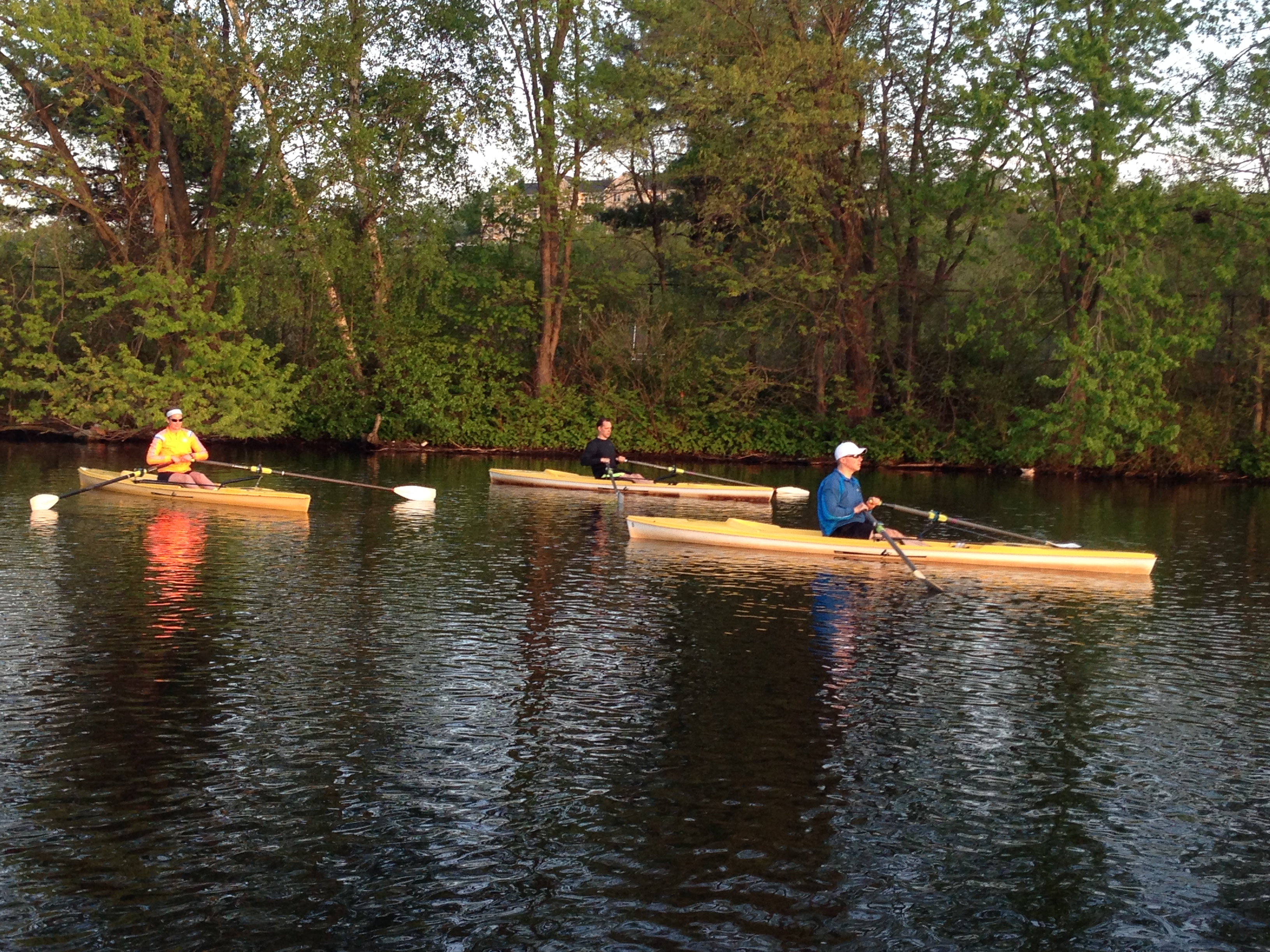
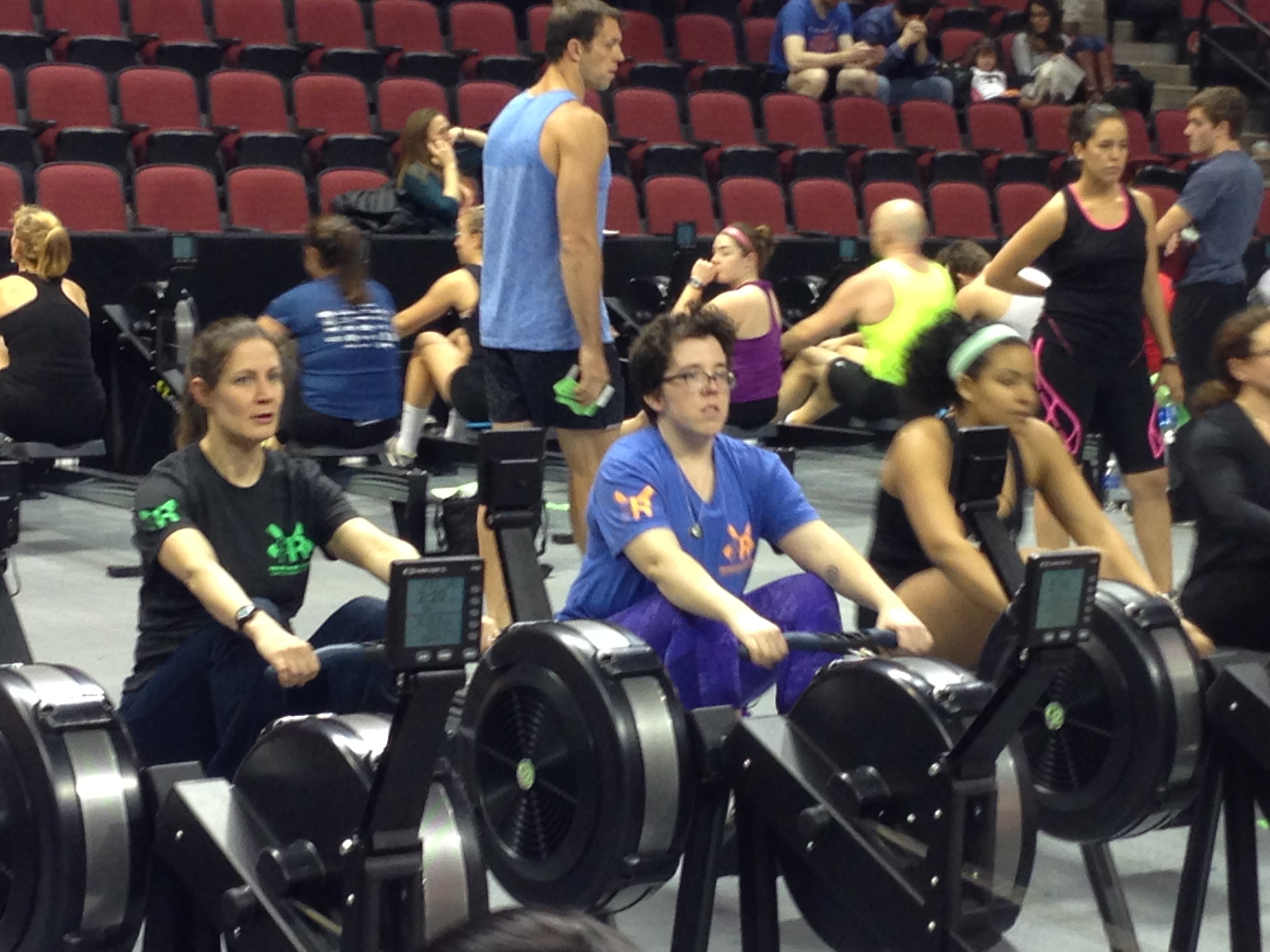
Now that we’re back on the water it’s time to start thinking about moving boats. What are you doing at each end of the stroke to help move your boat and maintain maximum boat speed? Here are two video reviews to help you find opportunities to move your boat better. One video is of steady state rowing and one video is of race pace rowing. Take a look and see how they can help you. What is going well? What areas can you also work on? Are you focused on rowing on the erg as if you were going to row on the water? Please share your thoughts in the comments section and consider joining Renegade Rowing this Spring.


 Renegade Rowing