Rowing WOD 11/12/14: “Jackie” Ladder – 1,000m Row, 50 Thrusters, 30 Pull Ups, 50 Thrusters, 1,000m Row – Post Time and Avg Splits

Rowing WOD:

RR Team back on the water! Hopefully this summer we'll be able to do "Jackie" on the water! Let us know if you want to join in!

“Jackie” Ladder

For time:

Row 1,000 meters

50 Thrusters (45 pounds)

30 Pull-ups

50 Thrusters (45 pounds)

Row 1,000 meters

The Girl WODs were introduced as benchmark workouts to measure your performance and improvements throughout your training.  Today’s Rowing WOD is a pumped up “Jackie”, a newer girl, aimed at measuring your efficiency and performance through three different full body movements.  It’s a great workout to test how well your technique has developed.  Ideally you’ll be able to hold a consistent split all the way through and leave your legs just fresh enough to go unbroken on the thrusters.  Before you start take some time to think about your game plan, the split you want to hold, how you’ll break up thrusters, and how to game the pull ups.

For the Renegades I’m going to recommend gaming this just like a 2k.  Good start, settle, and be consistent through the first 1k.  I’d suggest holding a split around 2k+5 to 2k+7 at a 28 stroke rating.  Split up the Thrusters to stay fresh on the front and back side.  Be sure not to tear on the pull ups.  For the last 1k just get right to the same split you were holding in the first 1k and then sprint when you get to the 250m mark.  Have a game plan and stay focused when the going gets tough.  If you can stay positive and mentally strong through this wod, you should be able to do it in just a 2k.

Renegade Rowing League is coming up November 22nd!  Don’t forget to sign up!

Post your time and average splits to comments!

What kind of Renegade are you? How many training blocks do you need in a week?

Renegade Rowing Athlete TemplateToday is usually a Rest Day, however I released a new training plan template earlier this week that includes an Endurance/Active Rest Block and an Olympic Lifting Block.  Depending on what type of Renegade Athlete you are you may want to take a rest day or you may need to hit one or both of those blocks.

In the coming week I’ll be highlighting the different types of athletes that have given Renegade Rowing a shot.  I hope to shed some light on the possibilities that exist in developing a broad, general, and inclusive fitness to allow for sport specific performance no matter what level you’re at.  One group I’m working with is 4 High School Rowers who train with me three times a week in order to prepare for making their team and the rigors of winter training.  A second group is the Boston College Men’s Crew Team, who not only rows on the water most days of the week, but manages to get in to the gym once or twice to get stronger and become more dynamic athletes.  A third group includes members of CrossFit Boston who would like to compete at CRASH-B’s and learn to race on the water.  And last, but definitely not least I’m privileged to help a competitive masters rower fight his way to elite status.  All of these athletes have different needs and the template I’ve created is a step in the right direction of helping them find the right amount of general and specific preparedness to reach their goals.

Please take a look at the Renegade Rowing Athlete Template below and share your thoughts on where you are and how many blocks you currently use in training.  I will be making adjustments as we go and continually striving to give you good examples of how this works and why it works.

RR Athlete Template

Renegade Rowing Training Plan Template

RRTP 11-3-14

Rowing WOD 11/4/14: 1k, 6x250m, 4x:45 On, :15 Off – Post # of Strokes at Goal Split

**Yesterday I released the Renegade Rowing Training Plan Template and this week’s programming.  Here is some detail on the Race Prep Block that the Renegade Rowing Club will be performing at 6am.  Here are the template and this weeks programming one more time…

Renegade Rowing Training Plan Template

RRTP 11-3-14

Rowing WOD:

c/o Row2k.com

c/o Row2k.com

1. 1k Row @26 s/m

– Moderate Intensity (Row like you’re out for a steady jog)

*Note your average split for 1k

2. 6 x 250m Row w/ :30 Rest

– Row each piece at the average split from the 1k above

– Stroke Ratings are as follows:

@22 s/m, @28 s/m, @24 s/m, @26 s/m, @24 s/m, @26 s/m

3. 4 x :45 On, :15 Off

**Practice each piece as if it were the start of a 2k

**When you settle count the # of strokes where you hold your goal 2k split

For the first part of today’s Rowing WOD, row at an intensity similar to Jogging focusing on Smooth Form and Body Preparation by 1/2 Slide.  Try to incorporate the ideas and skills of Posture, Control, and Connection.  Today we’ll be working on ratio at different stroke ratings and varying the pressure we exert each stroke.  At lower stroke ratings like 20 − 24, the ratio should be 1:2 or 1:3, 1 count on the drive, 2 or 3 counts on the recovery.  By controlling our seat as it slides forward we can make sure we’re preparing our bodies for the catch.  The goal is to turn our force and momentum around without any extra effort.  Remember, we want to drive our body weight backwards toward the finish line, not throw it forward toward the Catch/Start of the Race.

When varying stroke rating during a piece use the pressure with the legs on the drive and the speed of the hands through the finish to vary the rating.  If you want to increase the stroke rating and maintain power, think “drive the legs down faster and quick hands away” out of the finish.  If you want to decrease the stroke rating without losing power, keep the same pressure on the drive and hand speed through the finish, but slow the seat down as it slides forward on the recovery, this is what I mean by “Control the Recovery”.

The goal for these pieces is to learn how to vary the pressure at different stroke ratings while maintaining the same split.  The idea being that eventually we’ll find an optimal stroke rating where you just keep spinning the flywheel every stroke without letting it slow down to much and thus save energy and avoid fatigue.  What we’re ultimately working towards is Efficiency!  Instead of slogging along and duking it out at a slower stroke rating like a 24 for our 2k, we want to be able to row quick and light between a 28 − 32 when needed.

For the third part of the workout you’ll row like the start of a 2k race.  Perform a 3 stroke starting sequence (Half Stroke, 3/4 Stroke, Full Stroke) then a High 10, then settle to your 2k race pace for each of the 4 pieces.  The goal is to learn how to get the flywheel moving and the split down without jacking up your legs.  Then the even bigger goal is learning how to settle immediately to you’re race pace and be consistent.  Count how many strokes you can take at your 2k pace once you settle, no higher, no lower.
In terms of preparing to race 2,000 meters, the goal is to continue building our confidence in maintaining a consistent split as well as develop the ability to change our Ratio/Rhythm as we row at different Stroke Ratings.  We want to get a taste of what the start will be like and what is required to settle to race pace so we don’t Fly and Die!
Post your best :45 second start and settle.  How many strokes did you take at your goal 2k split?
Rowing WOD 10/27/14: 5k Test – Post Results

Rowing WOD:

Home stretch at HOCR!

5k Test

It’s been about a month since our last 5k, how has your aerobic capacity and endurance improved?  Today’s assessment will give you an idea of both your aerobic capacity and endurance.  Set your monitor for 5,000 meters and get after it.  Be sure to record your time, average 500m split, average stroke rating, and average watts.  This will give you an idea of your work capacity over about 20 minutes.

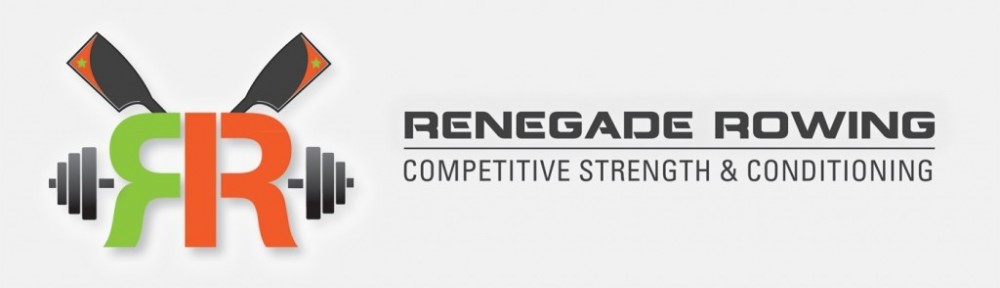
The Head of the Fish was last weekend and the Head of the Charles was the weekend before.  They were both awesome.  Beautiful weather, tons of boats, and lots of hard work paying off.  For many crews the Charles and the Fish are the end of the road in the fall or at least the last big regattas.  Before we head indoors for the winter it’ll be good to know where we stand.  That’s what this week is for.  Also, if you’ve never done a 5k this will give you a sense for what the Head of the Charles is like.  Just imagine an ever-changing stadium around you with killer bridges and collisions galore as you row.

For those wondering why we’re doing such a long test and how to attack it, think of this as a Girl Wod like “Mary”.  The athlete who can efficiently and effectively move their body weight will be able to consistently do more work aerobically without having to dip into anaerobic energy stores.  Also, when tackling “Mary”, good competitors will go in with a game plan based on what they know they can maintain.  The first couple of rounds may be used to ease into the work without flying and dying.

Whether you’re a Vet or Novice, the goal should be to maintain a consistent 500m split and stroke rating throughout the whole piece.  If this is your first 5k aim to build your confidence by negative splitting.  Start the first 1k at a moderately hard pace that you can consistently hold.  Then every 1k after that try to pull a little bit faster, perhaps 1 split second every 1k.  What you should avoid is going out to hard, say 1:45 /500m, and then dying half way through to limp in at a split of 2:00 /500m.

Novices should try to maintain a stroke rating of 24 to 26.  Vets should work on executing a race plan, maintaining their splits, and rowing at a stroke rating of 26 to 28.

Let us know how you do!  Post your results to Comments.

Rest Day 10/26/14: Good Luck at Head of the Fish!

HOCR 2014 DrewRest Day:

Good luck to all of the competitors at the Head of the Fish Regatta in Saratoga, NY this weekend!  The Boston College Men’s Crew Team has been working hard all season.  Have fun and race hard everyone!