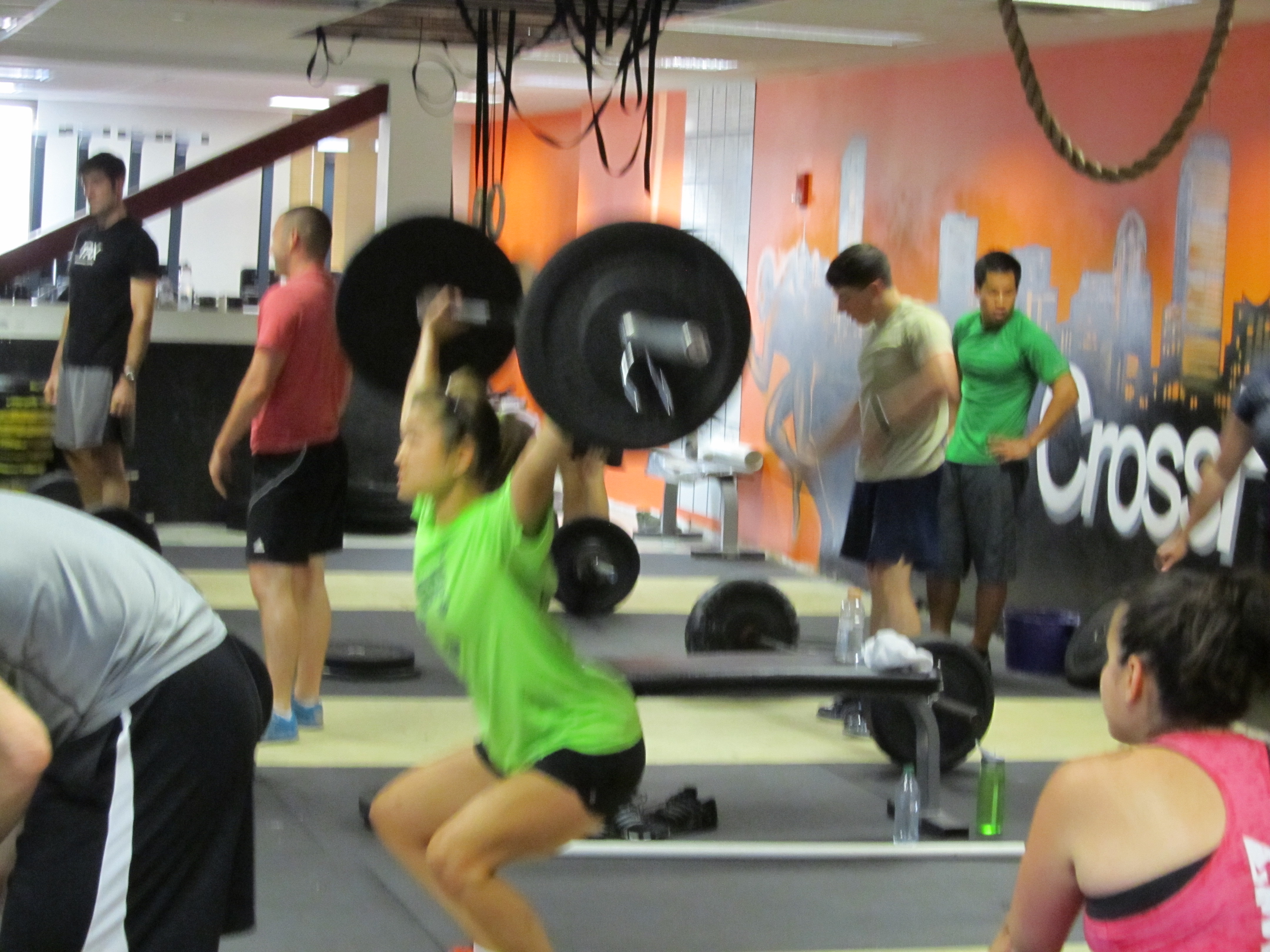
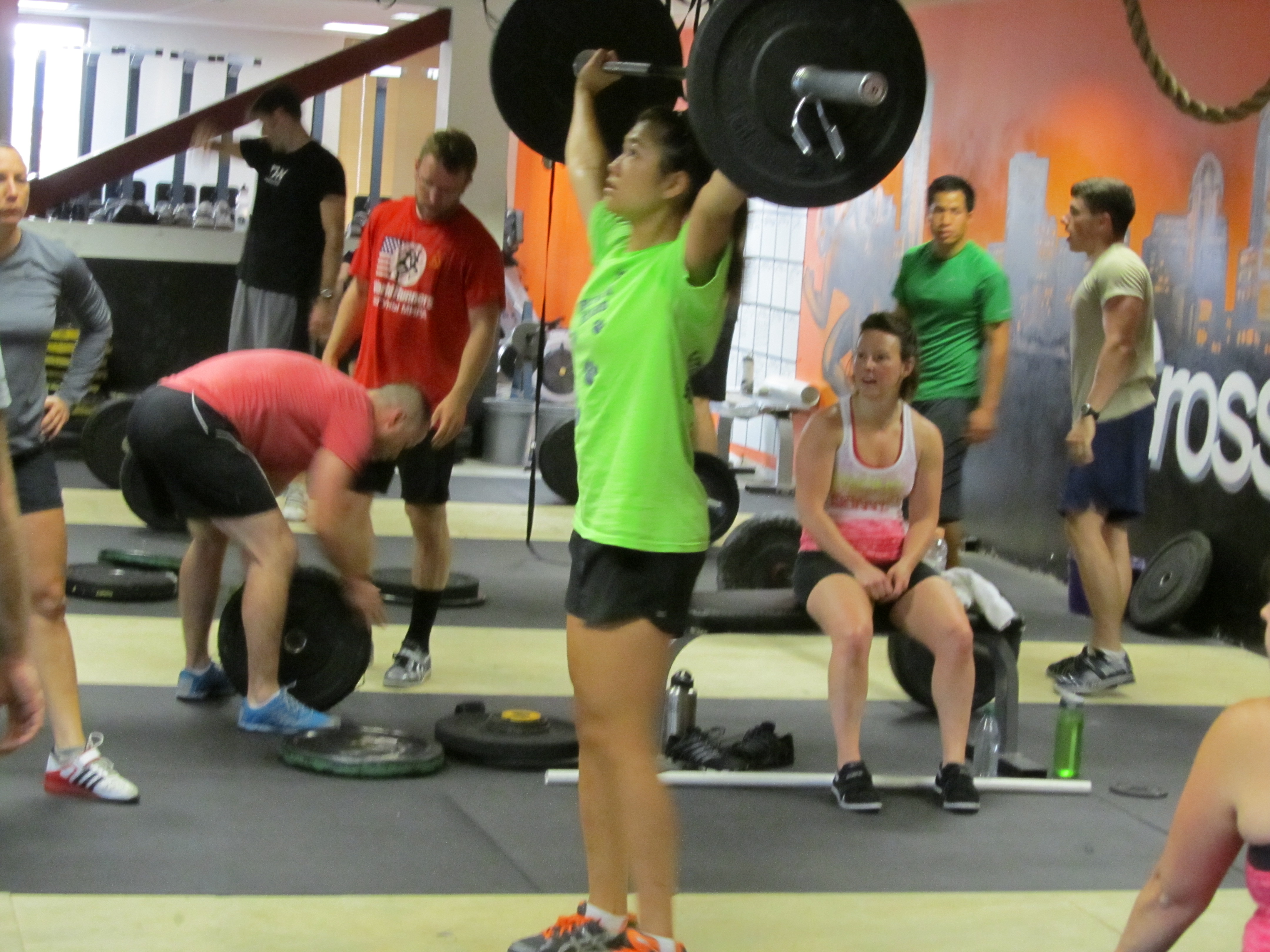
What do you think about using Olympic Lifting in training to be a Rower or using Rowing to be a better Olympic Lifter? Both require speed and power and incorporate similar movement patterns. However, in rowing you sit down and are in contact with three surfaces. In Olympic Lifting you are only in contact with two. In Olympic lifting the goal is to transfer forces vertically and in rowing the goal is to transfer forces horizontally. Where do you see the most benefit in training with both? Are there downfalls?
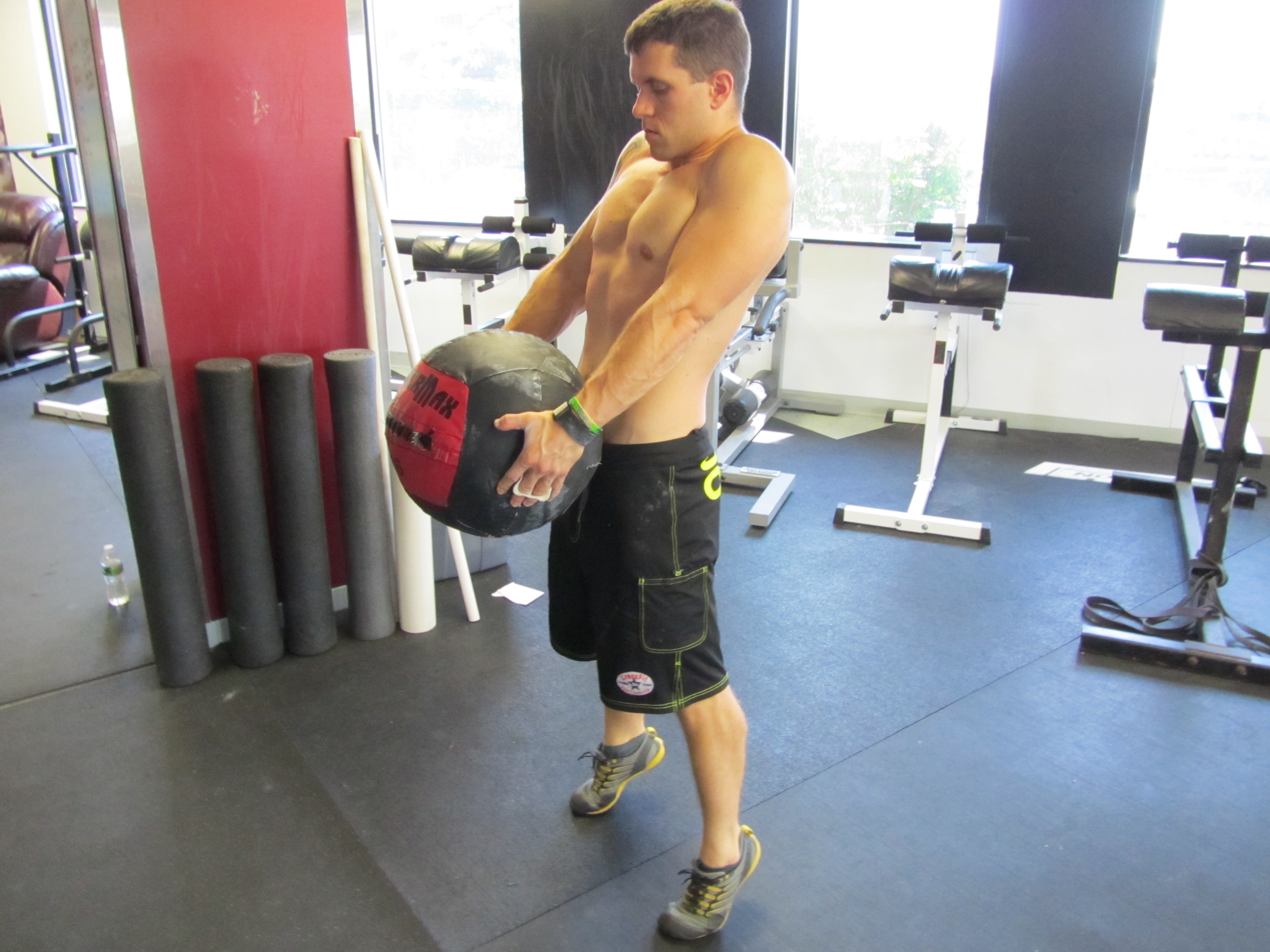
Work for fluid triple extension as you “jump” the ball off the ground.
Rowing WOD 11/28:
For Time …
500m Row, 5 Medicine Ball Cleans (20/14 lb)
400m Row, 10 Med Ball Cleans
300m Row, 15 Med Ball Cleans
200m Row, 20 Med Ball Cleans
100m Row, 25 Med Ball Cleans
The ability to work at high intensity depends largely on mechanics and consistency. If your rowing is smooth and efficient you should be able to push this Rowing WOD and hold sub-2k pace for every piece. A good goal might be to hold your 2k split for every piece or negative split so that each piece is one split second faster. Same goes for the medicine ball cleans. If you can focus on using the legs and hips to move the ball, then your arms will remain loose and fluid providing a greater efficiency of movement. This will allow you to push the pace and go unbroken for every round. Try to only pause for brief breaks in between exercises if you have to. If you don’t have a medicine ball to clean than you could modify with a loaded back pack or just make the movement a Dumbbell Clean. No matter what focus on good overall movement and ensure you have the mechanics and consistency dialed in during your warmup.
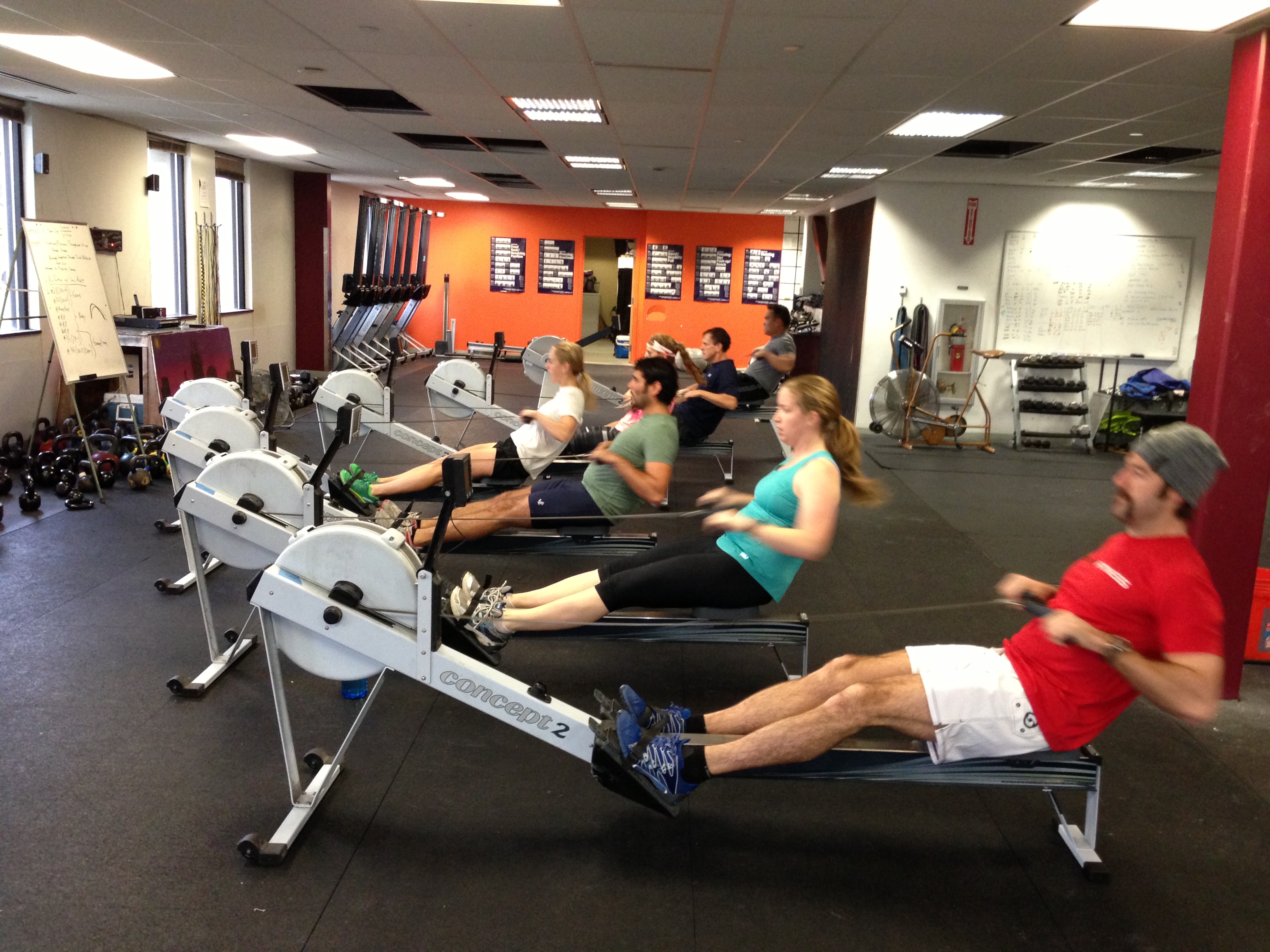
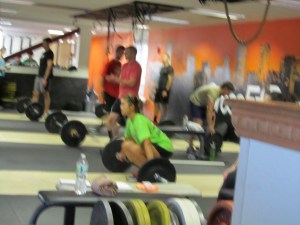
Yeah finish timing! The Renegade Rowing Club warming up as a Team.
Rowing WOD 10/27:
10 x 250m w/ 1 min Rest
Row it like your 2k race plan!
Have you ever gone into Fran or Jackie without a game plan? Perhaps newer folks have, but those with experience know the benefit of pacing, gaming, and executing a plan to produce a personal best performance. In the end a game plan facilitates mental toughness and focus to deal with pain when things get tough.
The second race of the Renegade Rowing League will be on December 15th. In order to prepare for competing at the 2k distance both in the Renegade Rowing League and the CRASH-Bs come February, the programing will be geared toward different distances and mentalities to build confidence in executing a race plan over 2,000m.
Today’s focus is executing a 2k race plan at high intensity. Set the monitor for intervals distance with 250m of Work and 1 minute of Rest. Row the first two pieces as if they were the start of the 2k. Row the next three pieces as if they were part of the second 500m, Row the next three pieces as if they were part of the third 500m, and finish the last two pieces with a sprint like the end of a race.
This should not be an all out 250m Max Row, but rather a calculated effort at a split close to what you think your current 2k split would be. The goal should be to pull the lowest split possible, consistently through all 10 intervals. For example: alternating between splits of 1:50 and 2:00 is inefficient. Instead consistently pull 1:55 every interval.
Post your Average Splits to comments.
*** Renegade Rowing Club ***
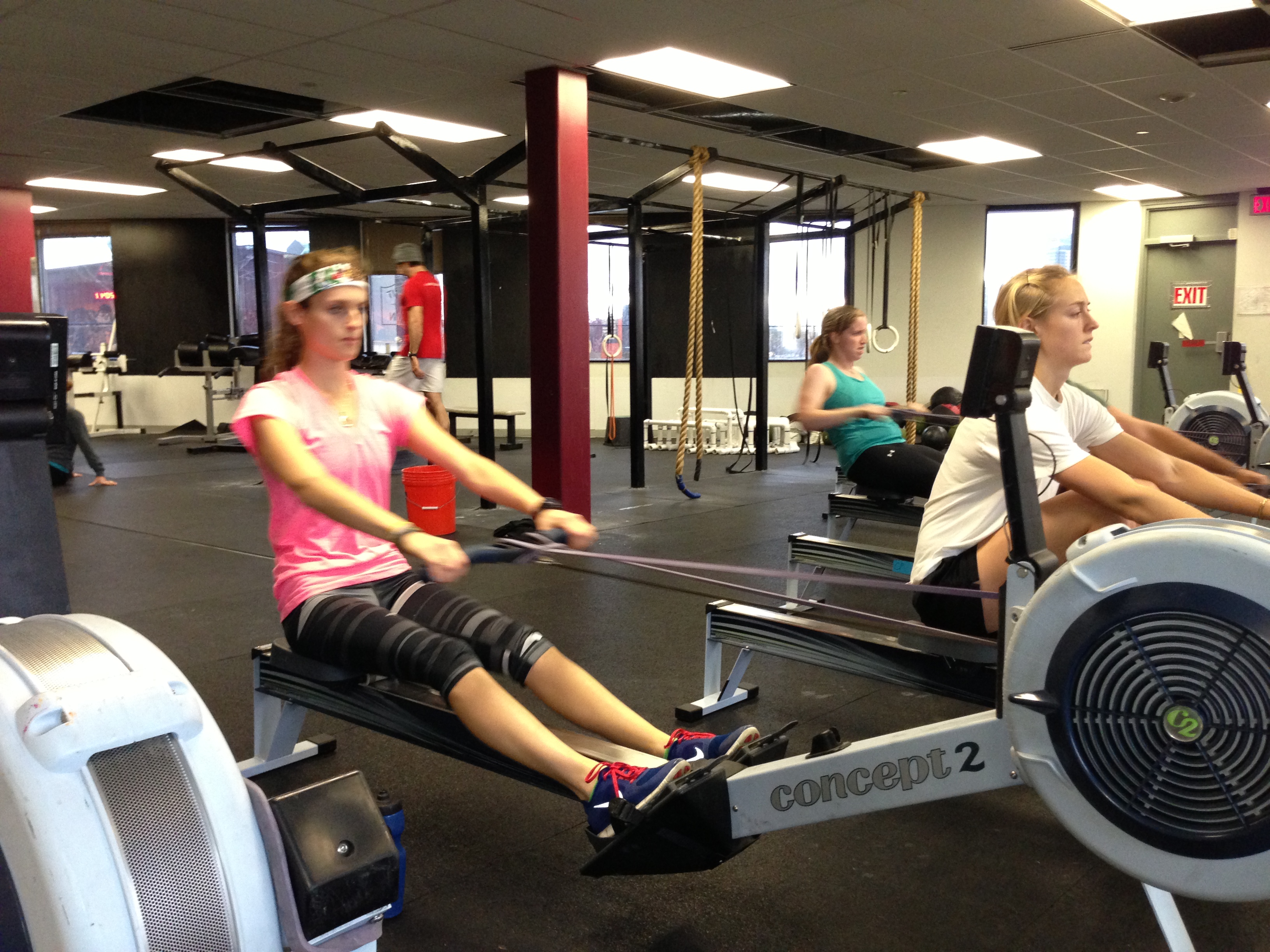
For those attending Renegade Rowing Club tonight we’ll be working on speed deadlifts as part of the warmup and drill section of practice. We will also review the feet out and banded rowing drill we worked on last week. Here is an example of what you can do by rowing feet out and banded.
Prepare your body earlier in the recovery for a better catch.
Rowing WOD 11/26:
1k @24-26 s/m (note average 500m split)
4′ rest
3 x 3’ On 1’ Off as follows (holding 1k split):
3′ @26 s/m, 25 s/m, 24 s/m
(rate changes every minute)
3′ @25, 24, 23
3′ @24, 23, 22
4′ rest
2 x 3’ On 1’ Off as follows (holding 1k split):
3′ @26, 24, 22
3′ @24, 22, 20
One thing that all good athletes have in common is a sense of efficiency. The athlete that can maintain proper mechanics and spend the least amount of energy to complete a task will be able to push harder and farther compared to the athlete that just flies and dies. Todays Rowing WOD introduces a key concept to being efficient in rowing and may improve your efficiency in longer wods.
Start the workout by rowing 1,000m at 24-26 strokes per minute. Effort should be about 60% – 75% as if you were jogging a half-mile, don’t go all out. The average split for the 1k will be your goal split to hold through all of the 3 minute pieces. Set the monitor for 3′ of work and 1′ of rest. Each 3-minute piece is broken into 1-minute sections that should be rowed at the designated stroke rating.
In order to hold the goal split while decreasing the stroke rating you must perform a ratio shift. A ratio shift changes the timing of the stroke on the drive and the recovery. For example, shifting from 1 on the drive: 2 on the recovery, to 1 on the drive: 3 on the recovery. This is a challenging workout. Use it to develop a sense of efficiency. A proper ratio shift maintains the power per stroke but allows the rower time to breath and prepare for the next stroke.
Post Total Distance and your Experience with ratio shifts.
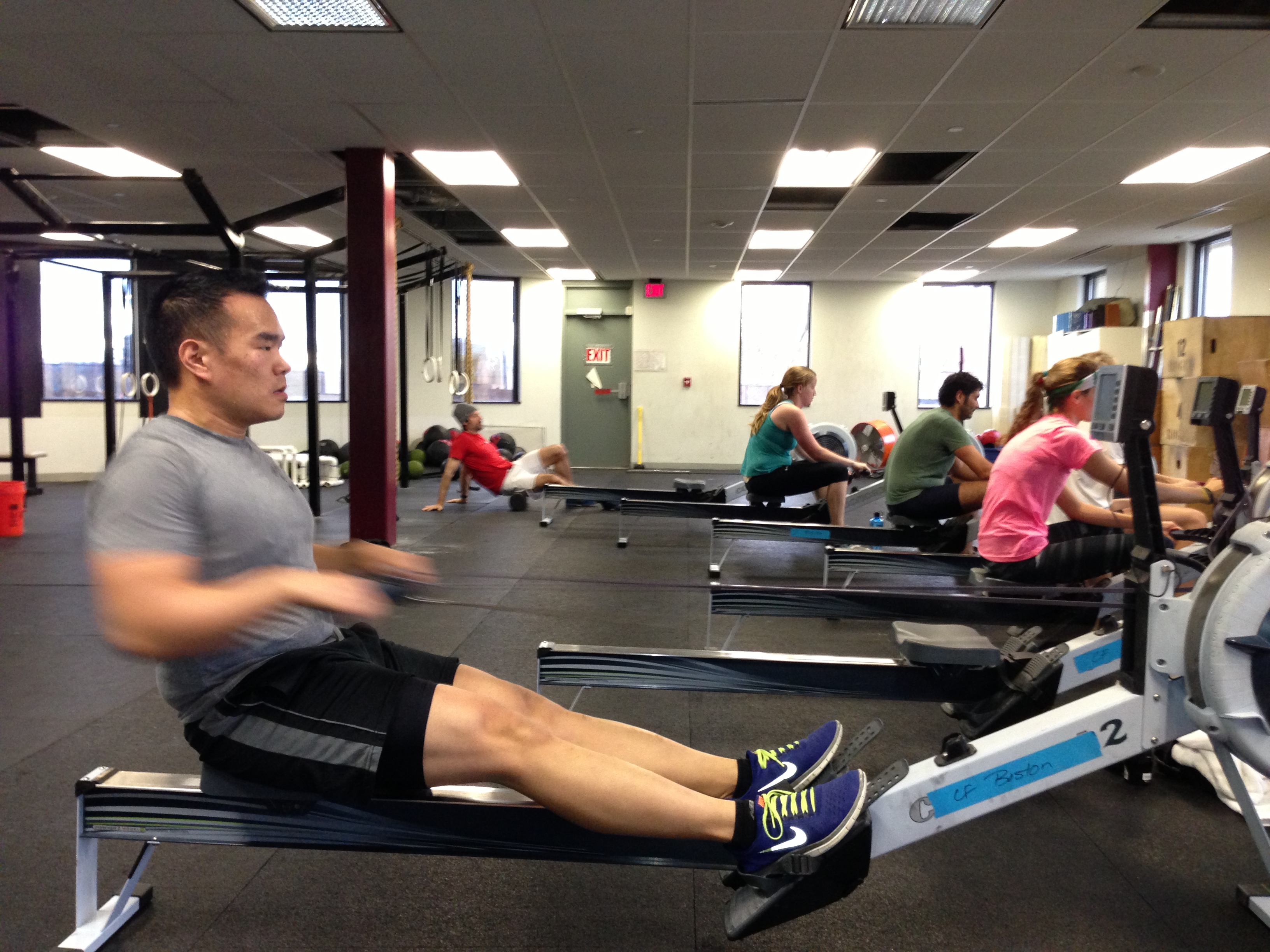
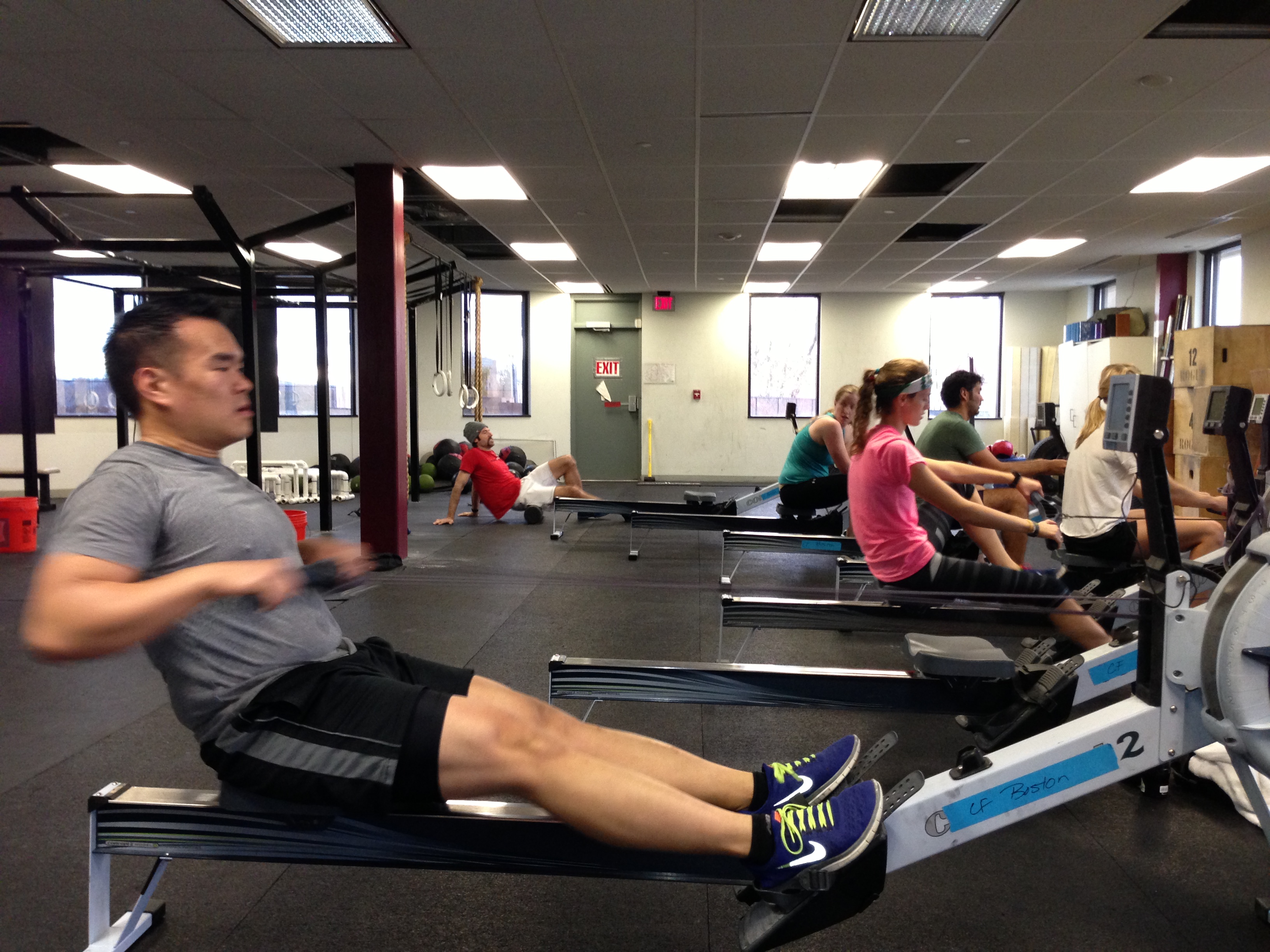
Below are some pictures of Mike T. on Saturday after working on staying connected through the finish. What does your finish look like? Is it efficient? How fast do your hands move through the finish? … Just a few things to think about as we continue to work on suspension through the stroke and balanced finishes.
If you want to be your best you’ll need others to push you and help you be your best in training. Checkout how the Renegade Rowing Club pushes and supports each other even in their warmup. Surround yourself with good people and the possibilities are endless.
Share your team to comments even if it’s a solid training partner. They’re priceless!
 Rest Day 11/29: