How to do a Strength Block and Preparation vs. Competition – Share your thoughts/questions/results

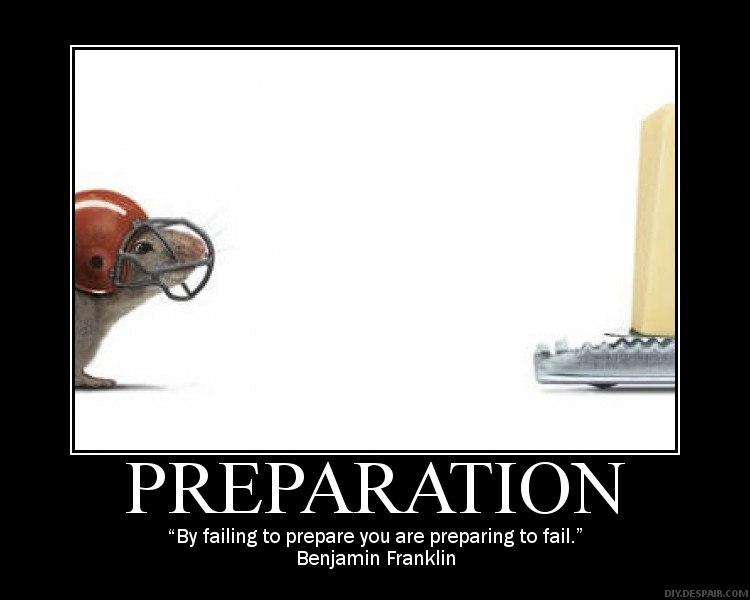
preparation_mousetrapPreparation vs. Competition

In our plan one week will be a microcycle. Our microcycles can be classified as either preparation or competition. During a preparation microcycle a fitness block and/or a rowing block will be introduced and then repeated the following week. In the following week, aka – competition microcycle, those blocks will be repeated and individuals will be expected to compete and try to better their performances from the preparation microcycle.

This week is a great example.  Today is a Re-Test of “Nancy in a Boat”, which was introduced last week.  Last week was a preparation microcycle and this week is the competition microcycle.  If you did “Nancy in a Boat” last Wednesday and you are attacking it again today your goal should be to hold more consistent splits and move a little bit faster in both your rowing and your overhead squats.  Last week you prepared.  This week you drop the hammer and compete.  Have fun and get after it!  Let us know how you do and if you were able to improve.

How to do a Strength BlockShoulder Press_Boat Handling
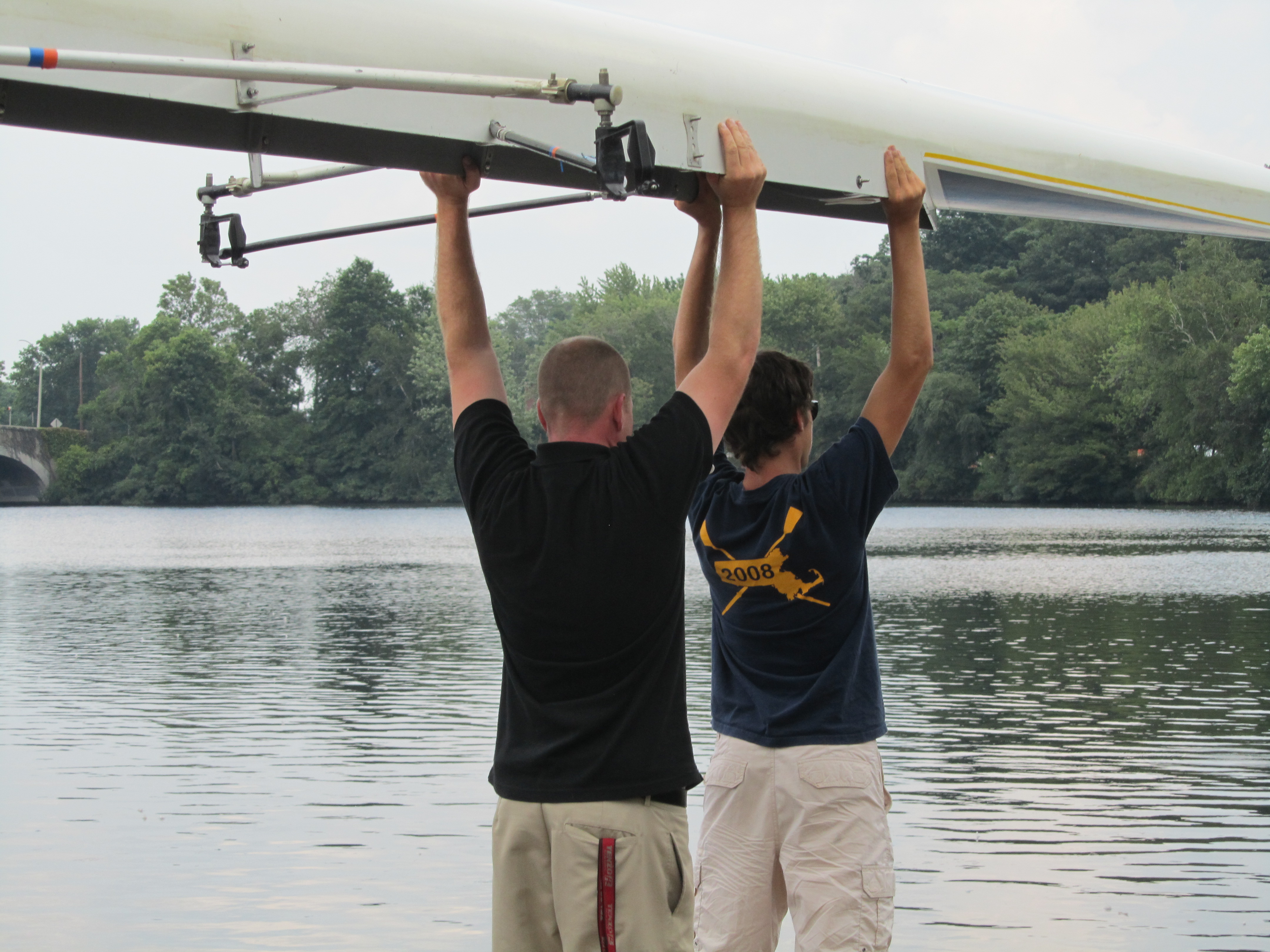
Today’s Strength Block is 3×8 Shoulder Press.  What does that mean and what should you be doing?  To start, 3×8 Shoulder Press means your work should include 3 Sets of 8 Repetitions.  I will always write it this way, unless of course I specify something different.  Also, if there is no prescribed weight or percentages given then you are expected to work up to where the X rep( 8th in today’s case) is very difficult without compromising form.  Once you get to this point you have completed your first working set.  You should then complete the remaining working sets at this weight.

The above description addresses the prescribed work that is programmed in a Strength Block each week, for example: 3×8 Deadlift, 3×8 Back Squat, or 3×8 Shoulder Press.  In order to get the most out of a Strength Block you should be doing more than what is prescribed for that week.  Some weeks I will specify what that extra work should be, but otherwise your Strength Block should be carried out in the following order…

1. 5-10min Aerobic WarmUp – Bike/Run/Row

2. Foam Roll (5-10 Slow Rolls of the following areas)

  • IT Bands
  • Quads
  • Adductors
  • Calves
  • Hamstrings
  • Hip Capsules
  • T-Spine (Thoracic Spine)
  • Shoulders

3. 4-8min Specific Mobility

  • If you found tight or angry areas in the foam roll, use this time to mobilize those areas.
  • Otherwise, take this time to mobilize the muscle groups that will be used in the Strength Block.

4. 10-15min Dynamic WarmUp (Pick and Choose what is needed based on the Strength Block)

  • The following exercises can be done in place if needed, but in the interest of becoming more athletic try to find a 10-15 yard area to do this warmup.  Do the first exercise to half-way and the second exercise for the second half.  Then Jog Back.
    • Quad Stretch / Single Leg Flexion
    • Inch Worms / Bear Crawls
    • Toy Soldiers / Airplanes
    • Over the Fence – Under the Fence
    • Charlies Angels (Knee Hug, Lunge, and Twist)
    • Skipping
    • Quick Skip
    • Skips for Height
    • Skips for Distance
    • Burpee Broad Jumps
    • Butt Kicks / High Knees
  • Then in place, Finish with:
    • 40 Jumping Jacks
    • 20 Air Squats
    • 10 Push Ups

5. 15 min – Renegade Rowing Strength Warm-up

  • Complete 2-3 Rounds (10-15 Reps of Each)
    • :15 Samson Stretch
    • Overhead Squat w/ PVC Pipe
    • Push Ups
    • Pull Ups
    • Bird Dogs
    • Dying Bugs
    • Dips

6. 15-20min – Performing the Prescribed Strength Work for the day as stated at the top.  Be sure to include an adequate amount of warm up sets.

7. 5-10min Mobility and Foam Rolling – Help kick-start the recovery process and stretch/smash whatever was used or taxed in the workout.

Work on your Goats!

Depending on how much time you have to train and what the focus of the Strength Block is, you can do all of the above or take out certain pieces in the interest of time.  However, try to keep the pieces that you’re bad at and need to work.  We will never improve if we don’t work on what we’re bad at.

Give today’s Strength Block a shot and let us know how you do.  Post your results to comments and let us know if there are any questions.


Rest Day 11/13/14: Video Review – How can Nick help you?

Today’s programming is either an endurance block, olympic lifting, or active recovery.  If you’ve been training hard all week and you’re a little banged up from the last couple of days be sure to mix in some active recovery with yoga, a light row, or even just a walk along the river with some mobility and stretching mixed in!

Below is a little video review to check out while you’re recovering.  The video is of Nick A. who just started back up with the Renegade Rowing Club after rowing on the water all Summer/Fall.  He’s a competitive rower with lots of experience and he’s looking to keep raising his game by getting stronger and finding more speed wherever he can.  Take a look at the video and see what he does well and look for things that you might be able to improve as well.  If you have any questions please let us know in the comments and I’ll do my best to get right back to you.

Can we be Pro Athletes? Yes, No, or Maybe?

Today's programming from The Renegade Rowing Training Plan for the week of 11/3/14

Today’s programming from The Renegade Rowing Training Plan for the week of 11/3/14

Today’s programming contains workouts at both ends of the rowing and training spectrum.  There is a 50min row with varying stroke ratings to build rhythm, form, and cardiorespiratory endurance.  There is a strength and conditioning workout with front squats and wall climbs to develop strength and bear crawls and double unders to develop endurance.  Last but not least there is a lift to develop strength in the shoulders.  How do you choose what to put into your workout and where do you spend your time?

In order to help answer that question I like to think about pro athletes.  What do they have that allows them to know what to do in a given day?  They have professional coaches.  They’re getting paid to figure it out and they have all day.  They have awareness of their strengths, weaknesses, bodies, and minds.

HOCR 2014 DrewSo can we be pro athletes?  Yes, no, and maybe.  It is possible these days for any athlete no matter what level to get a coach to help figure things out.  It’s probably not possible for everyone to get paid to train or more importantly to have enough time to fit everything in.  Last, it may be possible for any athlete to be aware of their strengths, weaknesses, bodies, and minds, but it’s up to them to have an open mind, feel what’s happening, and be willing to reflect on a regular basis.

The short answer to what you should choose to do today is to work on your weaknesses. Do you need more endurance?  Focus on quality and form in the Rowing Block.  If you need to become more athletic and build some strength and power then focus on the Fitness and Strength Blocks.

However, if you’re like me and you want to continuously improve then the short answer isn’t always good enough.  In order to become more like pro athletes we must strive to find good coaches.  We must find teams and training groups that will hold us accountable and push us.  Lastly, we must make the time to reflect on what we’re doing and how we can do it better.

I bring all of this up because today I had the privilege of working with a rower who has been on a mission to solve a back injury, continue to row and compete, and do whatever she wants to in life.  She’s done it by acting like a pro athlete.  She’s worked with various coaches, doctors, chiropractors, physical therapists, and specialists.  She’s joined a boathouse and a team to help push herself.  Lastly, she’s made time to get to practice early and stay late to think, feel, and figure out what is limiting her through reflection, strength training, and mobility.

BC Men BargeThe question that she brought up today is one that I continually ask myself.  Why can’t everyone be pro athletes?  Why can’t athletes find coaches who care and use positivity and constructive criticism?  Why don’t athletes take the time to learn new skills and tools for getting stronger and recovering?  Why do athletes limit themselves to one sport instead of cross training and becoming more well-rounded?

I know not everyone has these problems, but I hope that with Renegade Rowing I can help more athletes learn new skills, develop more awareness, and become firsthand athletes who continually learn and reflect.

If there is something you’re looking for or don’t understand, please let me know and I’ll do my best to get you an answer and improve the tools that Renegade Rowing has to offer.

Have an awesome weekend and stay warm if you’re in New England!

What kind of Renegade are you? How many training blocks do you need in a week?

Renegade Rowing Athlete TemplateToday is usually a Rest Day, however I released a new training plan template earlier this week that includes an Endurance/Active Rest Block and an Olympic Lifting Block.  Depending on what type of Renegade Athlete you are you may want to take a rest day or you may need to hit one or both of those blocks.

In the coming week I’ll be highlighting the different types of athletes that have given Renegade Rowing a shot.  I hope to shed some light on the possibilities that exist in developing a broad, general, and inclusive fitness to allow for sport specific performance no matter what level you’re at.  One group I’m working with is 4 High School Rowers who train with me three times a week in order to prepare for making their team and the rigors of winter training.  A second group is the Boston College Men’s Crew Team, who not only rows on the water most days of the week, but manages to get in to the gym once or twice to get stronger and become more dynamic athletes.  A third group includes members of CrossFit Boston who would like to compete at CRASH-B’s and learn to race on the water.  And last, but definitely not least I’m privileged to help a competitive masters rower fight his way to elite status.  All of these athletes have different needs and the template I’ve created is a step in the right direction of helping them find the right amount of general and specific preparedness to reach their goals.

Please take a look at the Renegade Rowing Athlete Template below and share your thoughts on where you are and how many blocks you currently use in training.  I will be making adjustments as we go and continually striving to give you good examples of how this works and why it works.

RR Athlete Template

Renegade Rowing Training Plan Template

RRTP 11-3-14

Rowing WOD 11/4/14: 1k, 6x250m, 4x:45 On, :15 Off – Post # of Strokes at Goal Split

**Yesterday I released the Renegade Rowing Training Plan Template and this week’s programming.  Here is some detail on the Race Prep Block that the Renegade Rowing Club will be performing at 6am.  Here are the template and this weeks programming one more time…

Renegade Rowing Training Plan Template

RRTP 11-3-14

Rowing WOD:

c/o Row2k.com

c/o Row2k.com

1. 1k Row @26 s/m

– Moderate Intensity (Row like you’re out for a steady jog)

*Note your average split for 1k

2. 6 x 250m Row w/ :30 Rest

– Row each piece at the average split from the 1k above

– Stroke Ratings are as follows:

@22 s/m, @28 s/m, @24 s/m, @26 s/m, @24 s/m, @26 s/m

3. 4 x :45 On, :15 Off

**Practice each piece as if it were the start of a 2k

**When you settle count the # of strokes where you hold your goal 2k split

For the first part of today’s Rowing WOD, row at an intensity similar to Jogging focusing on Smooth Form and Body Preparation by 1/2 Slide.  Try to incorporate the ideas and skills of Posture, Control, and Connection.  Today we’ll be working on ratio at different stroke ratings and varying the pressure we exert each stroke.  At lower stroke ratings like 20 − 24, the ratio should be 1:2 or 1:3, 1 count on the drive, 2 or 3 counts on the recovery.  By controlling our seat as it slides forward we can make sure we’re preparing our bodies for the catch.  The goal is to turn our force and momentum around without any extra effort.  Remember, we want to drive our body weight backwards toward the finish line, not throw it forward toward the Catch/Start of the Race.

When varying stroke rating during a piece use the pressure with the legs on the drive and the speed of the hands through the finish to vary the rating.  If you want to increase the stroke rating and maintain power, think “drive the legs down faster and quick hands away” out of the finish.  If you want to decrease the stroke rating without losing power, keep the same pressure on the drive and hand speed through the finish, but slow the seat down as it slides forward on the recovery, this is what I mean by “Control the Recovery”.

The goal for these pieces is to learn how to vary the pressure at different stroke ratings while maintaining the same split.  The idea being that eventually we’ll find an optimal stroke rating where you just keep spinning the flywheel every stroke without letting it slow down to much and thus save energy and avoid fatigue.  What we’re ultimately working towards is Efficiency!  Instead of slogging along and duking it out at a slower stroke rating like a 24 for our 2k, we want to be able to row quick and light between a 28 − 32 when needed.

For the third part of the workout you’ll row like the start of a 2k race.  Perform a 3 stroke starting sequence (Half Stroke, 3/4 Stroke, Full Stroke) then a High 10, then settle to your 2k race pace for each of the 4 pieces.  The goal is to learn how to get the flywheel moving and the split down without jacking up your legs.  Then the even bigger goal is learning how to settle immediately to you’re race pace and be consistent.  Count how many strokes you can take at your 2k pace once you settle, no higher, no lower.
In terms of preparing to race 2,000 meters, the goal is to continue building our confidence in maintaining a consistent split as well as develop the ability to change our Ratio/Rhythm as we row at different Stroke Ratings.  We want to get a taste of what the start will be like and what is required to settle to race pace so we don’t Fly and Die!
Post your best :45 second start and settle.  How many strokes did you take at your goal 2k split?