Video Review: Coach Pat – The Shoulder Press, Push Press, and Push Jerk – Can you Row with out the Press?

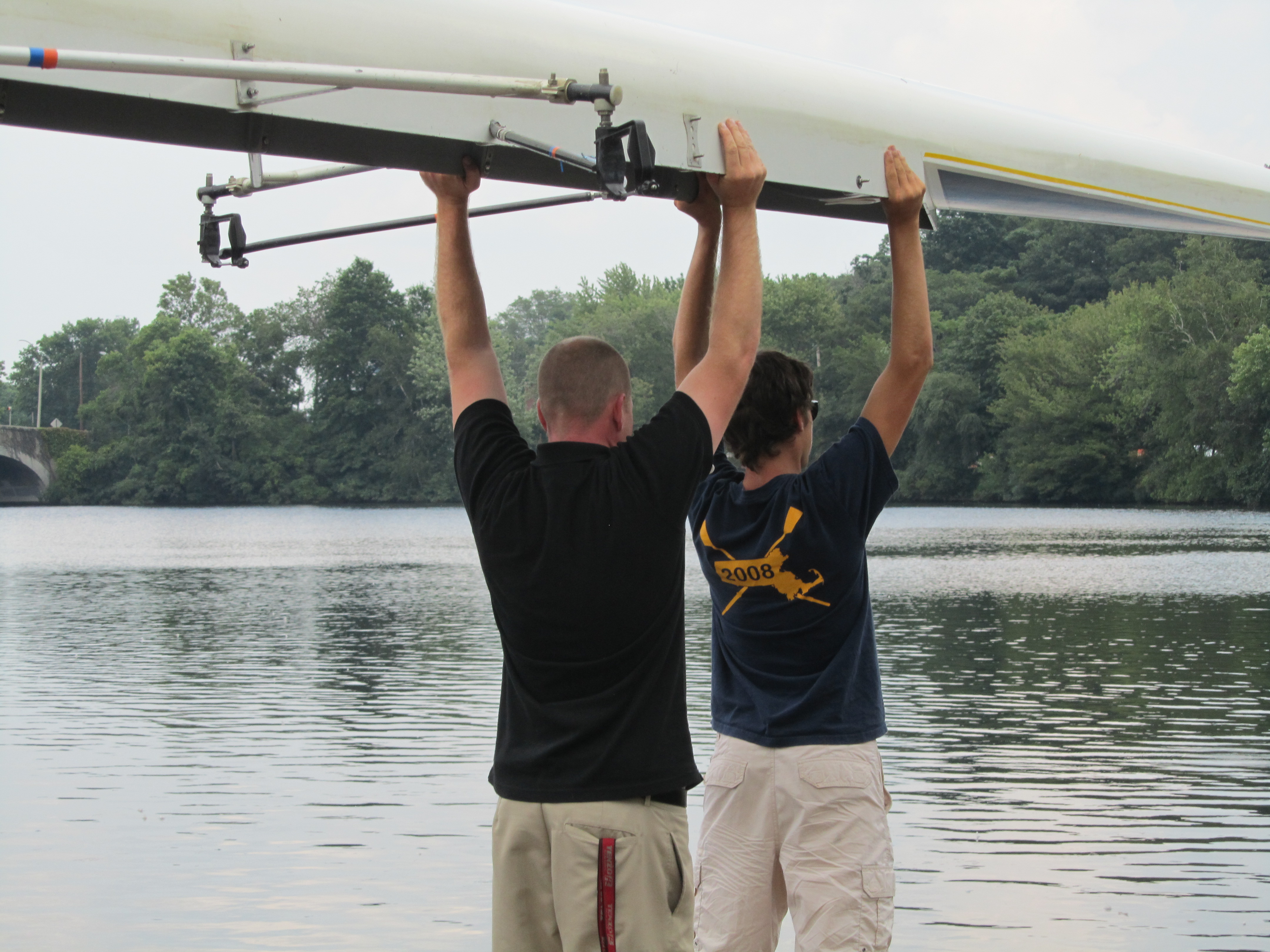
Shoulder Press_Boat HandlingWhen’s the last time you performed a Shoulder Press?  When’s the last time you lifted a boat from shoulders to overheads?  For many of you in Boston and the Northern states it’s been a while, but that ice is almost gone and regular water practices will be happening in no time.  Regardless, anytime you take a weight or external object from your shoulder to overhead, you are pressing, because that’s what a shoulder press is.  It’s the strongest, most efficient way to move something from shoulder to overhead.  If you need to move more weight and create more power the best movement becomes a push press.  If you need to move even more weight and create maximum speed and power that movement becomes an Olympic Lift, the Push Jerk.

I believe that if you can learn to move weight from your shoulder to overhead correctly you can and will become a better rower.  The key is how you press and what you focus on.  Here is a little video review of a pre-elite rower I’ve started working with.  This is her form before any coaching. Check out what she’s doing well and what she can do better.

Now take a look at my shoulder press, push press, and push jerk.  What parts of these movements can we tie to the rowing stroke?  I always teach the skills of 1. Posture, 2. Control, and 3. Connection whether it’s rowing or weightlifting.

1. Posture – How am I doing at maintaining a solid brace through my torso?  Is there any movement within the vertebrae of the spine?

2. Control – Is the bar traveling in a straight line over the middle of my foot?  Am I in control of my body and the bar? Can I stop at any point in time and be in a strong position?

3. Connection – How am I connected to the bar?  How am I connected to the floor?  Are my hips, hands, and shoulders connected as I initiate each movement?

After taking a look and answering some of these questions, think about your own stroke.  In the front end of your stroke, from 1/2 slide up to the catch and back, how do your joints move in relation to one another?  Can you stay connected?  Do you break or tense your arms early?  Is your shoulder and upper body strong enough to connect the power coming from your legs to your hands?  Do you feel or see any similarities when you press/push press/push jerk and row back to back?  How’s your posture and brace at the finish? Can perfecting these movements help improve your rowing?

Please share your thoughts to comments and I’ll get back to you with feedback.
Video Review: Coach Pat – The Squat and Rowing – Do you need to Squat to Row?

When’s the last time you performed a Squat?  When’s the last time you sat in a chair or got in a boat?  For many of you in Boston and the Northern states it’s been a while, but that ice is almost gone and regular water practices will be happening in no time.  Regardless, anytime you sit or stand up you are squatting, because that’s what a squat is.  It’s the strongest, most efficient, most powerful way to get your body up out of a chair or seated position.

I believe that if you can learn to squat correctly you can and will become a better rower.  The key is how you squat and what you focus on.  Here is a little video review of a pre-elite rower I’ve started working with.  This is her form before any coaching. Check out what she’s doing well and what she can do better.

Now take a look at my squat and rowing below.  What parts of the squat can we tie to the rowing stroke?  I always teach the skills of 1. Posture, 2. Control, and 3. Connection whether it’s rowing or weightlifting.

1. Posture – How am I doing at maintaining a solid brace through my torso?  Is there any movement within the vertebrae of the spine?

2. Control – Is the bar traveling in a straight line over the middle of my foot?  Am I in control of my body and the bar? Can I stop at any point in time and be in a strong position?

3. Connection – How am I connected to the bar?  How am I connected to the floor?  Are my hips, hands, and shoulders connected as I go to stand?

After taking a look and answering some of these questions, think about your own stroke.  In the front end of your stroke, from 1/2 slide up to the catch and back, how do your joints move in relation to one another and what does your body angle look like?  How much distance is there between your butt and your heals?  Do you feel or see any similarities when you squat and row back to back?  Can perfecting one movement help improve the other?

Please share your thoughts to comments and I’ll get back to you with feedback.

Video Review: Coach Pat – The Deadlift and Rowing – Can you row without deadlifting?

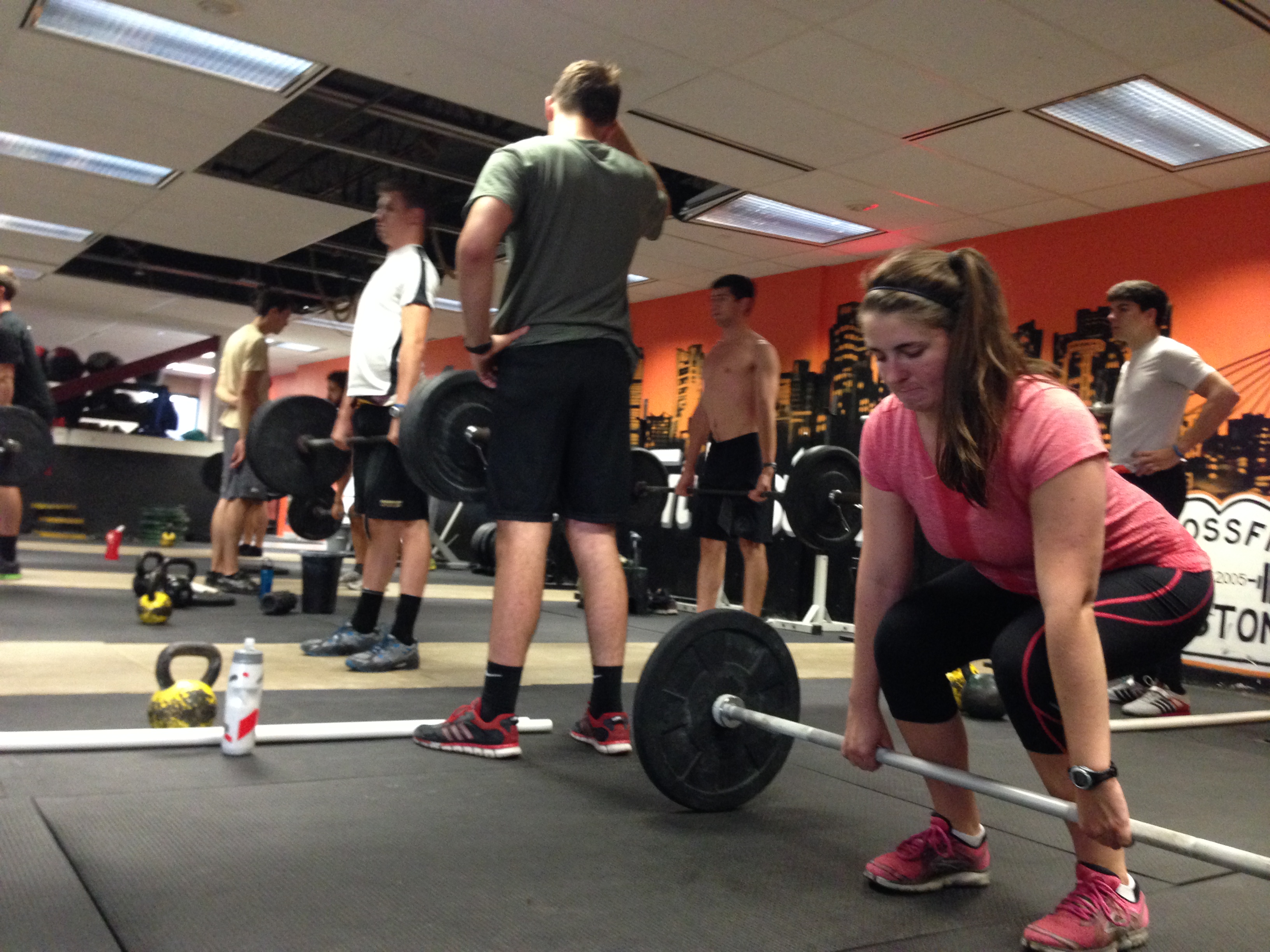
Coxswains getting after the Deadlift last winter!When’s the last time you performed a Deadlift?  When’s the last time you picked the boat up out of the water?  For many of you in Boston and the Northern states it’s been a while, but that ice is almost gone and regular water practices will be happening in no time.  Regardless, anytime you pick something up you should be deadlifting, because that’s what a deadlift is.  It’s the strongest, most efficient, most powerful way to pick something up off the floor or out of the water.

I believe that if you can learn to hip hinge and deadlift correctly you can and will become a better rower.  The key is how you deadlift and what you focus on.  Here is a little video review of a pre-elite rower I’ve started working with.  This is her form before any coaching. Check out what she’s doing well and what she can do better.

Now take a look at my hip hinge and deadlift below.  What parts of the deadlift can we tie to the rowing stroke?  I always teach the skills of 1. Posture, 2. Control, and 3. Connection whether it’s rowing or weightlifting.

1. Posture – How am I doing at maintaining a solid brace through my torso?  Is there any movement within the vertebrae of the spine?

2. Control – Is the bar traveling in a straight line over the middle of my foot?  Am I in control of my body and the bar? Can I stop at any point in time and be in a strong position?

3. Connection – How am I connected to the bar?  How am I connected to the floor?  Are my hips, hands, and shoulders connected when the bar is below the knee?

After taking a look and answering some of these questions, think about your own stroke.  In the front end of your stroke, from 1/2 slide up to the catch and back, how do your joints move in relation to one another and what does your body angle look like?  Does it stay the same?  When does your body start to swing open?  Do you feel or see any similarities when you deadlift and row back to back?  Can perfecting one movement help improve the other?

Please share your thoughts to comments and I’ll get back to you with feedback.

Video Review: Rhythm and Things to Look At on Concept2 Sliders

Are you pumped to be out on the water rowing now that it’s finally Summer?  We sure are in Boston and the Charles River is busier than ever.  Sometimes land work on Concept2 Sliders can help you with finding rhythm in the boat.  Perhaps on the next nasty day you stay inside and master rhythm with your rowing partner.  I’m sharing a video of some slider work we did earlier this year.  We were using sliders to find rhythm and ratio. Take a look and see how they might help you.  What are they doing well?  What do they need to work on?  Are you focused on rowing on the erg as if you were going to row on the water?  Please share your thoughts in the comments section.

The Renegade Rowing Training Plan 7-6-15

Letting it run at Bodies Over!

Letting it run at Bodies Over!

RR Training Plan 7-6-15

The Renegade Rowing Training Plan

aka – “Our” Plan

By: Patrick Larcom

Why Row?

Rowing is the utmost definition of Sport in modern society. Merriam-Webster and Dictionary.com give two definitions of sport. One, Sport is an athletic activity requiring skill or physical prowess and often of a competitive nature. Two, Sport is a source of diversion and recreation engaged in for pleasure. Whether you’re a middle school rower just learning to scull or an Olympic hopeful trying out for the national team, Rowing provides challenge, competition, and fun.

Rowing trumps all because it offers the best of sport. It tests our skill and athleticism as individuals and as part of a team. Rowing requires an unwavering calm and trust that pushing yourself to wit’s end without seeing where you’re going will develop personal satisfaction and boat speed. It takes balance, grace, and power. Rowing is saying goodbye to the chaos of life by shoving off the dock and taking time for yourself and your team to focus on a common goal.

If you’d like to read more about “Our” Plan click here!

If you have any friends who would love to get into rowing, please have them sign up for a free consultation with Renegade Rowing!