Rowing WOD 11/8/14: 5x500m Equal Work:Rest – Post Avg Splits

RRTP 11-3-14Renegade Rowing Training Plan TemplateRR Athlete Template

Rowing WOD:

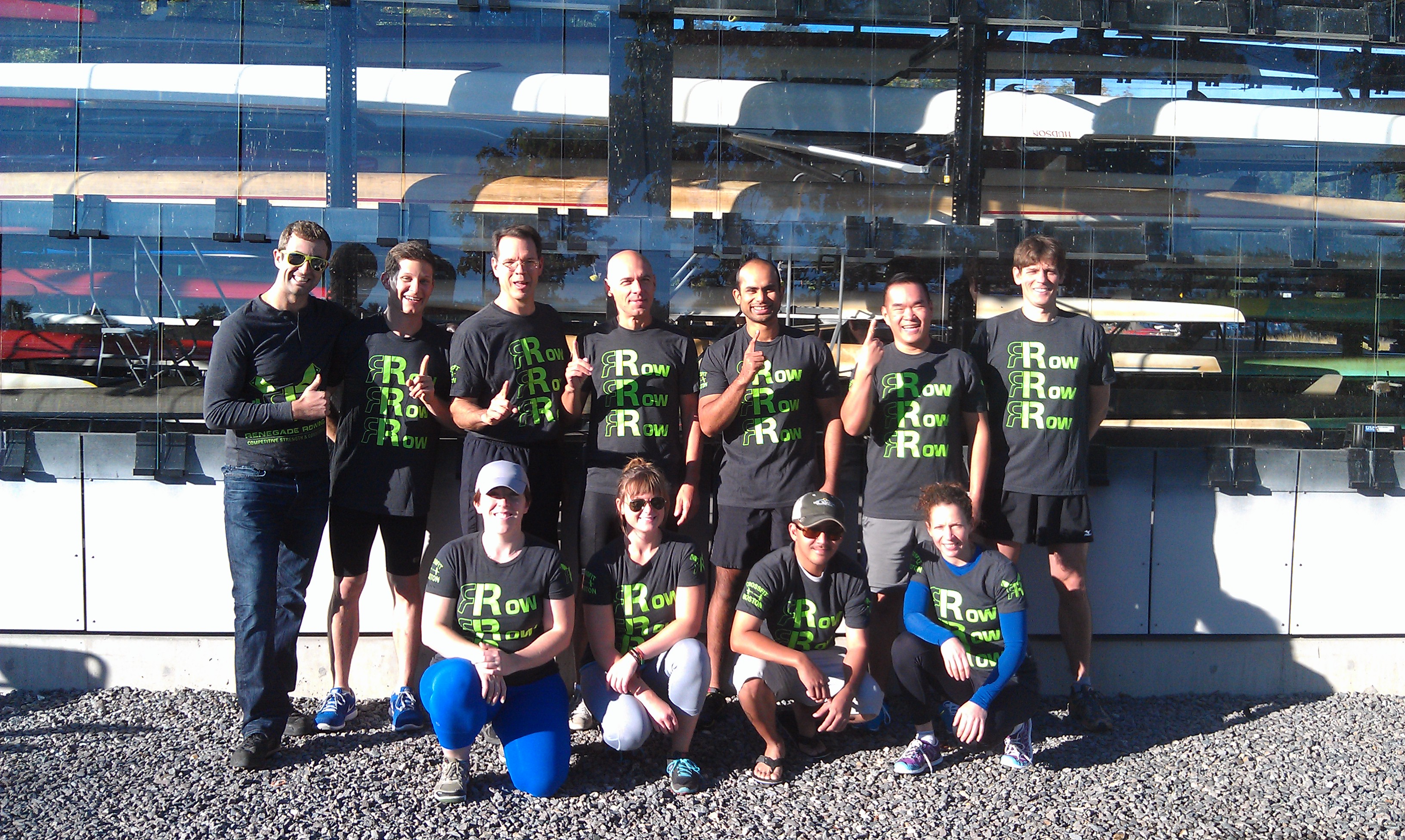
The Renegade Rowing Team!

5 x 500m

Rest as long as it takes you to complete 500m.  

Row as follows:

  • Pieces 1 and 2: practice the start of the race plan
  • Pieces 3 and 4: practice holding race pace like the body of the race plan
  • Piece 5: practice sprinting out at 250m like the finish of the race plan

Before getting after today’s Rowing WOD I want you to recall two things.  What are you training for and who are you training with?  We always talk about setting appropriate goals, which is a big part of Renegade Rowing.  Along with goals you should be finding an appropriate training partner.  In terms of the psychology of training and performance, we will always push harder and focus more when there is someone right there next to us.  A training partner will make you faster just by being there and holding you accountable.  Training partners are huge, especially when that little voice starts to creep inside your head and tell you to stop pulling.
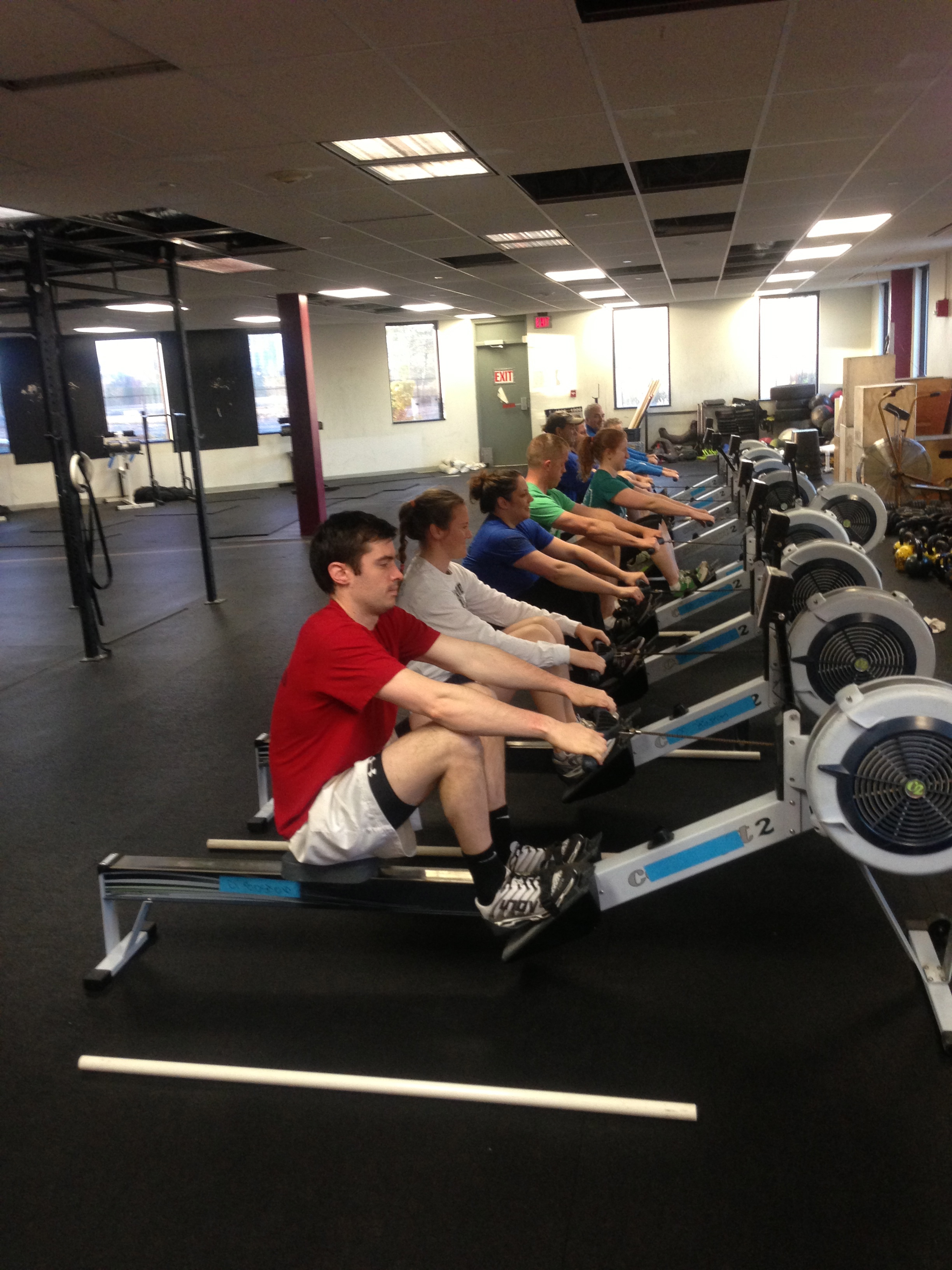
Rowing Together at CFB

Posture was a big focus this week, so be sure to keep it through each piece.  Today’s Rowing WOD is all about POWER!  P = Force x distance / time.

There are three ways to row faster:

1) Row Harder,

2) Row Longer,

3) Row Higher (increased s/m).

For most rowers it’s easy to learn to row longer and higher, but rowing harder doesn’t come easy.  That is why we work on General Physical Preparedness!  Gym’s like CrossFit Boston are what allows us to row harder, push ourselves, and produce more force each stroke.  Keep up with your WODS!  In order to row longer we need more compression with the legs at the catch while maintaining a tall posture and not lunging.  This requires us to have more flexibility, so keep working on that extra mobility!  Hips and Hamstring Flexibility are key!  Last, rowing higher means rowing at a higher stroke rating.  After playing with the damper setting and learning about drag factors, we have come to realize that we are more efficient at that higher stroke rating.  Remember when we need to sprint at the end of a piece we can  start to bring that split down by picking up the stroke rating!

Before starting today’s Rowing WOD you should review our race plan.  My idea for using this race plan is to keep it simple.  I’d like us to keep it simple and execute rather than coming up with some elaborate plan that we can’t execute.

Here is the race plan:

Starting 5 strokes (3/4, Half, 3/4, Lengthen, Full)

5 − 10 high strokes

Settle to race pace (your goal split, this requires a RATIO shift, take time to sit up and breath on the recovery!)

Pull a consistent split +/- 1 split second through the body of the race

@250m sprint for the finish line!

Post your Average Splits for each piece to comments.

********** IMPORTANT *************

Keep practicing good Posture, Body Preparation, and Connection!  Have someone watch you and see if you’re getting your body angle set by 1/2 slide and keeping connected as you start each stroke.

Here is the typical Renegade Rowing WarmUp for your reference!

Row Smart, Row Hard!

Can we be Pro Athletes? Yes, No, or Maybe?

Today's programming from The Renegade Rowing Training Plan for the week of 11/3/14

Today’s programming from The Renegade Rowing Training Plan for the week of 11/3/14

Today’s programming contains workouts at both ends of the rowing and training spectrum.  There is a 50min row with varying stroke ratings to build rhythm, form, and cardiorespiratory endurance.  There is a strength and conditioning workout with front squats and wall climbs to develop strength and bear crawls and double unders to develop endurance.  Last but not least there is a lift to develop strength in the shoulders.  How do you choose what to put into your workout and where do you spend your time?

In order to help answer that question I like to think about pro athletes.  What do they have that allows them to know what to do in a given day?  They have professional coaches.  They’re getting paid to figure it out and they have all day.  They have awareness of their strengths, weaknesses, bodies, and minds.

HOCR 2014 DrewSo can we be pro athletes?  Yes, no, and maybe.  It is possible these days for any athlete no matter what level to get a coach to help figure things out.  It’s probably not possible for everyone to get paid to train or more importantly to have enough time to fit everything in.  Last, it may be possible for any athlete to be aware of their strengths, weaknesses, bodies, and minds, but it’s up to them to have an open mind, feel what’s happening, and be willing to reflect on a regular basis.

The short answer to what you should choose to do today is to work on your weaknesses. Do you need more endurance?  Focus on quality and form in the Rowing Block.  If you need to become more athletic and build some strength and power then focus on the Fitness and Strength Blocks.

However, if you’re like me and you want to continuously improve then the short answer isn’t always good enough.  In order to become more like pro athletes we must strive to find good coaches.  We must find teams and training groups that will hold us accountable and push us.  Lastly, we must make the time to reflect on what we’re doing and how we can do it better.

I bring all of this up because today I had the privilege of working with a rower who has been on a mission to solve a back injury, continue to row and compete, and do whatever she wants to in life.  She’s done it by acting like a pro athlete.  She’s worked with various coaches, doctors, chiropractors, physical therapists, and specialists.  She’s joined a boathouse and a team to help push herself.  Lastly, she’s made time to get to practice early and stay late to think, feel, and figure out what is limiting her through reflection, strength training, and mobility.

BC Men BargeThe question that she brought up today is one that I continually ask myself.  Why can’t everyone be pro athletes?  Why can’t athletes find coaches who care and use positivity and constructive criticism?  Why don’t athletes take the time to learn new skills and tools for getting stronger and recovering?  Why do athletes limit themselves to one sport instead of cross training and becoming more well-rounded?

I know not everyone has these problems, but I hope that with Renegade Rowing I can help more athletes learn new skills, develop more awareness, and become firsthand athletes who continually learn and reflect.

If there is something you’re looking for or don’t understand, please let me know and I’ll do my best to get you an answer and improve the tools that Renegade Rowing has to offer.

Have an awesome weekend and stay warm if you’re in New England!

What kind of Renegade are you? How many training blocks do you need in a week?

Renegade Rowing Athlete TemplateToday is usually a Rest Day, however I released a new training plan template earlier this week that includes an Endurance/Active Rest Block and an Olympic Lifting Block.  Depending on what type of Renegade Athlete you are you may want to take a rest day or you may need to hit one or both of those blocks.

In the coming week I’ll be highlighting the different types of athletes that have given Renegade Rowing a shot.  I hope to shed some light on the possibilities that exist in developing a broad, general, and inclusive fitness to allow for sport specific performance no matter what level you’re at.  One group I’m working with is 4 High School Rowers who train with me three times a week in order to prepare for making their team and the rigors of winter training.  A second group is the Boston College Men’s Crew Team, who not only rows on the water most days of the week, but manages to get in to the gym once or twice to get stronger and become more dynamic athletes.  A third group includes members of CrossFit Boston who would like to compete at CRASH-B’s and learn to race on the water.  And last, but definitely not least I’m privileged to help a competitive masters rower fight his way to elite status.  All of these athletes have different needs and the template I’ve created is a step in the right direction of helping them find the right amount of general and specific preparedness to reach their goals.

Please take a look at the Renegade Rowing Athlete Template below and share your thoughts on where you are and how many blocks you currently use in training.  I will be making adjustments as we go and continually striving to give you good examples of how this works and why it works.

RR Athlete Template

Renegade Rowing Training Plan Template

RRTP 11-3-14

Strength and Conditioning WOD 11/5/14: “Nancy in a Boat” – 5RFT – 500m Row, 15 OHS – Post Time

**Today the Renegade Rowing Club will be performing the Fitness Block from the Renegade Rowing Training Plan Template for this week.  Below is the plan that was posted earlier this week.  Check it out and let us know if you have any questions!

RRTP 11-3-14

Strength and Conditioning WOD:

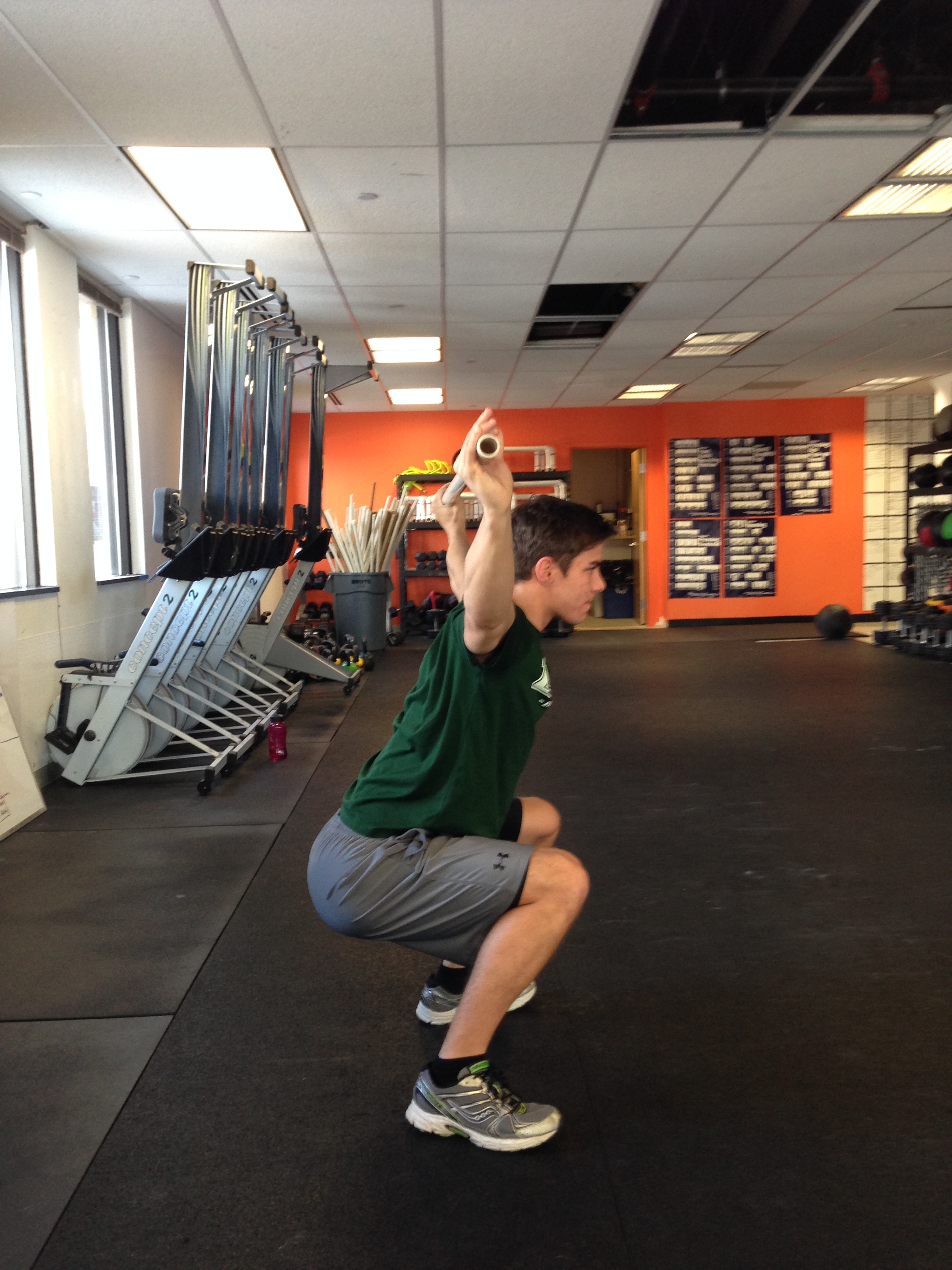
Jimmy from the Loyola Men's Crew Team working his Shoulder Flexibility in the Overhead Squat last Winter.

Jimmy from the Loyola Men’s Crew Team working his Shoulder Flexibility in the Overhead Squat last Winter.

“Nancy in a Boat”

5 Rounds For Time

500m Row

15 Overhead Squats (95/65 lbs.)

  • Post Time and Average Split to Comments.

Today’s Rowing WOD is a great opportunity for any athlete, experienced or not, to get a sense of form and rhythm and then apply it in competition.  Get in a solid warm up and hone your rowing skills with a 10min WarmUp on the Erg and then attack the Conditioning WOD with your new found efficiency and focus on form.

Rhythm and Endurance are two necessities for successful competition in longer WODs.  A great example would be the KB Swings and Pull Ups found in “Helen” or the necessity to be fresh enough for the thrusters and pull ups in Jackie.  Those who find a consistent rhythm can flow through the movements naturally and rely on their aerobic endurance without dipping into their anaerobic energy supply.

In today’s Rowing WOD the focus is developing rhythm and endurance.  Another word for rhythm in rowing is Ratio.  By varying the ratio of the drive to the recovery rowers can maintain the same pace or split, but work more efficiently and make the stroke feel lighter or heavier.

When going from a 20 stroke rating to a 24 you should focus on more pressure with the legs and quickly redirecting the hands through the finish.  This will help increase the stroke rating while leaving you the same amount of time to sit up, breathe, and relax as you slide forward on the recovery.

When you attack “Nancy in a Boat” pick a challenging split and stroke rating to hold, but make sure you’re able to remain efficient and fresh enough to perform the overhead squats unbroken.  If you know your 2k split, pick a goal split somewhere between 2k and 2k+3.  Try to focus on your rhythm and ratio to allow for breathing and recovery every single stroke.

Get after it and have a solid day of training!  We will re-test “Nancy in a Boat” next week!

Rowing WOD 11/4/14: 1k, 6x250m, 4x:45 On, :15 Off – Post # of Strokes at Goal Split

**Yesterday I released the Renegade Rowing Training Plan Template and this week’s programming.  Here is some detail on the Race Prep Block that the Renegade Rowing Club will be performing at 6am.  Here are the template and this weeks programming one more time…

Renegade Rowing Training Plan Template

RRTP 11-3-14

Rowing WOD:

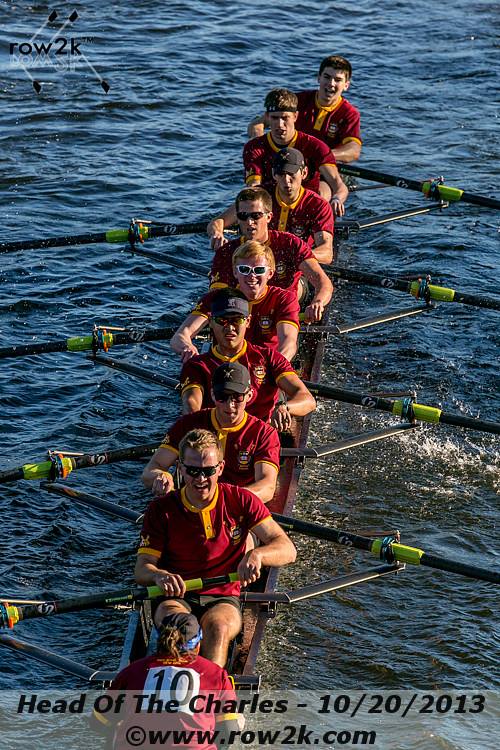
c/o Row2k.com

c/o Row2k.com

1. 1k Row @26 s/m

– Moderate Intensity (Row like you’re out for a steady jog)

*Note your average split for 1k

2. 6 x 250m Row w/ :30 Rest

– Row each piece at the average split from the 1k above

– Stroke Ratings are as follows:

@22 s/m, @28 s/m, @24 s/m, @26 s/m, @24 s/m, @26 s/m

3. 4 x :45 On, :15 Off

**Practice each piece as if it were the start of a 2k

**When you settle count the # of strokes where you hold your goal 2k split

For the first part of today’s Rowing WOD, row at an intensity similar to Jogging focusing on Smooth Form and Body Preparation by 1/2 Slide.  Try to incorporate the ideas and skills of Posture, Control, and Connection.  Today we’ll be working on ratio at different stroke ratings and varying the pressure we exert each stroke.  At lower stroke ratings like 20 − 24, the ratio should be 1:2 or 1:3, 1 count on the drive, 2 or 3 counts on the recovery.  By controlling our seat as it slides forward we can make sure we’re preparing our bodies for the catch.  The goal is to turn our force and momentum around without any extra effort.  Remember, we want to drive our body weight backwards toward the finish line, not throw it forward toward the Catch/Start of the Race.

When varying stroke rating during a piece use the pressure with the legs on the drive and the speed of the hands through the finish to vary the rating.  If you want to increase the stroke rating and maintain power, think “drive the legs down faster and quick hands away” out of the finish.  If you want to decrease the stroke rating without losing power, keep the same pressure on the drive and hand speed through the finish, but slow the seat down as it slides forward on the recovery, this is what I mean by “Control the Recovery”.

The goal for these pieces is to learn how to vary the pressure at different stroke ratings while maintaining the same split.  The idea being that eventually we’ll find an optimal stroke rating where you just keep spinning the flywheel every stroke without letting it slow down to much and thus save energy and avoid fatigue.  What we’re ultimately working towards is Efficiency!  Instead of slogging along and duking it out at a slower stroke rating like a 24 for our 2k, we want to be able to row quick and light between a 28 − 32 when needed.

For the third part of the workout you’ll row like the start of a 2k race.  Perform a 3 stroke starting sequence (Half Stroke, 3/4 Stroke, Full Stroke) then a High 10, then settle to your 2k race pace for each of the 4 pieces.  The goal is to learn how to get the flywheel moving and the split down without jacking up your legs.  Then the even bigger goal is learning how to settle immediately to you’re race pace and be consistent.  Count how many strokes you can take at your 2k pace once you settle, no higher, no lower.
In terms of preparing to race 2,000 meters, the goal is to continue building our confidence in maintaining a consistent split as well as develop the ability to change our Ratio/Rhythm as we row at different Stroke Ratings.  We want to get a taste of what the start will be like and what is required to settle to race pace so we don’t Fly and Die!
Post your best :45 second start and settle.  How many strokes did you take at your goal 2k split?