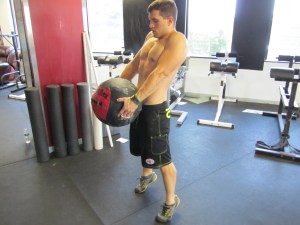
Rowing WOD 8/18: 3 RFT – 25 Med Ball Cleans, 500m Row – Post Time

Rowing WOD 8/18:

3 Rounds For Time

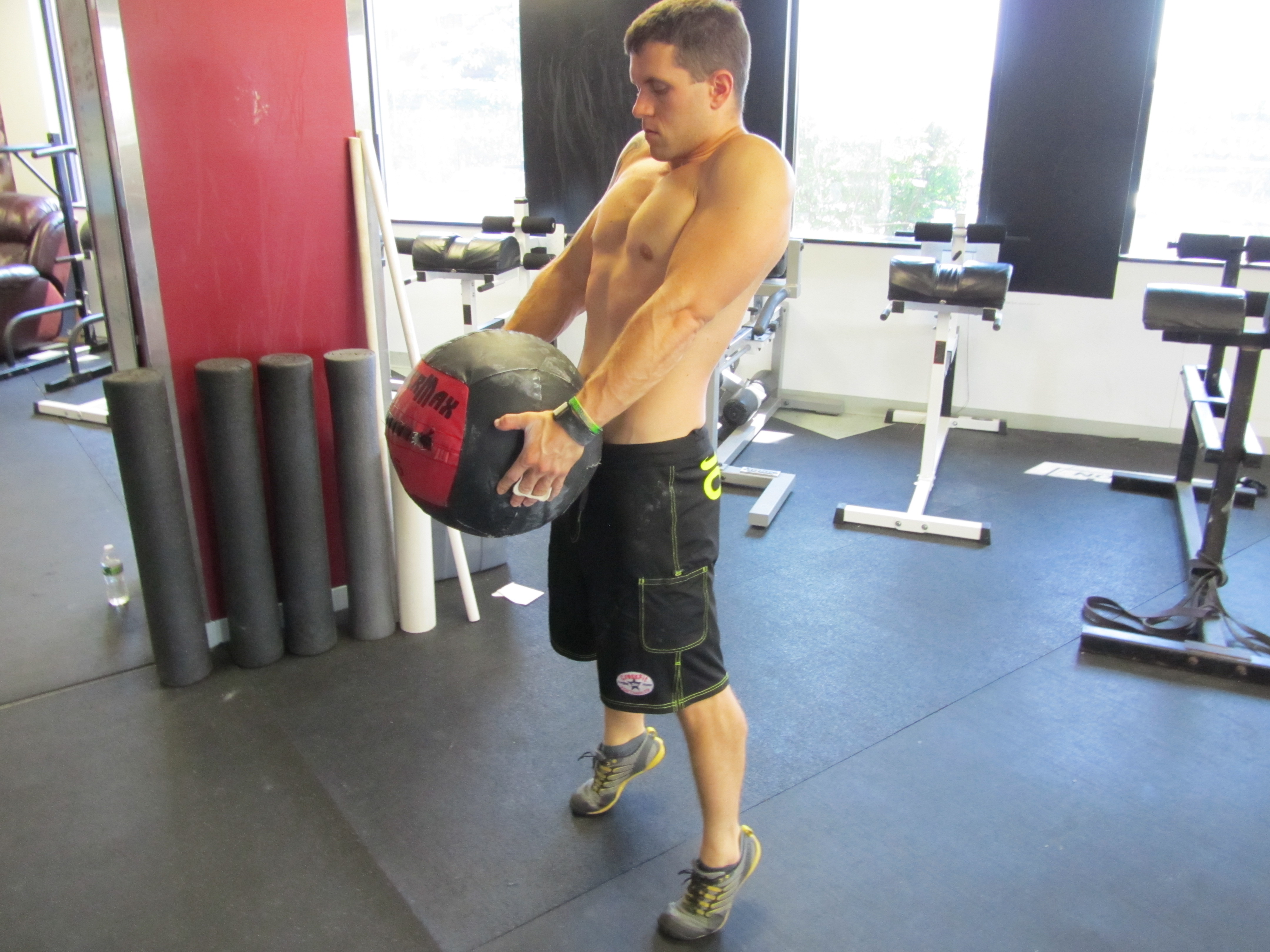
25 Medicine Ball Cleans (20#/14#)

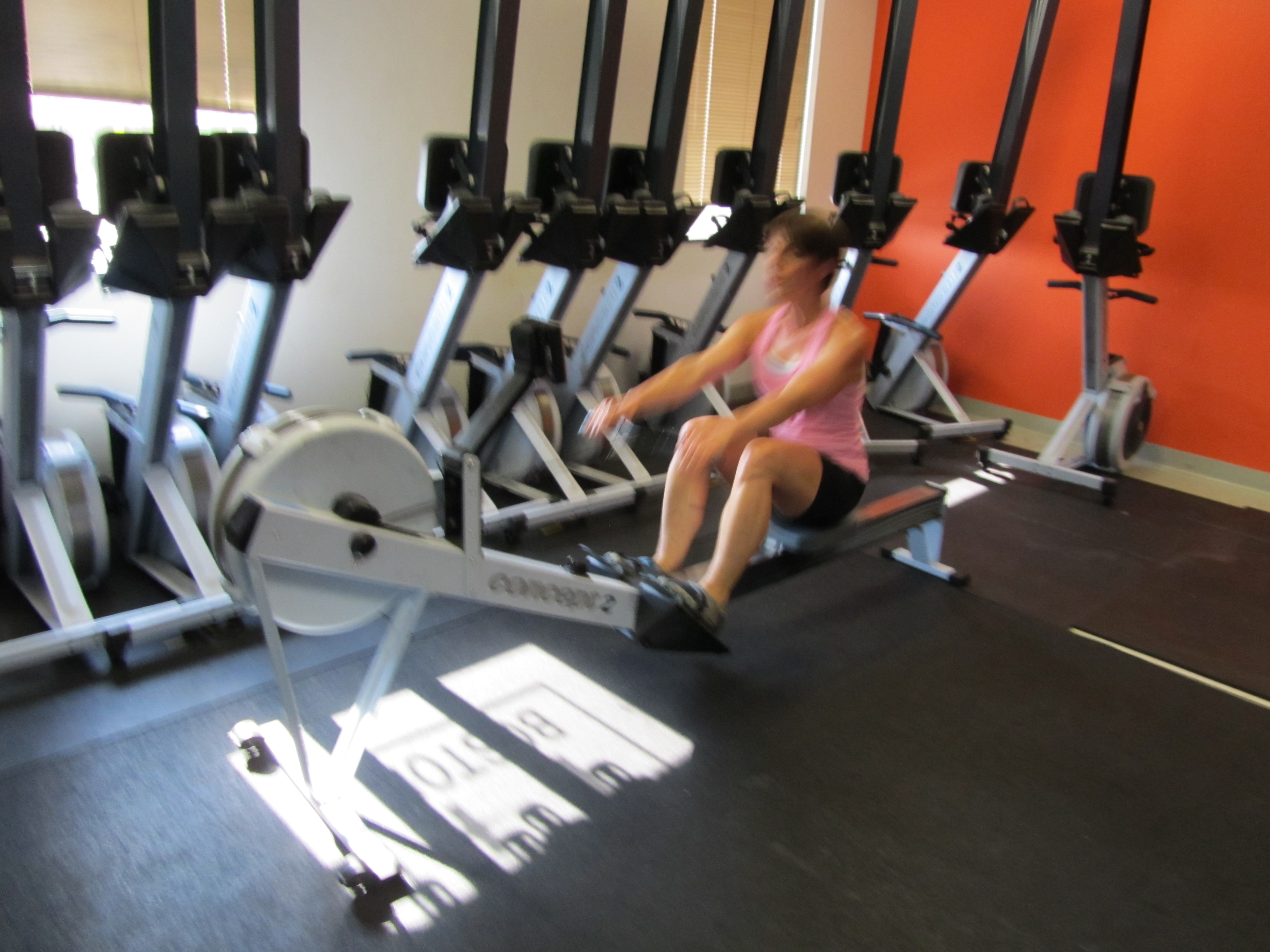
500m Row

Functional Movements are glorious for both rowing and fitness.  They are the movements we need to survive AND excel in sports.  Functional movements are powerful, use multiple joints, and feel awesome when executed well.  Almost all functional movement involves the extension of the hips and the proper recruitment of muscles from core to extremity.  

When combining a foundational movement like the med ball clean with rowing on the erg there is an opportunity for skill transfer.  Athletes can use the med ball clean to promote good rowing form and rowers can use the med ball clean to focus on better hip extension and posterior chain engagement.  One main problem with athletes jumping on the erg for the first time is the tendency to clench and pull with the arms when all the work should be done by the legs and hips.  By engaging the legs first and getting full extension with loose arms on the med ball clean, the novice rower can think about and feel the same thing on the erg or in the boat.  For rowers looking for more power and speed, there is a lot to be gained in developing the ability to draw from the glutes and hamstrings during the drive and forcefully extend the hips as the torso opens.  Rowers should focus on driving through the heels and making the ball weightless with the hips.

For both movements in today’s Rowing WOD try to be smooth and efficient.  If you’re confident in your movement then push the pace.

Post time to comments!

Rowing WOD 8/17: 5 x 800m w/ 2min Rest – Post Avg Splits

Rowing WOD 8/17:

5 x 800m Row

w/ 2min Rest

1st @24 S/M

2nd @26 S/M

3rd @28 S/M

4th @30 S/M

5th @32 S/M

Intensity and focus is what gets results.  In order to develop and grow as an athlete you’ll need to develop an ability to go hard and bring your “A” game.  Today’s Rowing WOD provides an opportunity for just that.  Set the monitor for 800m of work and 2 minutes of rest.  While the stroke rating starts out low, there should be a focus on power per stroke and solid intensity across all five pieces.  The increasing stroke rating will give you a chance to see where you’re most effective.  Ideally whenever the stroke rating is increased the split should decrease.

This week we’ve focused on finding and rowing with ratio to be efficient, breathe, and have good rhythm.  Put that ratio to work here.  It should change from about 1:3 (1 on the drive, 3 on the recovery) at 24 strokes per minute to about 1:2, or closer to 1:1, by the time you hit the last piece at a 32 stroke rating.  No matter what try to bring your average split down each piece.  When the stroke rating goes up you should be going faster.

Post your Average 500m Splits for each piece to comments.

Rowing WOD 8/14: 8 x 30 Strokes On / 30 Strokes Off – Post Max and Min Distance

Rowing WOD 8/14:

8 x 30 Strokes On / 30 Strokes Off

(Set Monitor for Intervals Time, 1:45 On w/ Undefined Rest)

In WODs like Fight Gone Bad where you’re given a time domain to do work it helps to know what you’re capable of both when you’re fresh and when you’re fatigued.  The goal should be to put everything you have into the erg and get the most out of it.  In other words be efficient and don’t waste energy with any movement or force that doesn’t translate into spinning the flywheel faster.

Today’s Rowing WOD tests our work capacity around the one minute time domain.  If you hold a 2:00 split per 500m at a stroke rating of 30 strokes per minute you would row an 8:00 2k in 240 strokes.  This 2k race plan would be made up of eight 30 stroke segments where you travel 250m in 30 strokes and it takes each segment one minute to complete.  Splitting up a race or workout in this manner gives you something to focus on and aim for.  If you’re ever in a competition where you need to decide how hard to row to get a certain number of points it may help to split it up like this.

The goal of today’s Rowing WOD is to go all out for 3o strokes every interval and see how far you can get.  Although this is max effort, consistent intensity is ideal to last all 30 strokes and not die after 20.  Set the monitor for intervals time with 1:45 of work and Undefined Rest.  Each piece should be rowed at max effort race pace.  Count 30 strokes in sets of 10 and note the distance you reach at the end of your 30th stroke.  Then paddle out lightly for 30 strokes.  The 30 strokes off should hopefully end during the Undefined Rest so that you can stop and write down the distance you reached.  Repeat this 8 times and try to beat your score each time.

Post your max distance and min distance reached in 3o strokes!

Rowing WOD 8/13: Ratio Shifts – 3 x 10min w/ 3min Rest – Post your experience!

Competitors hit some awesome Rowing WODs at the Beantown Throwdown yesterday including FGB!

Rowing WOD 8/13:

Ratio Shifts

3 x 10min w/ 3min Rest

Row each 10min as follows

4min @ 2k + 20

1min @ 2k + 16 (Keeping Same Stroke Rating)

4min @ 2k + 18

1min @ 2k + 14 (Keeping Same Stroke Rating)

When competing in a Rowing WOD where multiple exercises, like the Olympic lifts, thrusters, pull ups, or burpees, are combined with rowing, it helps to be able to control your effort level.  In order to control your effort level on the erg but remain efficient and get the most out of each stroke, you need to learn ratio.  Controlling ratio allows you to row at the same stroke rating but vary how much effort or pressure you put out. 

For instance, if you’re the first athlete on a team to row a relay that involves rowing and clean and jerks you’ll want to go out hard for the first 7-10 strokes but then settle by doing a ratio shift to give yourself time to breathe and prepare to hop off and lift heavy.  If you do a proper ratio shift you can keep your split from jumping up while getting more time on the recovery to breathe.

Today’s Rowing WOD is all about perfecting the ratio shift needed to settle into a piece but remain efficient and keep the power on.  The intensity of today’s wod is more of a steady state pressure, but you want to be precise with your split and stroke rating.  Just because it may seem light doesn’t mean you should allow your split to wander all over the place.  For the first 4min hold a pace that is 20 split seconds faster than your best 2k split.  It’s only acceptable to row at splits of +/-1 second off that pace.  Note what stroke rating is required to hold that pace and then keep that stroke rating as you do a ratio shift to row a pace of 2k+16 for the next minute.  After the first five minutes you can let the stroke rating change as you settle into a pace of 2k+18 for 4min.  Then finish with that same stroke rating as you row the last minute at 2k+14.  You’ll repeat this process for a total of 3 ten minute pieces.  Each piece try to dial in that ratio shift a little better.

So, how do you actually do a ratio shift?  Well to maintain the same stroke rating but pull a lower split you’ll need to put more pressure into the handle but slow down the recovery.  A proper ratio shift is done by pushing more with the legs, maintaining quick/smooth hands through the finish, and slowing down the seat as you slide forward to take the next stroke.  Remember you never want to pause at the finish or the catch.  The handle should continuously move but you can vary its speed.  That is the key to developing ratio.  With good ratio you will take more time on the recovery and less time on the drive.  You can think of it as doing more work but taking more rest accordingly.

Consistency and Efficiency are the name of the game.

Comment with your Experience!

Rest Day 8/12: What are you training for?

Rest Day 8/12:

What are you training for?

Everyone should have a goal and be training to reach that goal.  Without something to train for it’s easy to get lazy and not put out the effort you need to progress, get fit, stay healthy, and be awesome.  This past weekend many rowers are testing their speed at the 2012 US Rowing Masters Nationals in Worcester, MA.  If you’re not yet a competitive rower share what event you’re training for whether it’s local or national.  If you’re not training for an event, then what goal are you training for?

Share thoughts to comments!