Rest Day 5/30/13:
How much sleep do you get?
Share your thoughts to comments!
Sleep – the 6th Food Group
Here’s a great piece on Sleep by Alex Black of Wicked Good Nutrition!
 Alright, I know I don’t need to work that hard to convince you that sleep is awesome. I mean, who would turn down the opportunity to get a good night’s sleep or take a nap? Many famous athletes know sleep is awesome too. For example, at most competitions Yelena Isinbayeva, the woman who holds the world record in the pole vault with a jump over 16 ½ feet, warms up and then promptly takes a nap under a towel until her turn to compete. And just this past month I’ve come across some great research on sleep and its role in weight, food choices, and athletic performance. But before I share all this great data, a little on what exactly your body does when you sleep…
Sleep occurs in two parts, non-rapid eye movement (NREM) and rapid eye movement (REM) sleep. NREM sleep makes up about 75% of sleep time and consists of four stages. Stages 1 and 2 are the beginnings of sleep, when your start breathing more irregularly and begin to disengage from your surroundings. Stages 3 and 4 are the parts of the sleep cycle where the most recovery occurs, as breathing slows, tissues are repaired, energy is restored, and important hormones are released. REM sleep makes up the other 25% of sleep time, usually happening 90 minutes after you fall asleep and recurring every 90 minutes. During REM sleep, energy is provided to the brain and body, the brain is active – this is the part of sleep where dreaming happens – while the body becomes immobile as muscles are turned off.
Sleep and Weight In the medical world it’s been widely accepted that people who sleep less are more likely to be overweight. Research has found that people who sleep enough eat on average 200-500 fewer calories than people who don’t. But they didn’t always know why. But now TWO studies that used magnetic resonance imaging (MRI) to look at brain activity found two different ways that sleep may influence what you eat. In both studies, people were assessed after getting enough sleep and after a period of disrupted sleep and in both they were shown images of healthy and unhealthy foods while in the scanner. One study found that the part of the brain that tells us something is rewarding was more active when looking at unhealthy foods after sleeping poorly than it was after sleeping enough. In the other study people who didn’t get enough sleep showed less activity in the frontal lobe, or the part of the brain responsible for making decisions. Basically what these studies tell us is that when you don’t get enough sleep, unhealthier foods look more appealing and at the same time your ability to resist that food may be diminished.
Sleep and Hunger Lack of sleep doesn’t just make you crave uhealthier food, it also influences important hormones that control hunger. These two hormones are leptin and ghrelin. Leptin is stored in fat cells,and low levels of it tell the body you are starving and need to eat more food. Ghrelin is produced by the stomach and stimulates your appetite, again making you want to eat more. Ideally, you’d want to have higher leptin levels and lower ghrelin levels. However research has found that people who sleep less than 5 hours per night on average had lower levels of leptin and higher levels of ghrelin than people who sleep more. This means sleeping less = bigger appetite, on top of any appetite increase you may have from exercising.

Sleep and Sports Performance Last month ESPN published a commentary article calling sleep the new “magic pill”. This claim was based on research at Stanford, which manipulated sleep habits of 11 basketball players and found that when they increased their sleep they sprinted faster, felt better, and saw improvement in three-point shooting and free throw percentages. This is because during deep sleep, the body releases growth hormones that stimulate the building and recovery of bone and muscle. In addition, you need adequate sleep, in addition to getting a good breakfast of course, to have enough energy and good cognitive function, which means more alertness and coordination. Research in Europe a few years ago found that sleep 6 or less hours per night can have the same effects on coordination as drinking alcohol. This can really make a difference when you’re working on technical movements (think rowing, olympic lifts, kipping pull ups).
So Sleep and Nutrition… Sleep is key to helping you stay on track with a good nutrition plan and making that plan work for you. I have talked about the best nutrition for recovery before, but without adequate sleep it won’t be enough. You can replenish protein and carbs after every workout, but if you’re not sleeping enough your body won’t recover and repair as well as it would with enough sleep. This can leave you fatigued and not able to perform your best. Lack of sleep also makes the healthy recovery options (like nuts, meat, vegetables) look less appealing than the high calorie, low nutrient options like bagels, doughnuts, cookies, cereal etc. So make sure you’re getting enough sleep, especially if you are putting extra demands on your body with training. Experts say that teens need 8 ½ to 9 ½ hours of sleep per night and adults need 7-9 hours to be well rested.
A few strategies to improve sleep It’s not only important to get enough sleep, you need good quality, uninterrupted sleep too. Here are a few things you can do to help:
- Sleep in a dark room
- Avoid LCD screens (TV, computer) 15-30 minutes before bed
- Sleep in a colder temperature
- Avoid caffeine 4-6 hours before bed
- Avoid drinking excess water before bed (getting up to use the bathroom will interrupt sleep)
Recipe of the Week: Easy Almond Pancakes
Since we’re talking about sleep, it just feels right to give you a breakfast recipe. I found this through a Google search and modified it to add more flax, which I think makes both consistency and taste better.
Why they’re awesome: These pancakes are quick to make and are still good as leftovers (store in Tupperware in the fridge). Half of this recipe provides 384 calories, 20 grams of carbohydrate and 18 grams of protein. Add a little fruit and you’ve got a great post workout breakfast.
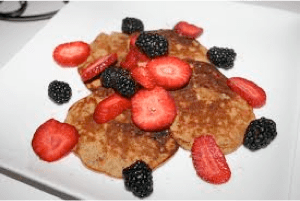 Ingredients (makes 2-3 servings)
2 eggs
2 tablespoons water
½ tablespoon honey
2 teaspoons vanilla extract
½ cup almond meal
½ cup golden flax seeds
¼ teaspoon baking soda
Coconut oil
Heat a skillet over medium heat. Whisk the liquid ingredients together. Add the dry ingredients and stir well. Melt about 1 tsp coconut oil into the skillet. Spoon mixture onto pan, making sure pancakes are pretty flat (thicker ones end up leaving a gooey center and burnt outside). Cook until firm enough to flip over and then cook another 30 – 60 seconds. Top with berries or whatever else you’d like.




 Renegade Rowing