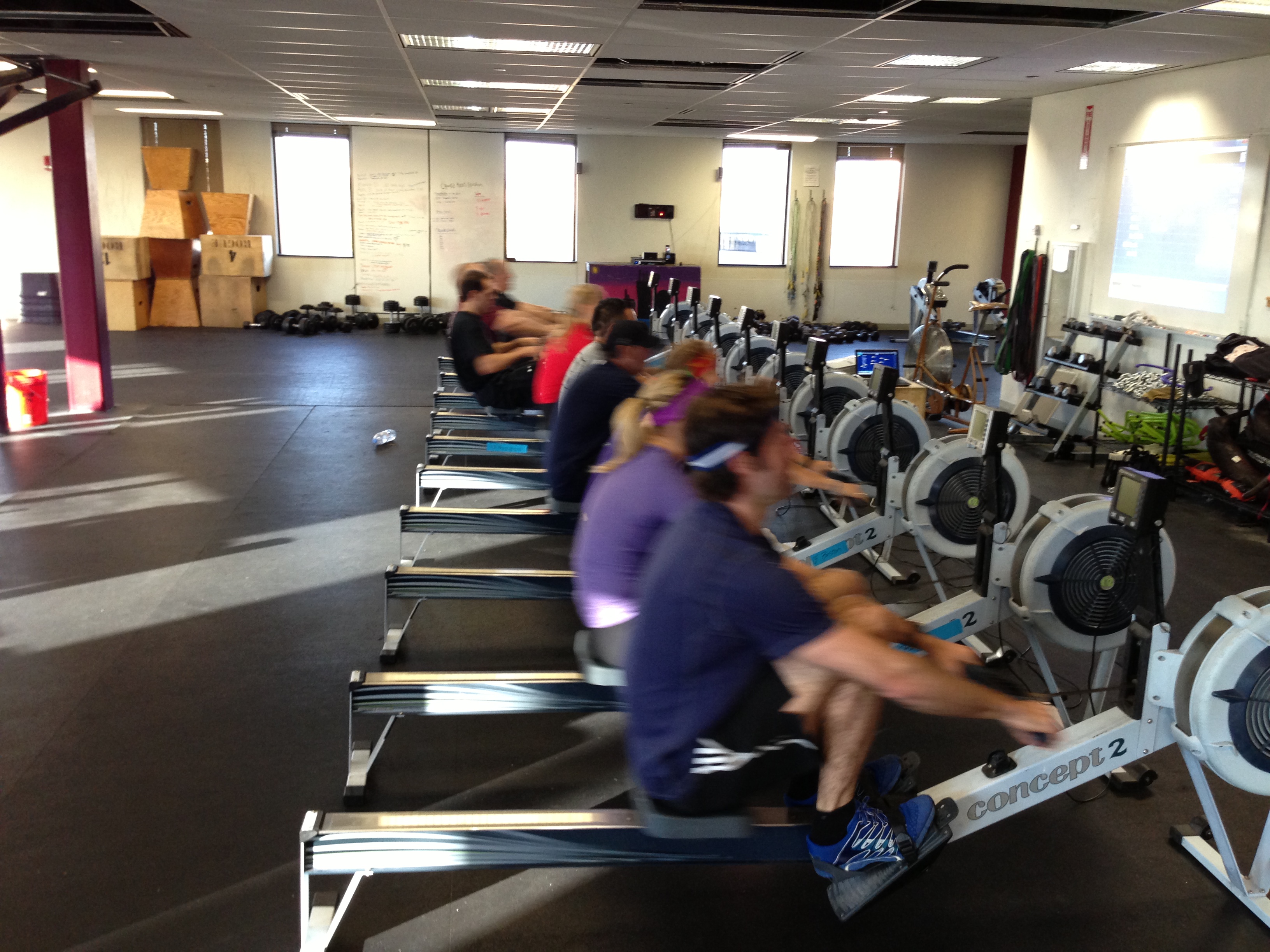
RRT Prepping for their epic end of term Renegade Rowing WOD last year.
Renegade Rowing Team
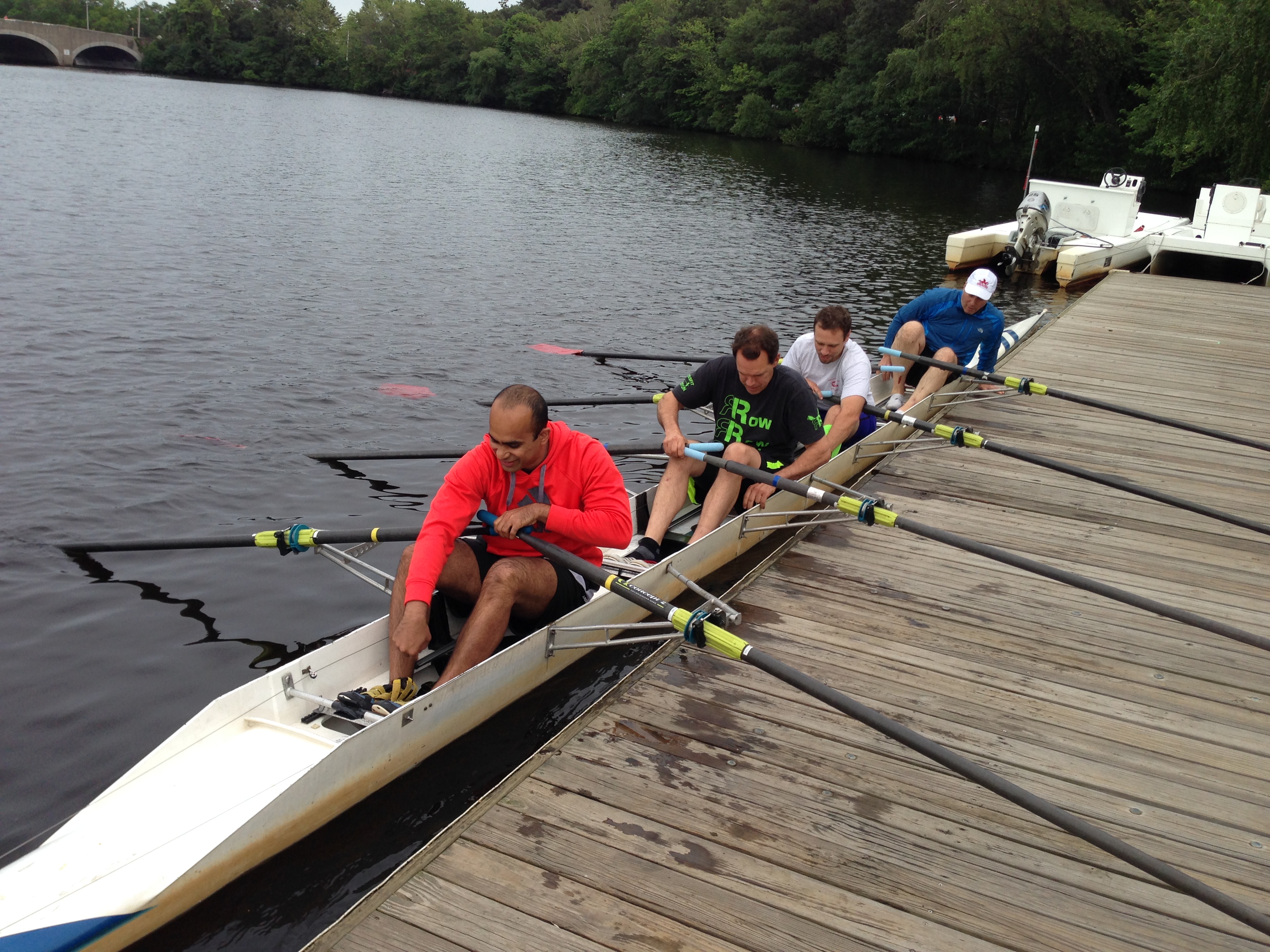
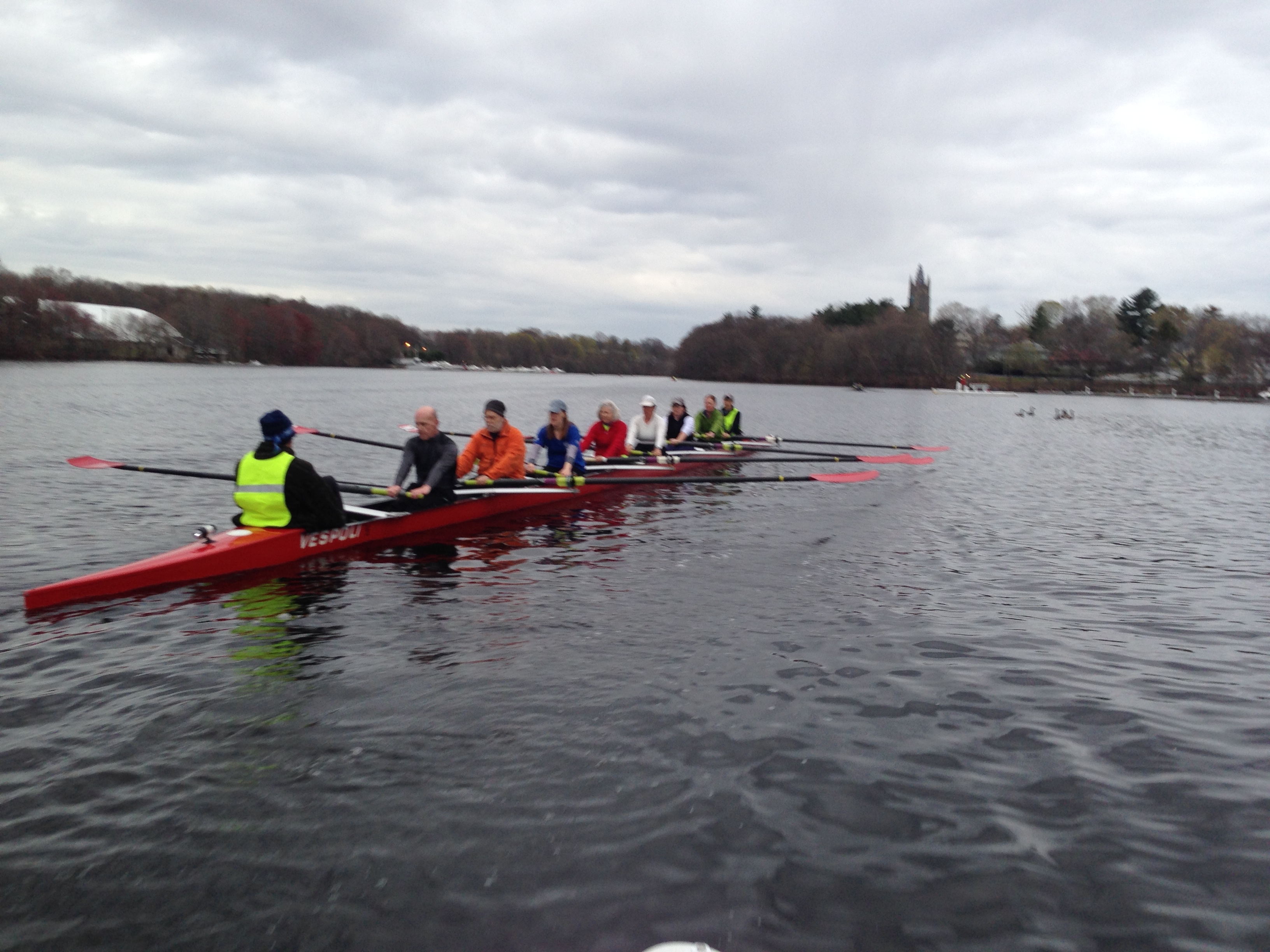
The Renegade Rowing Team is an opportunity to take your training to the next level and have some fun with other athletes outside of the gym. The Renegade Rowing Team will practice two nights a week from 6:45pm − 8:15pm on Tuesdays and Thursdays starting in June. Practices are held at Community Rowing’s Harry Parker Boathouse in Brighton, MA. Our goal is to learn to scull in quads on the water and become competitive enough to race this Fall. Each member of the RenegadeRowing Team will be expected to set goals both as individuals and as a team. Joining the Renegade Rowing Team is an opportunity to improve your training as well as everyone else’s. Learn to row and race with your friends!
I’ve always loved sports, especially when it comes to learning and competing at new sports that I don’t get to play often. Whenever we learn something new it’s far to easy to try to learn a couple of basics and then go full speed. Whether it’s golf, tennis, running, olympic lifting, rowing, or any other sport. The thrill of competition and grace in motion that sports played at full speed creates is amazing. Full speed competition elicits that feeling of joy and excitement that we all live for. However, a couple of problems usually arise at one point or another in our performance at full speed, especially if we take it up to full speed to quickly.
1. We lose form and things get sloppy. Basically the wheels come off.
2. We need more speed to out perform our competition, but it’s just not there.
Drew’s new Catch Positioning
Over the past couple of weeks I’ve experienced this situation with many of the athletes I coach, both on the water rowing and in the gym training. We’re always fighting for more intensity and boat speed, but too often something falls apart and our true potential is never reached.
Personally, I’ve experienced a similar situation while learning the piano. I currently take lessons once a week and have worked up to playing 4 songs and almost all of the scales, but my progress tends to stumble when I go to fast. It seems easy when I play a scale or a song slowly, so why not pick up the speed and just figure out how to not make mistakes playing faster? Well because it just gets sloppy and I never really learn what I’m doing wrong or better yet, what I can be doing better.
After being turned on to two great blog posts on slow motion practice, one from the music world and one from the golf world, I decided to share this idea with the rowing and strength training world that I hope you all partake in.
First, read through the above two blog posts and think about how slow is super slow. To often we think we’re going slow, but we could be going slower. Then, go out and practice super slow motion movements in your warmup. Be mindful, find the points where your focus lapses or you make a mistake, figure out how you can be more efficient, smoother, and more consistent. If you can take at least 20 minutes to practice this I guarantee you will find more boat speed, achieve more power, and perform at a higher level.
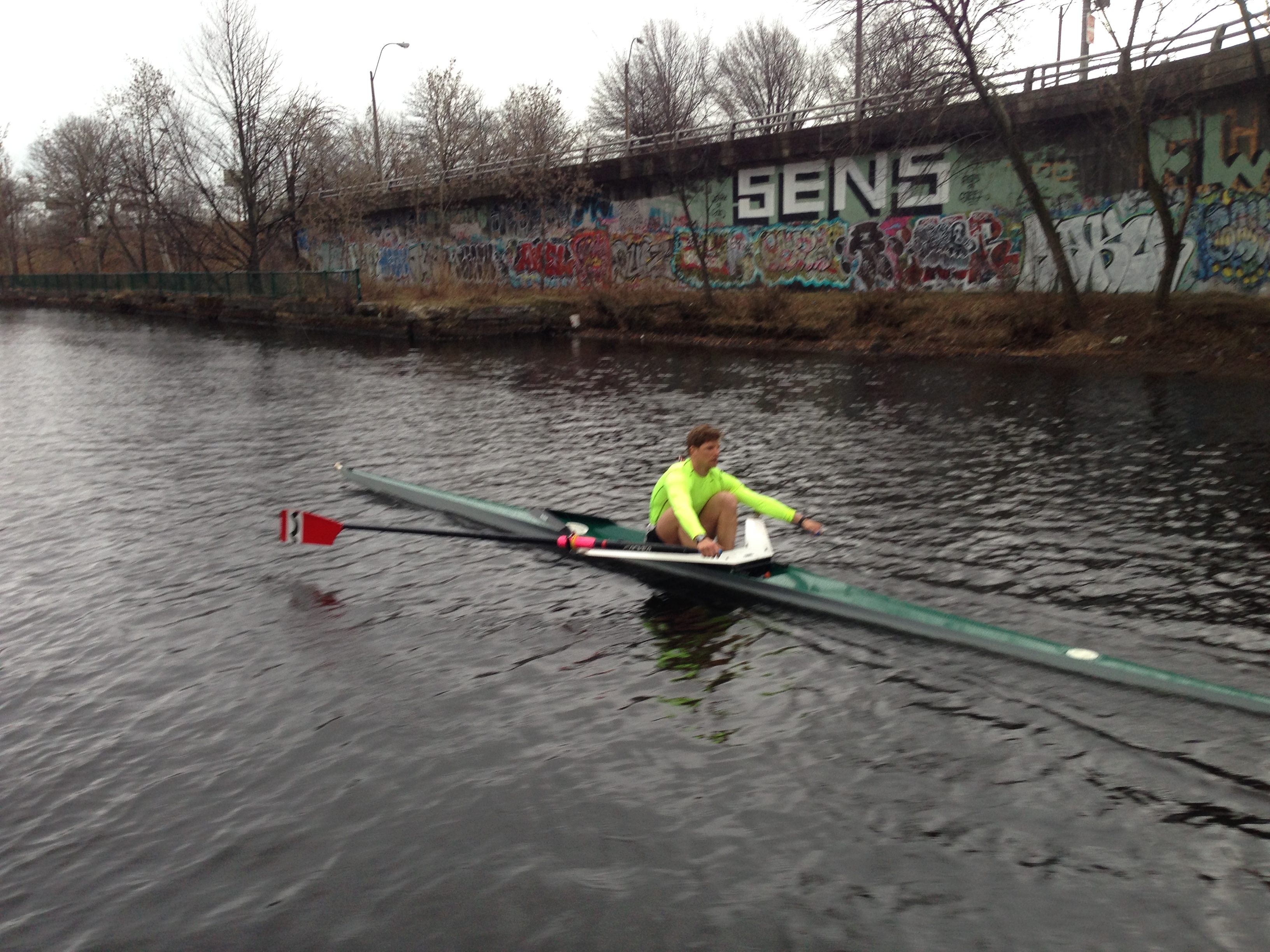
Here is Drew performing the Reverse Pic Drill in a single. Think about how many hours of slow motion practice, balance, and boat feel it has taken for him to get to this point. Look at where he slows things down to find better balance, feel, and connection to the boat and water. For him to make this better and go faster at full speed, he will probably need to practice this even slower. Now it’s your turn, get on an erg, setup a barbell, or get in a boat and master your movement skills with super slow motion. It’s harder than you think.
Today’s Rowing WOD is a 2k Row. It’s a test of how much pain and glory you can endure over seven to eight minutes. Grab some friends and get after it. This is our second test of the Spring season and will give you an idea of how much you’ve improved since our last test over a month ago. Knowing your 2k time, split, and stroke rating is important. It will allow you to game Rowing WODs in competition, whether it’s Jackie, a 2k at the Games, or any other Rowing WOD that pops up at local competitions this summer. Be in the moment, execute your splits, smile, have some fun, breath, and get after it!
If you’re interested in taking your 2k split and learning how to pull it on the water, Concept2 and CrossFit Rowing have just the seminar for you. Back by popular demand, Concept2 and Craftsbury Sculling Center in Vermont will be hosting a 2-Day CrossFit Rowing Trainer’s Course this June. On June 13 and 14th you can learn to own your stroke on the erg and on the water with some awesome coaches and beautiful facilities. I’ve participated in this course and hosted it. Hands down this is an amazing opportunity for someone looking to get into the sport and enjoy the great state of Vermont! Register below!
As a coach I work with many different athletes. Yesterday I started my day coaching a group of Military Rowers from CRI. Half of them are brand new to the sport of rowing and half of them have been rowing for years. After that I worked with the Boston College Men’s Rowing Team. Later that morning I taught a new private client to row on the erg in the gym. Then I finished the day working with the Renegade Juniors who are working to make the CRI Competitive Team move boats faster.
Of all the tools I use with these athletes, whether it’s lifting form, rowing drills, or conditioning, mobility work has the biggest bang for the buck when it comes to making a change in rowing form. If an athlete can figure out what is tight and what is limiting them from making a change, then they’ve got a shot at making a change. Of course figuring out what is tight/limiting is a challenge in itself, but once that happens you can introduce various mobility exercises to help increase range of motion and make the change. In future posts I will roll out some of my favorite movement screens to help determine what is tight/limiting, but for now take a look at the possibilities.
Below are two videos of Drew, a renegade rower training to be elite. The first one is from 2013. Notice his hunch/lunge with his torso and shoulders at the catch. After that, watch the second video, taken last week. Notice how his torso is much more upright and his shoulders stay locked into a stronger position. In order to achieve this change he has been working on mobility in his hips and shoulders for the past 6 months. Checkout yesterdays post to see his current mobility routine.
Let us know what you think in the comments. Have you had any success making an improvement/change to your stroke by focusing on mobility?
Watch the video below and then get loose and enjoy 15 minutes of hamstring and hip mobility.
Share your thoughts in the comments
Over the past week we’ve hit it pretty hard with intensity and higher volume. Our ability to sit up and maintain a solid core through the stroke has a lot to do with our mobility and range of motion through each joint. The work we do everyday before, after, and during our training to promote recovery and rebuilding of the muscle fibers we tear is very important. Use today as an opportunity to stretch out and rebuild those hips and shoulders, increase your flexibility, and eat some good quality food.
Here’s a video of what Drew does everyday to improve his mobility in the boat, especially at the front end of the stroke. Tomorrow I’ll have a couple of before and after videos of how this has affected Drew’s rowing.
Share your favorite mobility move, where you’re feeling it today, and how you mobilized!
 Practices at CRI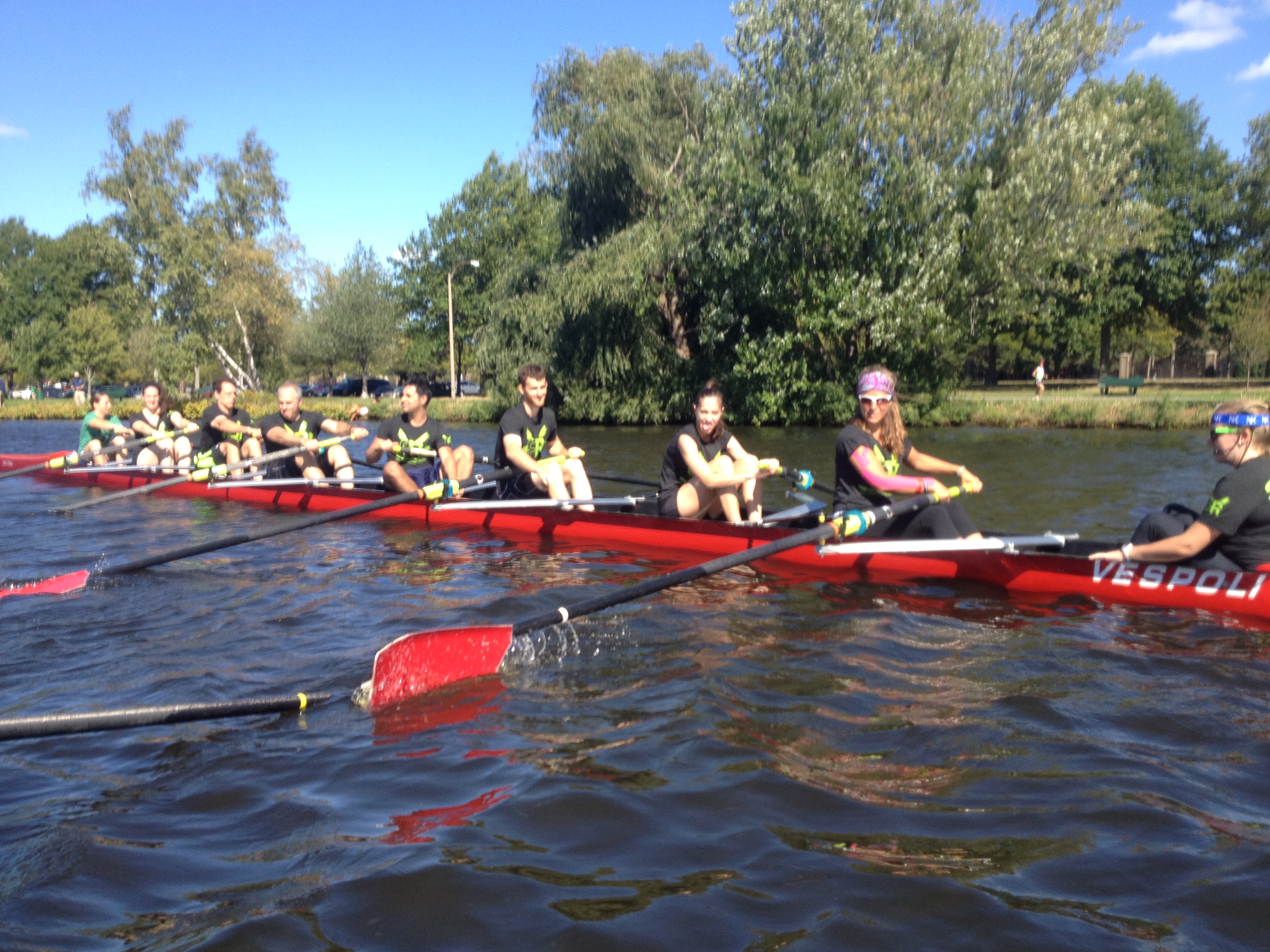


 Renegade Rowing