Video Review: Coach Pat – The Squat and Rowing – How well do you perform these movements?

One of the First Renegade Rowing Athletes to become a Firsthand Athlete!

One of the First Renegade Rowing Athletes to become a Firsthand Athlete!

When’s the last time you performed a Squat?  When’s the last time you sat in a chair or got in a boat?  For many of you in Boston and the Northern states it’s been a while, but that ice is almost gone and regular water practices will be happening in no time.  Regardless, anytime you sit or stand up you are squatting, because that’s what a squat is.  It’s the strongest, most efficient, most powerful way to get your body up out of a chair or seated position.

I believe that if you can learn to squat correctly you can and will become a better rower.  The key is how you squat and what you focus on.  Here is a little video review of a pre-elite rower I’ve started working with.  This is her form before any coaching. Check out what she’s doing well and what she can do better.

Now take a look at my squat and rowing below.  What parts of the squat can we tie to the rowing stroke?  I always teach the skills of 1. Posture, 2. Control, and 3. Connection whether it’s rowing or weightlifting.

1. Posture – How am I doing at maintaining a solid brace through my torso?  Is there any movement within the vertebrae of the spine?

2. Control – Is the bar traveling in a straight line over the middle of my foot?  Am I in control of my body and the bar? Can I stop at any point in time and be in a strong position?

3. Connection – How am I connected to the bar?  How am I connected to the floor?  Are my hips, hands, and shoulders connected as I go to stand?

After taking a look and answering some of these questions, think about your own stroke.  In the front end of your stroke, from 1/2 slide up to the catch and back, how do your joints move in relation to one another and what does your body angle look like?  How much distance is there between your butt and your heals?  Do you feel or see any similarities when you squat and row back to back?  Can perfecting one movement help improve the other?

Please share your thoughts to comments and I’ll get back to you with feedback.
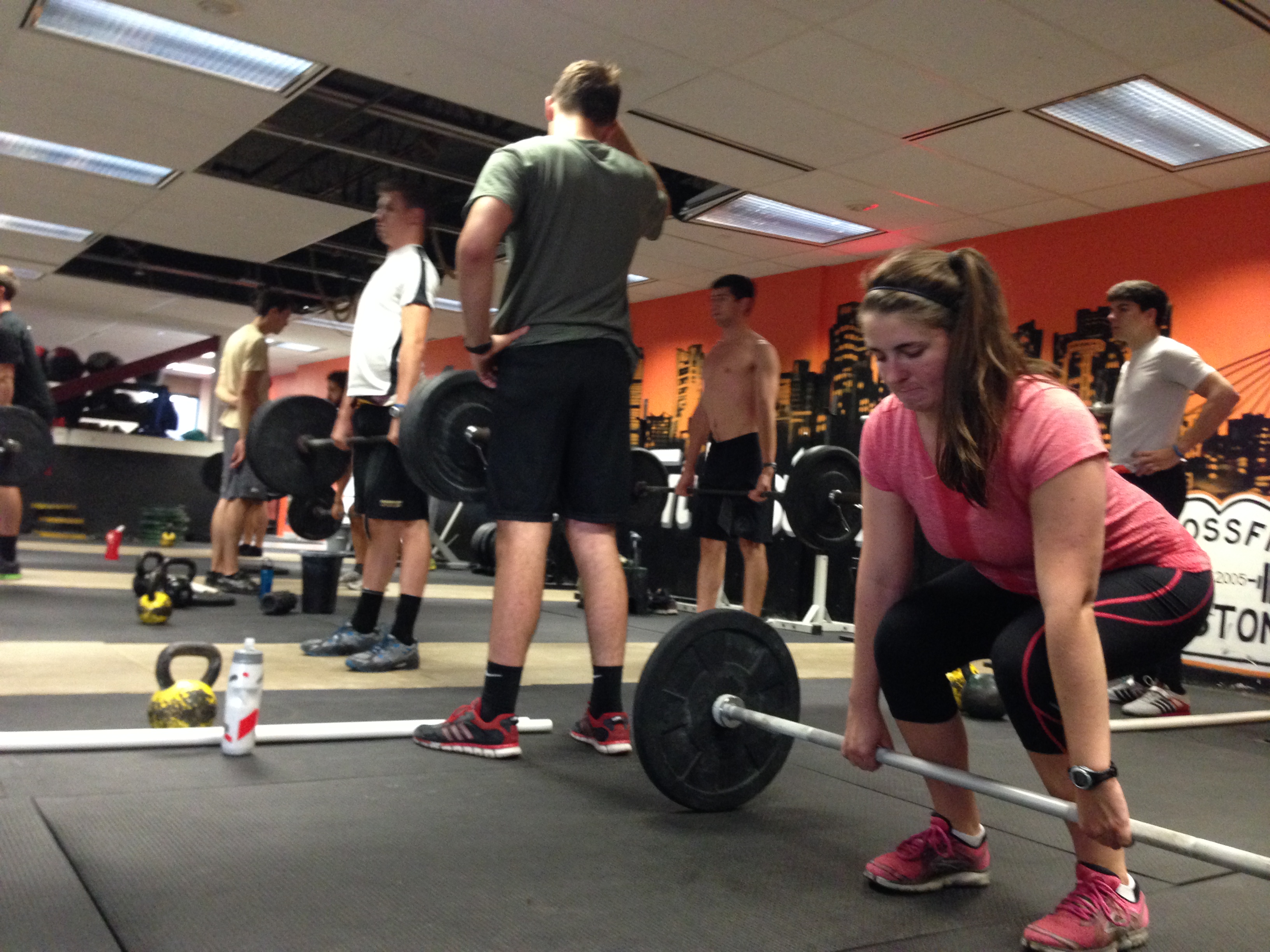
Video Review: Coach Pat – The Deadlift and Rowing – How well do you perform these movements?

Coxswains getting after the Deadlift last winter!

Coxswains getting after the Deadlift last winter!

When’s the last time you performed a Deadlift?  When’s the last time you picked the boat up out of the water?  For many of you in Boston and the Northern states it’s been a while, but that ice is almost gone and regular water practices will be happening in no time.  Regardless, anytime you pick something up you should be deadlifting, because that’s what a deadlift is.  It’s the strongest, most efficient, most powerful way to pick something up off the floor or out of the water.

I believe that if you can learn to hip hinge and deadlift correctly you can and will become a better rower.  The key is how you deadlift and what you focus on.  Here is a little video review of a pre-elite rower I’ve started working with.  This is her form before any coaching. Check out what she’s doing well and what she can do better.

Now take a look at my hip hinge and deadlift below.  What parts of the deadlift can we tie to the rowing stroke?  I always teach the skills of 1. Posture, 2. Control, and 3. Connection whether it’s rowing or weightlifting.

1. Posture – How am I doing at maintaining a solid brace through my torso?  Is there any movement within the vertebrae of the spine?

2. Control – Is the bar traveling in a straight line over the middle of my foot?  Am I in control of my body and the bar? Can I stop at any point in time and be in a strong position?

3. Connection – How am I connected to the bar?  How am I connected to the floor?  Are my hips, hands, and shoulders connected when the bar is below the knee?

After taking a look and answering some of these questions, think about your own stroke.  In the front end of your stroke, from 1/2 slide up to the catch and back, how do your joints move in relation to one another and what does your body angle look like?  Does it stay the same?  When does your body start to swing open?  Do you feel or see any similarities when you deadlift and row back to back?  Can perfecting one movement help improve the other?

Please share your thoughts to comments and I’ll get back to you with feedback.
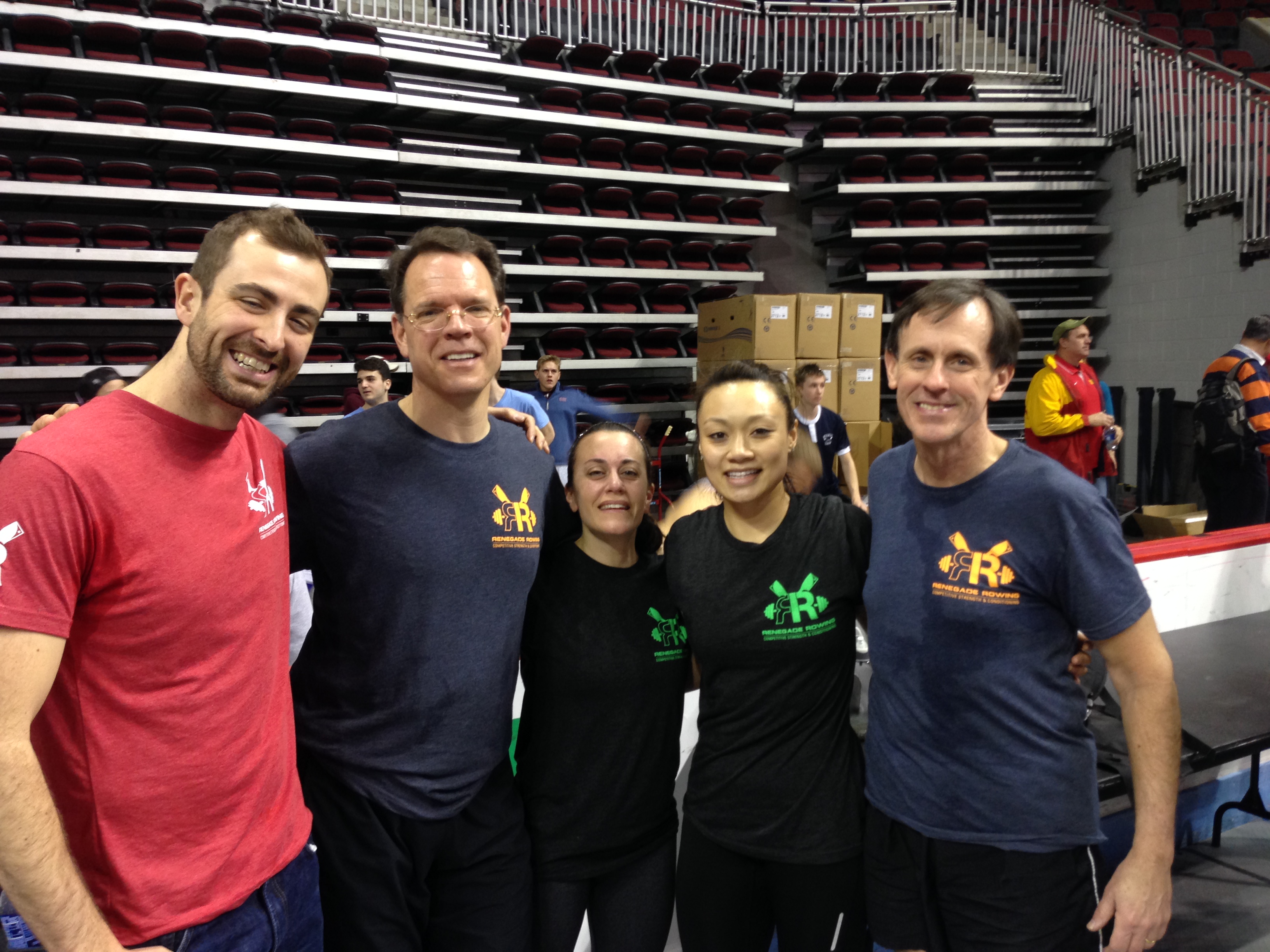
Where’s the fun in life? Our Reason for Competition in Rowing, Fitness, and Strength Training

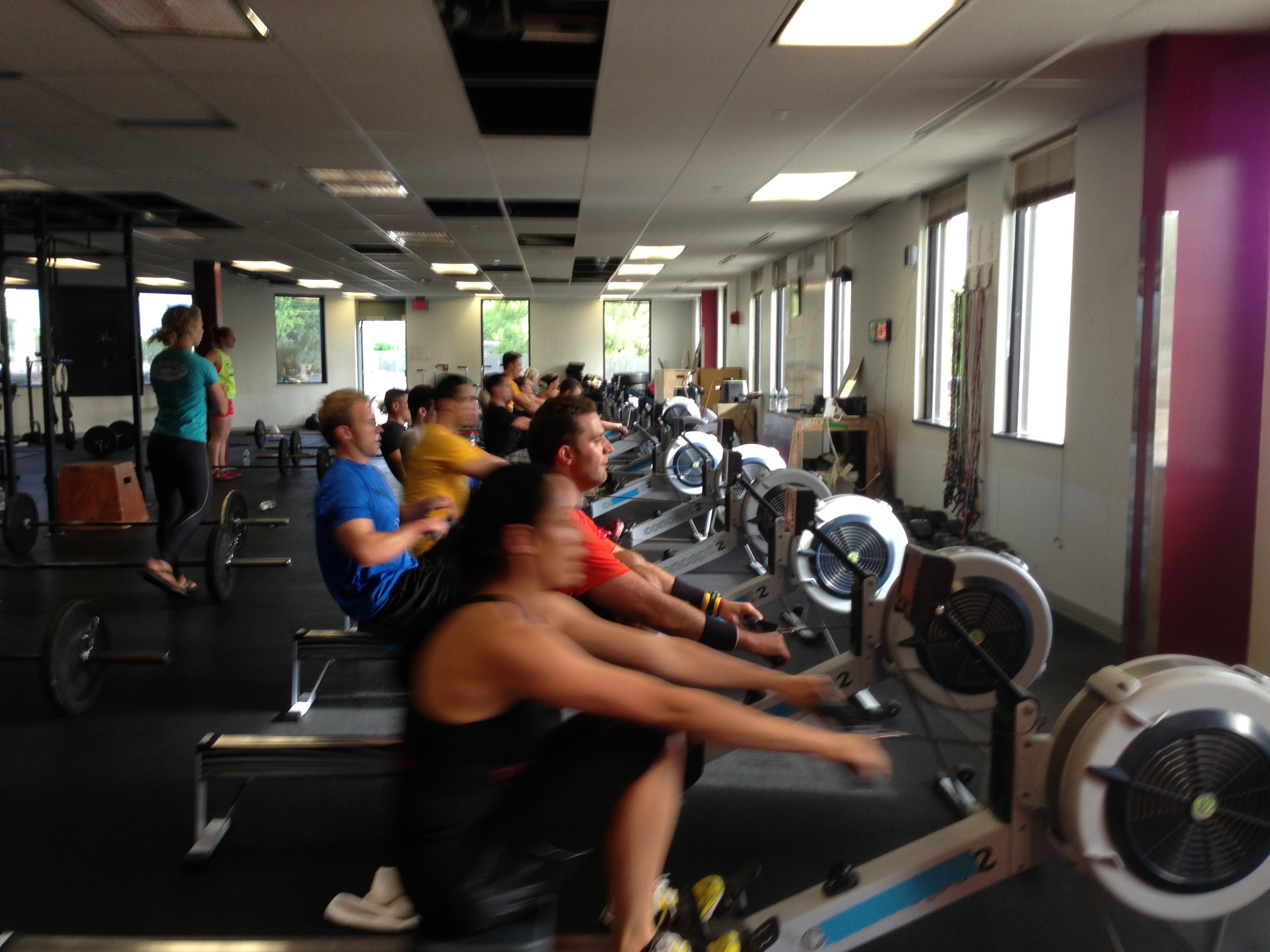
The morning crew at CRASH-B 2015.  Great racing everyone!

The morning crew at CRASH-B 2015. Great racing everyone!

Last week I shared my belief that life is all about motion and learning.  To live and survive, we must be able to move from place to place and interact with the world around us.  That’s great, but how does fun fit into that line of thinking?  I recently had an epic weekend with my college buddies and they reconfirmed my love for competition and sport, which is where I find fun in life.  Competition turns some people off, but let me explain why I think it’s an integral part of our daily lives that everyone should embrace.

Competition is the basis for all sport.  People play sports because they’re fun.  Sports are fun because every participant is given a chance to compete.  It’s not the outcome or the opponent that matters.  People enjoy competing because they’re given an opportunity to test themselves and their abilities in order to experience the thrill of an improvement toward a goal.  Competition can be both individual and team oriented.   By incorporating competition into everyday practice, Renegade Rowing allows us to track progress toward our goals, but more importantly to have fun and experience the journey.

Pat UVM CrewIn order to compete, athletes must develop mental toughness.  Firsthand athletes are developed through competition when they harness the power of the mind.  Our thoughts affect our feelings and our feelings affect our actions.  Anyone can develop an ability to do work with regards to fitness and rowing, but when work capacity is combined with mental toughness, athletes can control their actions and reach their goals.  Mental toughness is an athlete’s ability to commit to competition with a belief in oneself, to have a positive focus on the things they can control, and to embrace challenge as an opportunity for learning and self-improvement.

While the thrill of intrinsic motivation should be what drives us, we should not forget about the power of the opponent or the teammate in competition.  We can push ourselves asCFRowing Trainer Courseindividuals, but the opportunity to push ourselves against others will only make us better.  I’m a competitive guy and I like being pushed and challenged and testing my abilities against others.  There’s honesty in giving it all you have against others, especially knowing they’re doing the same.

Rowing is an Olympic Sport that elite athletes train for year round.  Some athletes may only compete 5 to 6 times per year and of those competitions they might only peak for one race.  Most other sports have seasons filled with games allowing for learning and development during competition.  Renegade Rowing incorporates daily competition so that athletes have the same opportunities that other sports have.  Renegade athletes will have the confidence needed to perform on race day.  By providing many opportunities to experience race day competition in practice, athletes will have a wealth of experiences to draw from when race day arrives.

If you enjoy the thrill of competition and are looking for a community of like-minded individuals who push each other to be better, Renegade Rowing is for you.  Share your thoughts, comments, and questions below.  We’d love to hear from you and compete alongside you!

Here is the training plan for the week:

RR Training Plan 3-16-15

What kind of blocks do you want to see in your Training Plan?

Renegade Rowing Athlete TemplateThis winter I released a new training plan template that includes blocks like Endurance/Active Rest and Olympic Lifting.  Depending on what type of Renegade Athlete you are, you may need to incorporate more of those blocks or you may need a Mobility or Yoga block.  Over the next couple of months I plan on developing more blocks that you can add to your training tool box.  I will also be adding simple testing blocks and standards to determine which blocks you need more of.

This week I’ll be highlighting the different types of athletes that have given Renegade Rowing a shot.  I hope to shed some light on the possibilities that exist in developing a broad, general, and inclusive fitness to allow for sport specific performance no matter what level you’re at.  One group I’m working with is High School Rowers who train with me four times a week in order to prepare for making their team.  A second group is the Boston College Men’s Crew Team, who not only rows on the water most days of the week, but manages to get in to the gym once or twice to get stronger and become more dynamic athletes.  A third group includes members of CrossFit Boston who competed at CRASH-B’s and will learn to race on the water.  And last, but definitely not least I’m privileged to help a competitive masters rower fight his way to elite status.  All of these athletes have different needs and the template I’ve created is a step in the right direction of helping them find the right amount of general and specific preparedness to reach their goals.

Please take a look at the Renegade Rowing Athlete Template below and share your thoughts on where you are and how many blocks you currently use in training.  I will be making adjustments as we go and continually striving to give you good examples of how this works and why it works.

RR Athlete Template

Renegade Rowing Training Plan Template

RRTP 3-9-15

New Class Schedule and New Pricing! Which class will you take next?

RR Classic with Lauryn and JC

RR Classic with Lauryn and JC

Yesterday the new Renegade Rowing Class Schedule and Renegade Rowing Pricing went into effect.  Lauryn and JC tore it up at 6am in the RR Classic.  Today I wanted to share some more info on the classes themselves.  Below you will find a brief description of each class.  While they may help paint you a picture of what to expect, the only way to know what a class involves is to experience one.  Sign Up with Coach Pat to get in the game!

RR Classic
This is the original Renegade Rowing Class.   It’s where it all began. The goal is to improve your Rowing, Fitness, and Strength. We clean up your Rowing Technique in the warmup. We work on improving mobility and increasing flexibility. Then we throwdown in a strength wod (workout of the day) and a conditioning wod that brings together the best of Rowing and Strength Training.
Renegade Blast
This class is meant to kick your ass in 45 minutes.   Expect to be moving and sweating from start to finish. We’ll put you through various levels of High Intensity Interval Training using Rowing, Bodyweight Movements, and Functional Movements. Anyone can jump in and get a solid workout as long as they’re ready to move, sweat, and have some fun doing it. Get fired up for 45 minutes of awesome that will keep you coming back for more!
RR Running and Endurance
We don’t want you to just be a rower, we want you to be an athlete and to succeed at life! The Renegade Running and Endurance Class will help you do both.   We’ll work running skills and drills into a team style warmup and then either hit the beautiful banks of the Charles River for a group run or the Harvard Track for sprints and interval training. Don’t be surprised if you end up meeting a new training partner or end up dragging your friends along to give it a shot once a week. Our running class gets addicting and it’s a great way to network.   Just imagine if you met one new athletic friend in Boston every Friday morning, Boom! Great start to the weekend.
RR Sculling/ Indoor Rowing
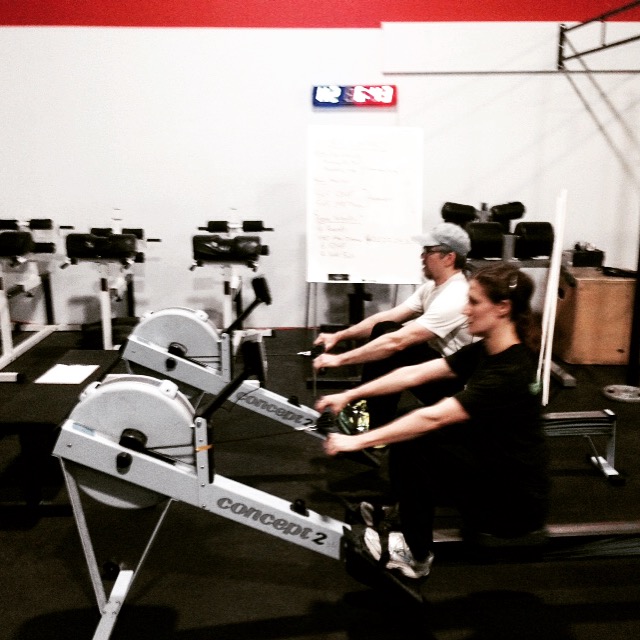
This class is all about taking it to the water and reaching your goals through teamwork. When the Charles River is full of ice, we’ll use the Concept2 Ergometer as a tool to not only improve our fitness, but learn the intricacies and discipline it takes to row on the water. Indoors we’ll row together as if in a boat and take turns leading and following. Everyone will get a chance to make calls and test their knowledge of the sport while also getting in a kick ass workout. When the ice finally does melt and it’s warm enough to get on the water, we’ll be sculling in quads and singles at the Community Rowing Inc. (CRI) – Harry Parker Boathouse in Brighton, MA. Stop wondering what it would be like to fly across the mirrored surface of the Charles River and come do it. Seriously, it’s an experience like none other!
RR Stadium/Social WOD
The best part of training with Renegade Rowing is that you get to do it with a great community of healthy, athletic, like-minded people who want nothing but the best for each other. Every Monday on the blog we’ll announce some version of a Stadium Run or a Social Workout where everyone can come throwdown together and push each other. The best part about these workouts is they are free if you bring a friend who’s never been! Spread the word and let’s Get Awesome together!

Renegade Rowing Class Schedule