The Renegade Rowing Training Plan
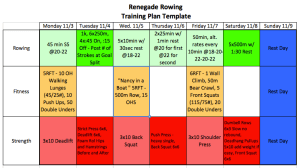
Renegade Rowing Programming for 11/3/14 – 11/9/14
aka – “Our” Plan
By: Patrick Larcom
Why Row?
Rowing is the utmost definition of Sport in modern society. Merriam-Webster and Dictionary.com give two definitions of sport. One, Sport is an athletic activity requiring skill or physical prowess and often of a competitive nature. Two, Sport is a source of diversion and recreation engaged in for pleasure. Whether you’re a middle school rower just learning to scull or an Olympic hopeful trying out for the national team, Rowing provides challenge, competition, and fun.
Rowing trumps all because it offers the best of sport. It tests our skill and athleticism as individuals and as part of a team. Rowing requires an unwavering calm and trust that pushing yourself to wit’s end without seeing where you’re going will develop personal satisfaction and boat speed. It takes balance, grace, and power. Rowing is saying goodbye to the chaos of life by shoving off the dock and taking time for yourself and your team to focus on a common goal.
Why “Our” Plan?
Rowing is at a tipping point. Colleges continue to create new rowing programs and junior athletes are able to use rowing to get into school. Popular movies like “The Social Network” and global crazes like CrossFit have pushed rowing into mainstream society. With rowing on center stage it is a chance for “Our” Team and all those that follow “Our” plan, to show the world why rowing is so amazing. It’s “Our” opportunity to keep them coming back. So, if you see something missing from “Our” plan that will make “Our” sport and our training better, please speak up. It’s up to us to forge a path into the future of rowing together.
Our plan pulls together the best aspects and practices of current rowing programs, other sports, and general society. Current rowers love competition and the hardcore nature of training. The phrase “Athletes Row, Everyone Else Just Plays Games” comes to mind in this regard. Rowers relish in the pain of training on the erg, the sting of blistered hands, and the early morning rows.
Unfortunately, general society knows nothing of what rowers go through. There is no story for spectators to follow. Other sports have plenty of games to watch and characters to follow. Teams are given a chance to compete in pressure situations many times throughout a season and fans get to watch the drama unfold. There are weekly high-speed crashes in NASCAR and fights in the NHL. There are rivalries between whole cities like Boston and New York. While crashes and fights might not be appropriate for rowing, the excitement they draw keeps society coming back for more and gets little kids dreaming. All of this comes from the stories that other sports create through competition.
Rowing is an Olympic sport. In fact, it was one of the original sports of the modern era. However, unlike other Olympic sports such as soccer and basketball, the general public only sees rowing during the Olympics. Major sports are televised daily across the globe due to the myriad professional leagues, amateur leagues, college leagues, and youth leagues that feed each sport. There are thousands of rowing teams throughout the world, but they all exist individually. Each rowing team only trains for one or two competitions a year.
Competition is the answer to why our plan will be different and why it will keep you coming back, even after you leave the team. The number of competitions may be lacking from the annual rowing schedule, but we will create our own stories and competitions everyday in practice to push ourselves and keep things exciting. Everyone on the team will be given a chance to compete no matter what his or her skill set. We will track our progress and gauge improvement based on competition. Instead of Long Slow Distance training, our plan will focus on intensity and quality of movement. Overuse injuries due to hours of rowing will be replaced with skill work and competition. Most importantly, by nourishing our hunger for competition, we will have fun on a daily basis and experience the journey.
Basis for “Our” Plan
Rowing is a strength-endurance sport that involves repetitive, high intensity movements. A 2,000-meter race involves 80 percent or more aerobic activity and 20 percent or less anaerobic. Rowing is unique from other sports in its requirement of both high-intensity exercise endurance and low-intensity exercise endurance. Since we are not elite athletes and do not have the time to train full-time, our plan will focus on methods for developing high-intensity exercise endurance. During certain points in the season, or when assessment shows that our aerobic base is a limiting factor, we will focus on methods for developing low-intensity exercise endurance.
High-intensity exercise endurance (HIEE) is the ability to sustain and repeat high-intensity movements. Sports involving HIEE require high levels of force production, require high rates of force development, call for fast velocities of movement, and require high levels of power output. Low-intensity exercise endurance (LIEE) is also known as aerobic endurance because it involves activities that rely predominantly on oxidative or aerobic metabolism (Bompa, 2009).
LIEE training can impede muscular growth, which will impair an athlete’s ability to generate high rates of force development, maximize peak force-generating capacity, and optimize peak power generation. The use of high-intensity interval training, such as resistance or sprint interval training, has been reported to improve both LIEE and HIEE (Bompa, 2009). Since Rowing requires both, our plan will employ the use of high-intensity interval training both on and off the water.
When addressing issues with training it can be beneficial to observe what other coaches and rowers from around the world are using. The limiting factors of rowing performance are maximum strength, starting power, and muscular endurance. Gee states that strength training for rowing should include simultaneously coordinated upper and lower body work to mimic the full body coordination needed in the rowing stroke. “The Olympic lifts, the squat, and the deadlift are whole-body exercises requiring coordinated actions of many muscle groups for their successful performance, which is why these exercises have been highlighted as appropriate for rowers.” 32 prominent British-based rowing coaches including 22 at the Olympic or National level have used Olympic lifting, periodized training, and focused recovery to improve performance in their athletes. Many also employed the use of plyometrics, on-water rowing sprint work for speed, static stretching for flexibility, dynamic stretching, and PNF stretching (Gee, 2011).
Our plan will incorporate all of the mentioned training modalities and more through the use of Renegade Rowing. Renegade Rowing is a strength and conditioning program made up of all the mentioned training modalities in addition to others and is scalable for juniors and Olympians. Renegade Rowing is an open source fitness program and can be learned and adapted by any coach and rower willing to take the time to reach out and experience it. Based on the adaptation and use of Renegade Rowing by teams at both the high school, collegiate, and masters level, the potential for increased performance, injury prevention, and time-saving in rowing looks to be unparalleled.
The focus of our plan is increasing work capacity. Renegade Rowing can be viewed as a type of High Intensity Interval Training, of which there is a decent amount of research literature. According to Ziemann, work capacity can be increased by HIIT. Aerobic and Anaerobic markers for performance are improved and HIIT has been studied and proven as an effective way to improve aerobic capacity in endurance sports. When efficiency of training is a factor HIIT can be used to quickly improve aerobic and anaerobic capacity (Ziemann, 2011). The focus of most rowing programs is building an aerobic base. We will use Renegade Rowing as a type of HIIT to build our aerobic base, but build strength and power as well. HIIT can sufficiently improve aerobic base and leave time for sport specific training needed to improve skill and racing strategies. It’s important to note that recovery must be monitored and tailored accordingly to guard against over training and injury with the combination of HIIT and sport specific training.
Our methods will focus on developing a broad, general, and inclusive fitness that enables rowing specific skill. On land we will use constant variance, functional movements, and high intensity training. This will allow us to manage practice time effectively to develop both strength and endurance. On the water we will focus on skills, race preparation, and competition to build rowing specific technical and tactical prowess. Our plan aims to successfully combine strength and endurance training to develop general fitness so that our athletes are ready for any sport or activity in life. By increasing work capacity and rowing skill we will out work and out row our competitors.
By following this plan your coaches will be able to help you become a better you for life. Once a year, after the sprint season has finished, our team will hold the Renegade Rowing Games. The games will be a weekend long event to test ourselves and compete with current and past teammates. We will be able to see how far everyone has progressed in our preparation for rowing and life. The Renegade Rowing Games will include the classic individual and team competitions of our plan in both Rowing, Strength, and Conditioning. The games will be an opportunity to show our respect for the hard work everyone has put in and motivate us for the next year. The Renegade Rowing Games will measure the progress we’ve made toward our plan’s end goal and give us a baseline to work from as we start a new cycle of our plan.
A Quick Note
Our plan will be combining the best of many worlds, rowing, fitness, strength, nutrition, mobility, flexibility, and recovery. The goal of this post is to outline all the tools available in our plan. This post will introduce certain principles and ideas that will be important to know when following our plan. If it’s not possible to include all of the details for a certain part of our plan here, then those details will be covered in separate posts. If you only read this post you should have a strong idea of how our plan will run. Just know that everything we do has a purpose and your coaches are happy to explain any part of the plan you may be curious about.
Training
Training is distinct from “exercise” or “working out” in that the goal is to maximize performance in a particular sport or activity. A training plan, then, is a systematic and progressive program to allow an athlete to achieve their full potential in a chosen sport. Our plan will allow us to progress from our current level of fitness and rowing skill to a higher level of fitness and skill that is on par with our goals.
Some of the training principals we’ll use in our plan are the overload principle, the specificity principle, the reversibility principle, and the individual differences principle. The overload principle says that athletes must challenge themselves to stimulate further physiological adaptation. Only by striving to do more work faster will we challenge ourselves and give our bodies a reason to adapt. The specificity principal means that an athlete must train the skills needed in a specific sport and the conditioning needed for a specific event by doing that sport and that event. For us specificity means rowing when we can row and racing/competing in situations similar to a 2,000m race. The reversibility principle means that training gains are not permanent. Athletes who stop training lose fitness, regardless of the reason. If an athlete can’t make practice it is up to that athlete to make up the work to at least maintain fitness. The last principle might be called the individual differences principle. This recognizes that every athlete is genetically different and all athletes are not expected to respond to the same training program in the exact same way. While some athletes won’t make the same progress over the course of the year as their teammates, our plan will allow every athlete the best chance at reaching their personal potential.
General Features of Our Plan
First things first, there are many training methodologies and metrics in existence, but we believe that there is no training adaptation better at improving performance than the ability to do more work. Our plan views common metrics like VO2 max, lactate threshold, body composition, strength, and flexibility as correlates or derivatives of increased work capacity. Rather than worrying about testing lactate or VO2 on a regular basis, our plan will focus on the assessment, tracking, and development of increased work capacity. Our belief is that a simple plan executed flawlessly will trump an extremely complex and detailed plan executed moderately well. Keeping it simple, our plan and training philosophy is to work together as a team to do more work faster through competition.
While our training philosophy may be simple, it is important to know that everything in our plan has a reason, which is the purpose of this post. The following may seem complex and detailed, hopefully not, but keep in mind that the end goal is simply increased work capacity and rowing skill. Our plan is spelled out in detail as much as possible so that you may take ownership of your readiness to do work and compete.
Periodization and Planning
Our plan will be periodized in the sense that if we are lacking in one area of our rowing or fitness, we will focus on strengthening that area for a month or two at a time until appropriate improvements are made. However, our plan will not vary much in its overall structure throughout the year. The workouts will be varied in length, intensity, and creativity, but every week we will need to put in the work to make improvements and better ourselves. There is no way to get where you want to go without hard work.
Our plan is based on the belief that effective training should always be geared toward specific race preparation. It’s not possible to completely isolate and separate different aspects of physiology, training them separately and sequentially, expecting gains in one area to persist when moving on to another area. Our plan will not only be focused on race preparation, but general physical preparedness. We will train and be ready for the known and the unknown. Our rowers will be able to execute a 2k race and then go help another team lift a swamped boat out of the water. We will keep an eye on the proportionality of our training to ensure all aspects of our physiology are making improvements, but we will continually train throughout the year as if our lives depended on it and the Renegade Rowing Games were tomorrow.
Assessment and Tracking
In order to get where you want to go, you must know where you are and from which direction you’ve come. We will use assessment to find out where we are. We will track all of our work in a daily log to know where we’ve been. For example, we may run an assessment and figure out we need more aerobic capacity. By tracking we’ll be able to know to what extent our training has been focused on aerobic capacity, how much improvement that training has yielded, and make the appropriate adjustments going forward.
A week-long assessment will be performed at the beginning of every general preparation period in order to set the training focus for the following weeks. Depending on the results of individuals and the team, the coaches will be able to set a focus for the general preparation and specific preparation periods that follow. The team will participate as a whole in all strength and conditioning and rowing workouts, but if certain individuals are far from average they will be able to choose from a list of workouts once or twice a week that will be more tailored to their individual needs. Also, every individual should approach each workout with the proper mindset and know what they need to work on based on their assessment results. If an individual doesn’t understand his or her results or can’t determine what to work on, they should ask a coach.
Details of the Plan
A typical week’s training will consist of nine to twelve blocks. A block is a workout. Each block can be classified by type and length. Rowing blocks will be short, medium, or long and focused on Endurance, Race Prep, or Active Rest. Fitness blocks or Strength and Conditioning blocks will be short, medium, or long. Strength blocks differ slightly from the others in that they will not have a designated length, but rather a designated focus of total, lower, or upper body and either focus on Basic Strength and Skill or Olympic Lifting. Depending on the focus of the week, we will be able to choose certain blocks to fulfill our goals.
In our plan one week will be a microcycle. Our microcycles can be classified as either preparation or competition. During a preparation microcycle a fitness block and a rowing block will be introduced. In the following competition microcycle those blocks will be repeated and individuals will be expected to compete and try to better their performances from the preparation microcycle.
Four microcycles will make up a macrocycle. Two macrocycles will make up a phase. There are two types of phases in our plan, general and specific. The general phase will focus on all around improvement and the specific phase will be focused on a specific race. An assessment microcycle will be performed at the start of each phase. The selection of blocks for each phase will be based on the assessment microcycle and the needs of the team. The general and specific phases will only differ in the extra emphasis that is placed on technical, tactical, and psychological race preparation used during the specific phase.
The only time our plan differs will be during a peak competition. The four weeks containing a peak competition will make up one macrocycle known as the competition phase. During this phase it doesn’t matter which microcycle the peak competition falls on, we will adjust accordingly. The microcycle and training structure will remain the same leading up to and following the competition. Intensity and workload will be varied the week before and after the competition based on the fatigue and stress levels of the athletes. If everyone is performing well and feeling good we won’t change much. If everyone is exhausted and sore we will tone things down a bit and focus on our mental preparation and mobility.
Our plan accounts for three major competitions, one in the fall, one in the winter, and one in the spring. This version of our plan has chosen the Head of the Charles, the CRASH-B’s, and Championship 2k’s in May as the peak competitions we’ll be training for. Different peak competitions may be chosen based on the team and the year. It should be noted that due to a short spring season the general phase and specific phase only contain one microcycle each and there will be no assessment week performed during the specific phase. The fall season and winter season can be thought of as building toward the shorter spring season, which is the peak and finale of our annual training plan.
Rowing Blocks
Our goal is to become better rowers and learn to move boats fast. Therefore we will need to focus on some aspect of our rowing everyday. Every time we do a strength and conditioning or olympic lifting workout we will be focused on how it will help our rowing and what skills will transfer to the water. In order to see those skills transfer we will row every practice, either on the erg or on the water. Our goal should always be to learn something new about our stroke and how the exercises and movements we’re using in the gym are helping us to move boats faster. Whenever there is time left over after a workout we will work on our rowing and transfer our skills by warming down on the erg with a focus on form and efficiency.
When rowing is the main block used in practice we will be focusing on race preparation and our ability to compete at race pace. This doesn’t mean we’ll be doing all out 2k’s everyday, but we will get comfortable at racing. Depending on the needs of the team we may do more work just below race pace or just above race pace. When rowing is the main block a majority of the work will be high intensity pieces. We will also use short interval work, progressive sets, and specific power pieces both in our rowing blocks and our strength and conditioning blocks.
Every time we get in a boat we should have a game plan and one thing to focus on when things get tough. Our mentality should be to do our best every practice by maintaining our strengths and working on our weaknesses. Everyday is an opportunity to find more strength and speed in a part of our stroke. We will row when we can and work on skills when we can’t. Increased work capacity and strength will be our secret weapon. Everyone will fight to pull their own weight and help those who are struggling. Make your teammates faster by pushing yourself and the team. If we’re not in the top boat we will take pride in making that boat go faster. While the whole team can’t race in the top boat, we will know their success is due to everyone’s hard work and support.
Fitness/Strength and Conditioning Blocks
In order to develop the skills we need to row, we will improve our fitness through strength and conditioning. Fitness is defined as work capacity across broad time and modal domains. People play sports for the fun and opportunity of competition. Every fitness block will contain an opportunity to compete and improve individually and against our teammates. By varying the length of time we do work and the types of exercises and movements involved, we will develop a broad, general, and inclusive fitness that will give us an edge in both rowing and life. We’ll use rowing, running, jumping, throwing, gymnastics, Olympic weightlifting, and more. Even if there is no fitness block scheduled for practice we will always have some sort of competition to keep things exciting and push each other.
Our strength and conditioning will be a general physical preparedness program that can be tailored to the technical aspects of rowing. It will fit nicely into the limited time constraints of a rowing practice in order to keep rowers fit and healthy throughout the season. Renegade Rowing is a core strength and conditioning program that focuses on developing athletes. Much of the program focuses on the extension and flexion of the hips and the extension, flexion, and rotation of the torso or trunk. This “core” strength is what rowers need, but due to the specialization of the sport have little time to develop.
The rowing stroke is a universal motor recruitment pattern and is performed in a wave of contraction from core to extremity. It is one of several functional movements employed by Renegade Rowing. Functional movements are compound movements that utilize multiple joints. They are natural, effective, and efficient locomotors of the body and external objects. The most important aspect of functional movements is their capacity to create power and move large loads, over long distances, quickly. In rowing that would be the capacity to move a boat over 2,000 meters as fast as possible, which is the goal of every competitive rower. Collectively, these three attributes, load, distance, and speed, uniquely qualify functional movements for the production of power.
In our plan intensity is defined as power, and intensity is the independent variable most commonly associated with maximizing favorable adaptation to exercise. By focusing on pushing ourselves and each other to our own relative intensity we are able to produce more power and achieve our goals.
Strength Blocks
Strength is the ability of a muscular unit, or combination of muscular units, to apply force. Strength will be our foundation for fitness, rowing, and injury prevention. Strength will lead to more power in all of our movements and ultimately allow us to move boats faster.
The focus of our strength work will be developing competency in weightlifting. “Weightlifting” as opposed to “weight lifting”, two words, and “weight training” refers to the Olympic sport, which includes the “clean and jerk” and the “snatch.” We will use the strength, speed, power, and flexibility we gain training for the Olympic lifts to row faster on the water.
The benefits of Olympic weightlifting don’t end with strength, speed, power, and flexibility. The clean and jerk and the snatch both develop coordination, agility, accuracy, and balance and to no small degree. Both of these lifts involve complex, full body movement patterns and are initiated and driven by the hips. By mastering the Olympic lifts we will develop additional prowess in rowing.
The deadlift, clean, squat, shoulder press, and jerk are functional and multi-joint movements used in everyday life. Our strength blocks will start with the deadlift, clean, squat, shoulder press, and jerk and then introduce the “clean and jerk” and snatch. In the very beginning we will just work the movement of the clean and jerk with lightweight due to their complexity and dynamic nature.
Much of the best weight training material comes from “powerlifting”. Powerlifting is the sport of three lifts: the bench press, squat, and deadlift. Powerlifting is a superb start to a lifting program followed later by the more dynamic clean and the jerk and finally the “clean & jerk” and the “snatch”. We will start with the basics, the squat, the deadlift, the shoulder press, and the bench press. While we master the fundamentals, we will continually introduce the clean, jerk, and snatch with dowels and light training bars to keep an eye on where we are going.
Practice
Practice is the single most important factor in the control of learning. Some might think the more we practice the more we learn, but if there is no quality or substance in that practice then learning is slow and tedious. It has been suggested that at least 10 years of effortful practice under optimal training conditions is required to reach international-level performance (Ericsson, 1996, 2003; Ericson et al., 1993). Optimal conditions require a well-defined task of appropriate difficulty for the athlete, information feedback, and sufficient opportunities for repetition and correction of errors. Deliberate practice is a training activity that contains all of these elements (Williams, 2010).
Deliberate practice isn’t enough to enable athletes to learn a skill correctly. For a practice to be effective the athletes must be motivated to learn. Athletes must practice with the intent to improve. Our plan allows for this by providing daily competition so that athletes come to practice and are constantly motivated to improve their performance. Deliberate practice and the motivation to improve through daily competition is what our plan will provide and teach.
Preparation is the key to reaching peak performance. To be prepared is to consistently have your thoughts, feelings, and bodily responses at the right state at the right time. The consistency that is required to reach peak performance and compete day in and day out will never happen if practice and competition behaviors are left to chance. By creating a systematic approach to how we think about, feel, and react to different situations we can reduce the fear of the unknown and the stress associated with it. The goal of preparation is to create processes that we can employ daily, weekly, seasonally, yearly, in a warm-up, at practice, in a race, and after competition to improve our readiness to perform.
Practice Structure
Every practice will contain an introduction, a warm-up, a skill session, a workout, and a recovery. Athletes will be expected to arrive 10-15 minutes early in order to foam roll, perform the mobility work of the day, and take care of any other business before the start of practice. At the scheduled start of practice athletes will be encouraged to continue rolling out while the coach introduces the focus for the day and how the warm-up, skill session, workout, and recovery will play into that focus.
Missing Practice
Practice is where we learn to compete and where we make improvement. Missing practice is missing an opportunity to improve. That being said, an athlete who takes responsibility for their work when they miss practice can still make improvements and will be helping the team. Your coaches realize that life pops up from time to time and encourage you to have balance in all aspects of your life, such as family, school, and friends. However, whenever an athlete misses practice they should try to fit in a workout on the same day they’re away. Your coaches will provide a list of various workouts that can be done on your own. Pick one, work hard, and share how you did with the team. Communication will be key when missing practice. Let the coaches know when you’ll be missing as soon as you know and fill in your team while you’re away or when you get back. We’re all in this together.
Recovery, Sickness, Injury
One of the reasons rowing programs have moved toward Long Slow Distance in their training is that it is hard to combine High Intensity Interval Training (HIIT) and Strength Training while allowing proper recovery. Aspects of HIIT and Strength Training are found in Renegade Rowing and therefore recovery plays a large role in how Renegade Rowing is combined with rowing. One of the best parts of Renegade Rowing is that it is scalable to any age or ability and also promotes mobility and nutrition. Coaches and Athletes will hold this aspect in high regard with respect to our plan. One saying that sums up the idea of paying attention to scalability, recovery, nutrition, and mobility is “check your ego at the door.”
If athletes know they haven’t had enough sleep, aren’t well hydrated, haven’t eaten well, or are injured in any way, they should notify coaches during the warm-up. Coaches will also be keeping an eye on all athletes during the warm-up to watch for those that may not be having a good day either physically or mentally. Athletes that aren’t able to give their all will still be encouraged to participate, but with caution. Athletes who aren’t feeling well can choose to do the warm-up and review the skills of the day before taking the rest of the time to hydrate and work on mobility. If an athlete can still function coaches may consider scaling the workout so that an athlete continues to learn the movements without the intensity. The big idea going in is that coaches and athletes monitor both physical and mental states to ensure adequate recovery is being achieved from day-to-day. Keeping safety first can reduce the risk of injury.
Nutrition
It is impossible to out train a bad diet. Food is medicine. Food is fuel. And food can be the key to an athlete’s success. Just like a car needs gas to run, your body needs energy to perform. Energy comes from a variety of food and beverage sources, and some forms are better than others. The most optimal fuel for your body will come from quality non-processed whole foods. These include a variety of meats, fruits, and vegetables as well as nuts, seeds, certain oils, and dairy. The goal is to eat a balanced diet, putting the right things in your body at the right time to achieve your best possible performance.
Energy neutral training is something our plan recommends as well. The goal is to replace the energy used during training by consuming an appropriate amount of food 60 minutes before to 60 minutes after a workout. By keeping a positive energy balance throughout the day, more calories in than out, our bodies will see increased muscle mass, better performance, training adaptations, and normal growth. If we don’t have a snack or something ready to eat right after we workout, the lack of consumption of calories will result in up to 25% of our energy coming from muscle mass. While energy neutral training requires knowledge of caloric expenditure during a workout, which is something we can do using a heart rate monitor, we should at least plan ahead and have a snack available directly after a workout. That snack should have an appropriate mix of carbohydrates and protein. Some examples would be a banana and beef jerky or egg whites and sweet potato.
Hydration
Hydration is also important. Without water there is no life. Following our plan we will need to be drinking water throughout the day to ensure we’re hydrated and ready to go for practice. Poor hydration will lead to poor performance. A good practice is to keep a water bottle with you and have a few sips every half hour and when you feel thirsty. Our plan’s recommendation for hydration will be outlined along with nutrition in an additional post. Know that all athletes will be expected to bring a refillable water bottle to practice.
Where Do We Go From Here?
As you can tell our plan is different. It challenges the standard long slow distance model of training by combining more high intensity interval training through strength and conditioning and rowing. The best way to get a handle on our plan is to see it in action. The following attachments outline the Renegade Rowing Training Plan Template and give examples for the work we will be doing day in and day out. The best advice we can give you is to keep an open mind, be ready to learn and work hard, and be ready to be part of something. Take a look at the charts, calculations, and diagrams, but most of all get in the gym, get in the boat, and give it everything you’ve got. This is our plan and we’ll know best how to improve and progress toward our goals by the work we do together. We take pride in being different. We are specialized generalists who are experts in both fitness and rowing. Our plan develops firsthand athletes that know how to compete, work hard, and row fast based on personal experience. We will be strong and row fast for life.
Renegade Rowing Training Plan Template
RRTP 11-3-14
References
Bompa, T. O., & Haff, G. G. (2009). Periodization: Theory and methodology of training (5th ed.). Champaign, Illinois: Human Kinetics.
Gee, T. I., Olsen, P. D., Berger, N. J., Golby, J., & Thompson, K. G. (2011, March). Strength and conditioning practices in rowing. The Journal of Strength and Conditioning Research, 25(3), 668-682. Retrieved from https://docs.google.com/viewer?a=v&pid=explorer&chrome=true&srcid=0Bx5k9SOB4q9lODNlNmNmZTctYWM2OC00MDBmLWJkZjYtNzFmOTUxNzRiNjhi&hl=en_US
Ziemann, E., Grzywacz, T., Luszczyk, M., Laskowski, R., Olek, R. A., & Gibson, A. L. (2011, April). Aerobic and anaerobic changes with high-intensity interval training in active college-aged men. The Journal of Strength and Conditioning Research, 25(4), 1104-1112.



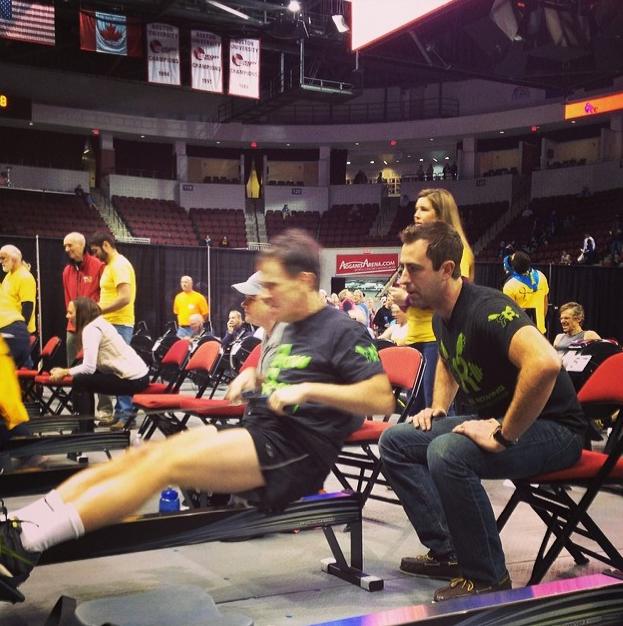
 In 2014 Bob decided he was ready for more and kicked it up a notch. He tried out for and made the CRI Men’s Masters Crew Team. He also became an avid sculler (1 Rower, 2 Oars). Throughout the Summer he competed at regional regattas in both sweeping and sculling. He ended the Fall season in a big way by racing a single at the Head of the Charles Regatta for the first time. The thing I love about Bob is that he’s committed to maintaining and improving not only his rowing prowess, but his athleticism in general. He became a regular member at CrossFit Boston, partakes in CFB Classes 2-3 times per week, trains with the Renegade Rowing Club once a week, all in addition to rowing with the CRI Crew Team on Monday, Wednesday, and Friday. Bob is looking forward to CRASH-B’s again this Winter and continues to train as an R3 Renegade Athlete.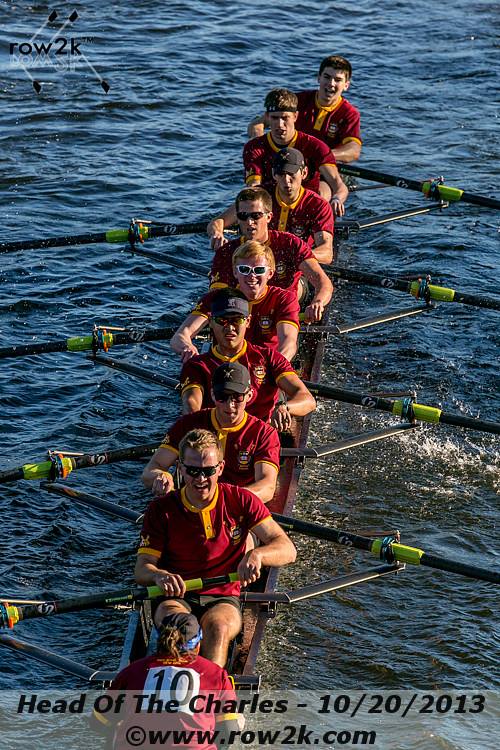
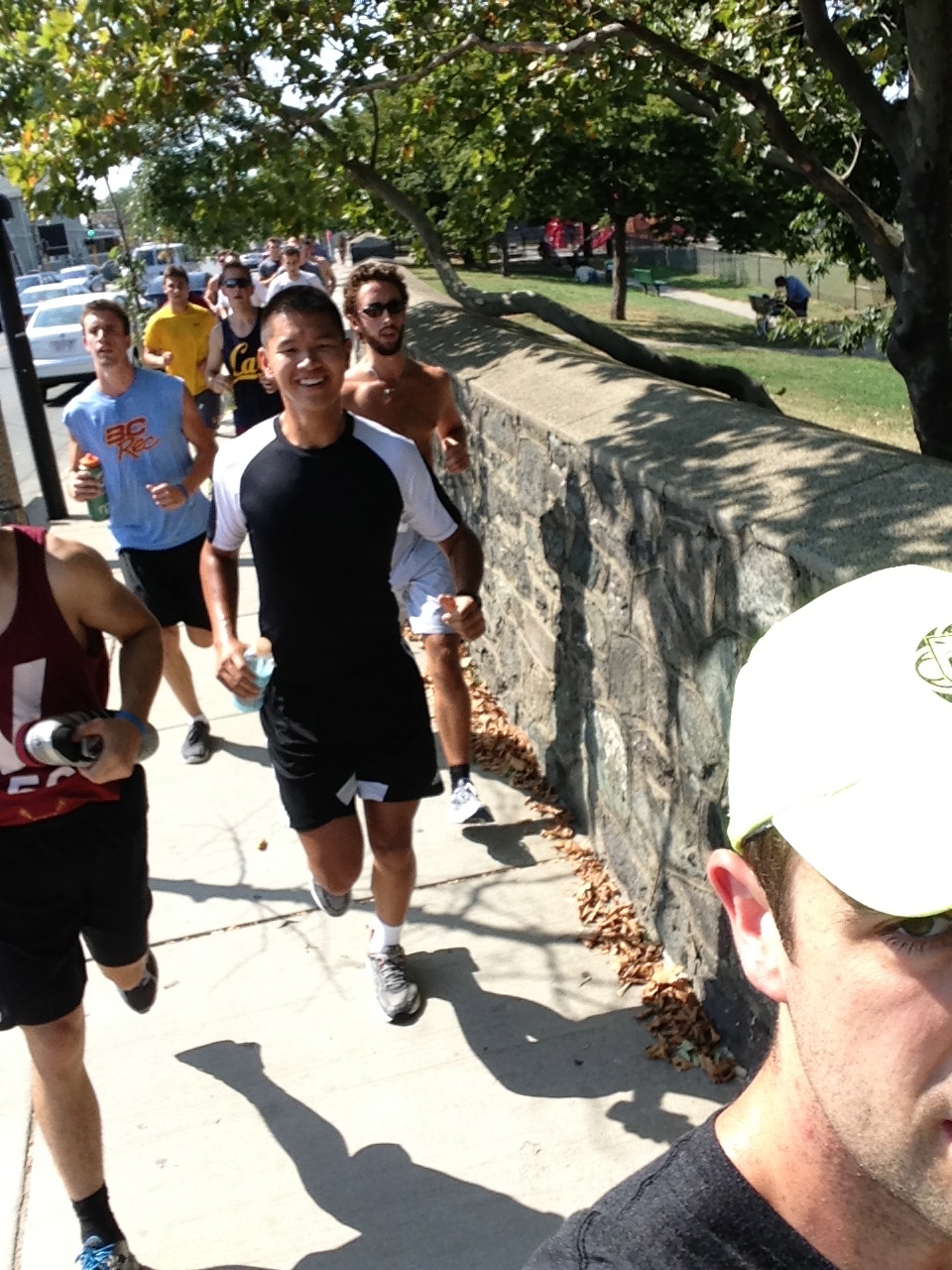
 Bill (R3)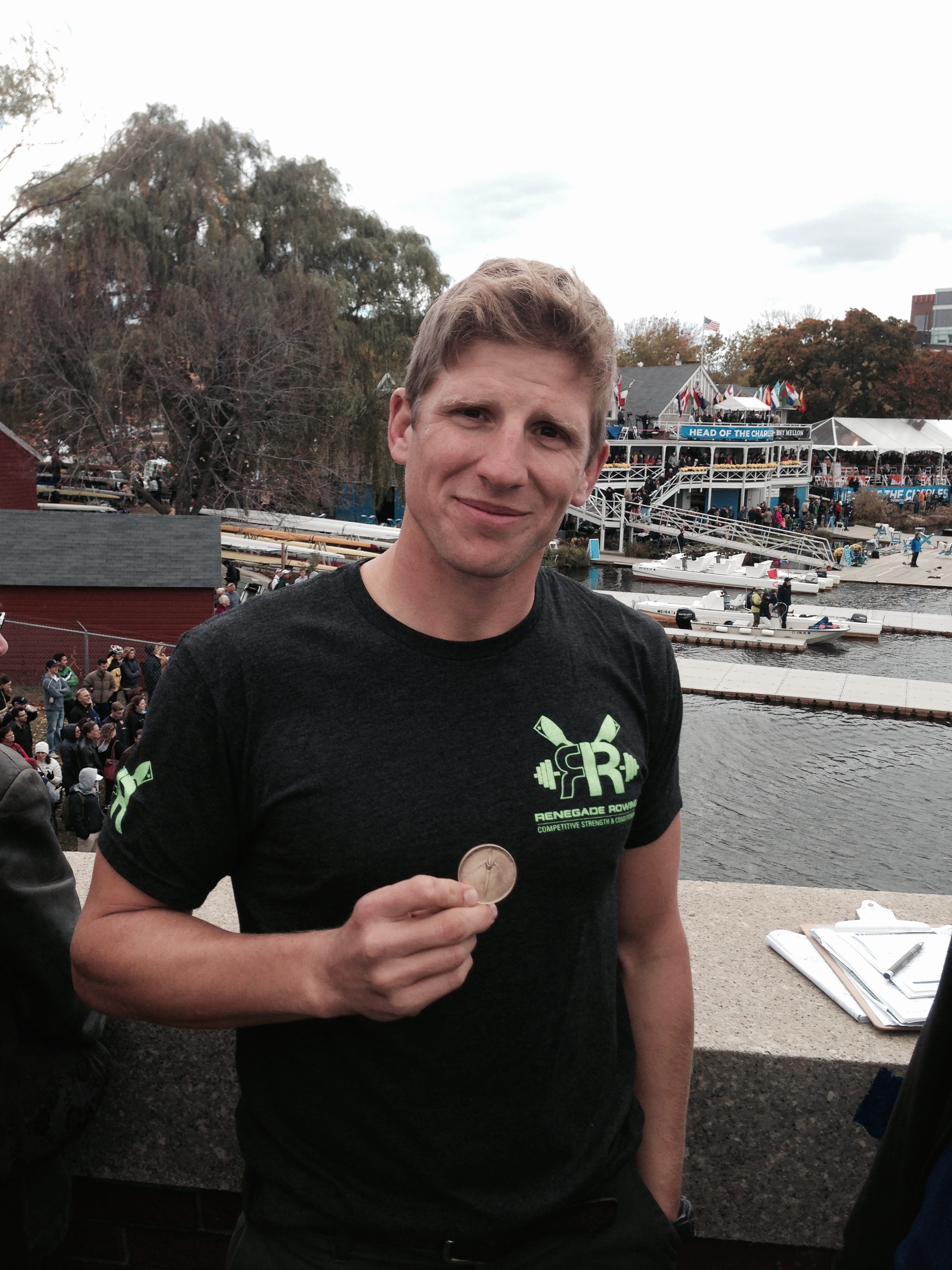


 Renegade Rowing