Rowing is a beautiful sport in that you create the resistance and determine how fast the boat moves. That being said, keep in mind that you get out what you put in for things like strength, conditioning, and Rowing. Ease into this workout for the first four minutes by finding your rhythm and breathing. However, as the stroke rating goes up make sure you’re putting in the effort to bring the 500m split down and keep consistent pressure.
Set the monitor for 10 minutes of work and 4 minutes of rest. During each ten minute piece follow the prescribed rating shifts.
Why is rowing fun? One reason is that it provides a challenge in learning technique to be as efficient as possible while working everything from your head to your toes. Elsewhere in sports and training, if you’ve tried the Pose Method of running you may understand the beauty of focusing on technique and the perception of what your body is doing in space. Focusing on form and technique gives your mind something to work toward rather than complaining about how much your legs burn.
Today’s Rowing WOD is a good opportunity to focus on one or two form fixes but get after it as well. Set the monitor for Intervals Variable and enter the work/rest accordingly. This WOD has the potential to build your confidence in the 2k. Come up with a plan and execute. Be consistent with your splits and stroke ratings for all three. If possible go a little bit faster on each piece. Vets might try for a pace of 2k+5, 2k+4, 2k+3 for each successive piece with a stroke rating of 28-32. Find your efficient stroke. Novices should focus on one form fix for each piece and work hard to maintain a consistent split.
Post your Average 500m Splits to Comments along with an answer to this question…
Today’s Rowing WOD is another long burner to build up your muscular endurance as well as your cardiovascular and respiratory endurance. Fight to go unbroken in all the movements and be sure to get a good mobility session afterwards to begin rebuilding and realigning all of your muscle fibers. Be efficient in your movement, keep a constant pace, and keep breathing.
From time to time it can be beneficial to look at yourself on camera. No we don’t care about the aesthetics or the fashion. We’re looking to gain feedback and a mental picture. We’re looking for just one or two cues that might give us a smoother, more powerful stroke. What’s going right? What’s going wrong? What can we do better?
You should be asking yourself, “What do I look like now? How do I move now? What could use some extra focus and improvement next time?” Don’t dwell on to many things at a time, just find one or two things that might make your life on the erg or in the boat a little better. Go work on them. Then reassess in a couple of weeks.
The Renegade Rowing Club has agreed to help everyone by taking a look at their strokes. If you’d like feedback similar to this, post a 20 second clip of you rowing to YouTube and share it with us in the comments of this post. I’ll do my best to give you a couple of things to work on!
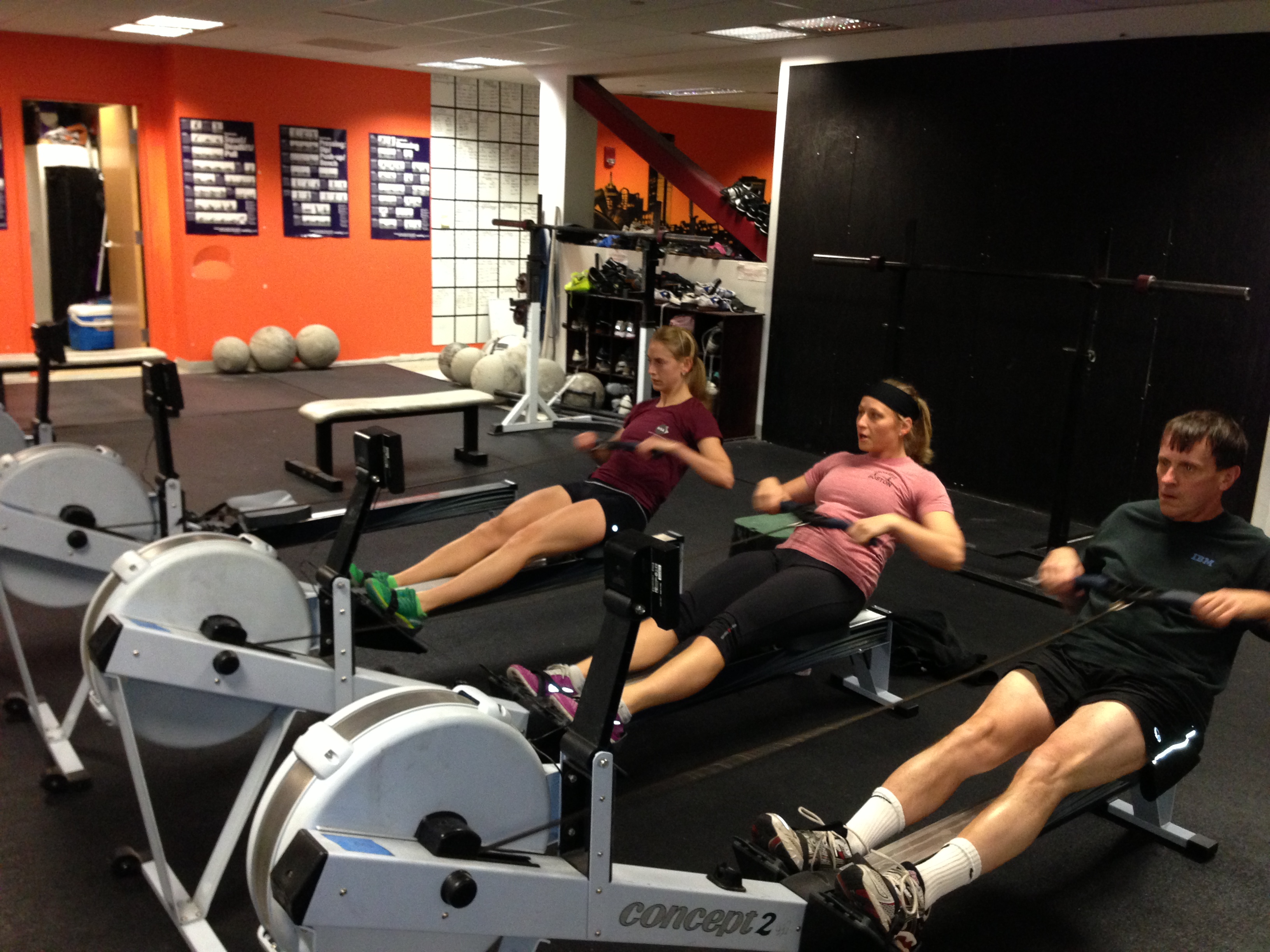
For each of the following videos I’ll be ranking each rower on their posture, control, and connection. I’ll use a five point scale where 1 = poor and 5 = perfect. When dealing with posture we’re looking for the torso to be stacked and strong at all times. When talking about control we are looking at the smoothness of the recovery and how the seat moves toward the catch. Does it rush forward for the next stroke? Is there control in the last few inches of the slide to change direction without pushing the boat backwards? Last and most important, connection, are the seat and handle connected and moving together into and out of the catch as if connected by a belt.
Take a look and share what you might focus on next time you row!
Posture: 3, Control: 3, Connection: 2
Feedback: Nice job getting the body over. Don’t let the seat stop at the catch. Be ready to push with the legs the second you hit the catch and keep the seat and hands connected.
Today’s Rowing WOD will be a good burner to get your lungs going and allow you to really focus on a solid core. The double unders and kettle bell snatches are technical and require a higher focus on skill and efficiency. For the double unders try to keep your wrists loose and get into a good flow that you can maintain. A good goal would be to go unbroken for a minute. With the one arm kettle bell snatch focus on driving through the heels and getting good hip extension to move the weight. A bonus for the KB Snatch is that it requires you to keep a stable core and not allow your torso to rotate. Any movement that involves an anti rotation component and stabilizing of the core is good for rowing. Every time we reach out to the rigger in sweep rowing there is both a compression and rotation on our spines, which can lead to disc injuries over time. By strengthening the core and resisting rotation we can prevent those injuries from happening. So keep that chest up and don’t let the shoulder drop too much through the bottom! Here is a good link from Rogue Fitness on the Kettle Bell Snatch: http://youtu.be/6l2Iu26oWW8
 Rowing WOD: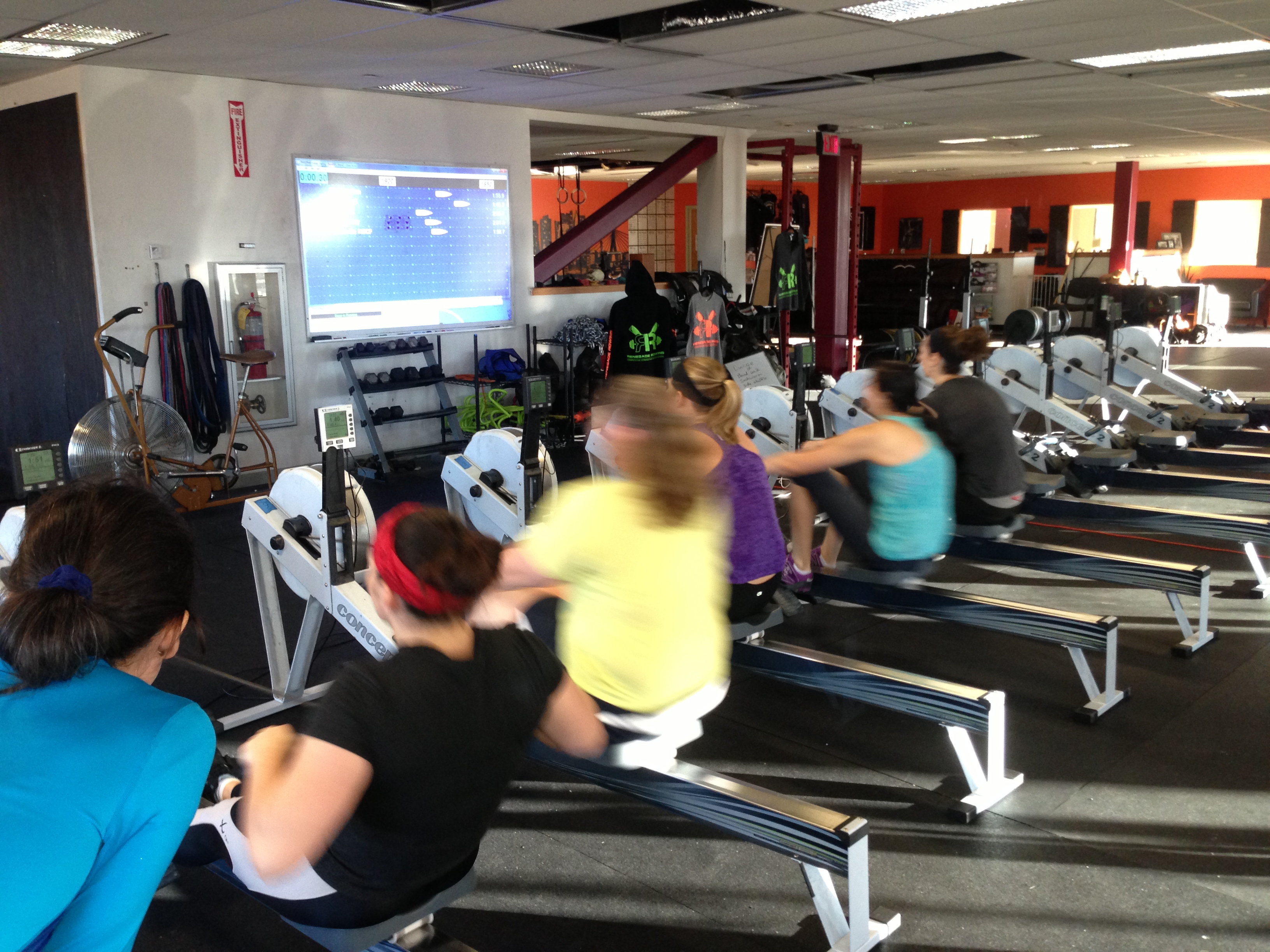

 Renegade Rowing