Performance is the beautiful moment in sport when an athlete gets to put it all together. Performance is the combination of mind and body, of physical and mental preparation. Performance is when an athlete gets to challenge the skills they’ve learned in order to feel total immersion in the activity. Those who perform best experience a narrow focus of attention on the present and no fear of failure. Exceptional performance feels like complete control, the slowing of time, and the feeling of everything being automatic and effortless. To perform well athletes must have control over emotion, thoughts, and arousal. They must exist in a state of high self-confidence, be physically and mentally relaxed, and highly energized. Some of the tools we’ll use to improve performance include concentration and self-talk.
Self Talk
Self-talk is that “voice inside your head” otherwise known as your thoughts. The mind controls the body and being aware of what that voice is saying can improve performance.
Daily Challenge 5/22:
Check Yourself! During your work today, whether it be in the gym, a meeting, or at home, make sure you’re using positive self talk and not adding undue stress to your performance.
Post your thoughts to comments. How does self talk affect your performance?
Many rowing coaches will say “Hang From It”, referring to the way rowers hang from the oars as they drive their legs down. In order to protect our shoulders it helps to build up our ability to keep the lats engaged and shoulders back and down while we hang. Thus our daily challenge…
Daily Challenge 5/15:
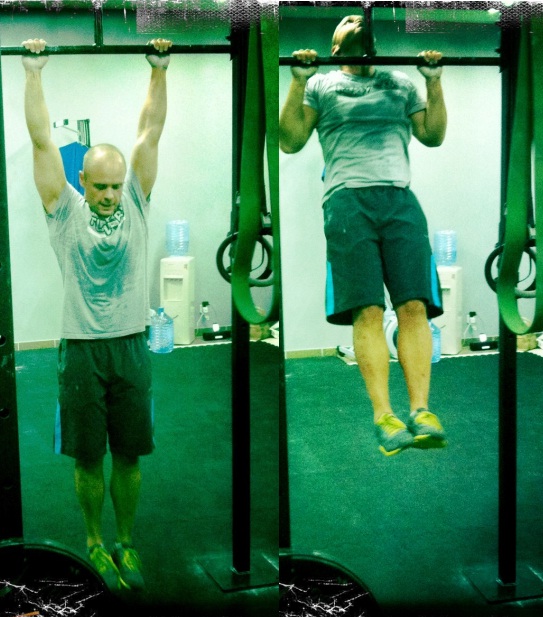
Hang from a pull up bar with your chin over the bar for 3×30 seconds. If thirty seconds is to long either reduce your hang time or add a light jump stretch band to the mix.
Share your experience! Was it hard? Did you keep your scapula retracted back and down?
A firsthand athlete has the competence and confidence to rely on personal experiences to prepare for, execute, and learn from a performance both as an individual and as part of a team. Rowing is a unique sport in that there is no coach calling plays, talking you through the pre-race warm-up, or cueing you on that one technical or tactical fix during a race. The same goes for fitness, when an athlete is away on vacation there is no coach to walk them through a workout. When a rower shoves off the dock on race day or goes home for vacation it’s up to them to know what to do, what to think about, what to fix, and what to focus on. The firsthand athlete actively communicates with their body, teammates, and coaches to continually learn and work towards their goals.
Daily Challenge 5/1:
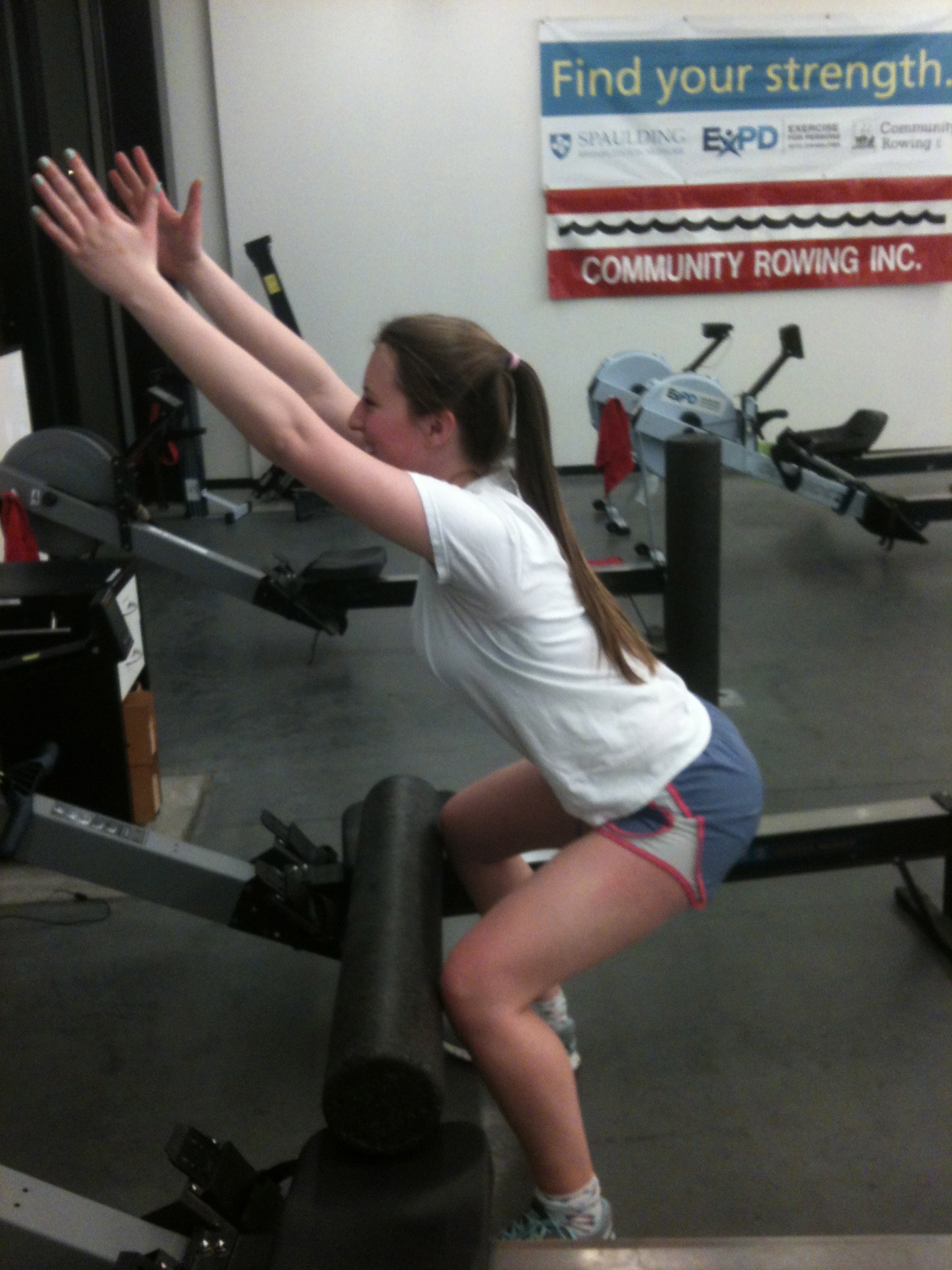
Perform a Cook’s Squat for 5 minutes.
Infants do cook's squats all the time!
This challenge is to give you a chance to experience what parts of your body might be tight, limited in range of motion, and need some extra focus in the coming weeks. To perform a cook’s squat imagine you are out in the woods camping. There is nothing to sit on but wet, muddy ground. To rest your body while cooking over a small fire the easiest thing to do is drop into a deep squat and try to relax all the muscles in your legs and back. Notice where you start to feel a stretch, an impingement, or pain. That might be an area to work on. If you can’t hold the Cook’s Squat for 5 minutes just hold it as long as you can and then come out of it.
Share your Firsthand Experience and let us know how it went!
Competition is the basis for all sport. People play sports because they’re fun. Sports are fun because every participant is given a chance to compete. It’s not the outcome or the opponent that matters. People enjoy competing because they’re given an opportunity to test themselves and their abilities in order to experience the thrill of an improvement toward a goal. Competition can be both individual and team oriented. By incorporating competition into everyday practice, Renegade Rowing allows us to track progress toward our goals, but more importantly to have fun and experience the journey.
In order to compete, athletes must develop mental toughness. Firsthand athletes are developed through competition when they harness the power of the mind. Our thoughts affect our feelings and our feelings affect our actions. Anyone can develop an ability to do work with regards to fitness and rowing, but when work capacity is combined with mental toughness, athletes can control their actions and reach their goals. Mental toughness is an athlete’s ability to commit to competition with a belief in oneself, to have a positive focus on the things they can control, and to embrace challenge as an opportunity for learning and self-improvement.
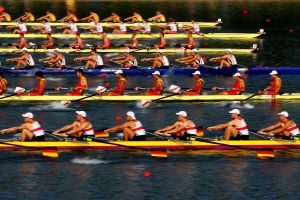
While the thrill of intrinsic motivation should be what drives us, we should not forget about the power of the opponent or the teammate in competition. We can push ourselves as individuals, but the opportunity to push ourselves against others will only make us better. I’m a competitive guy and I like being pushed and challenged and testing my abilities against others. There’s honesty in giving it all you have against others, especially knowing they’re doing the same.
Rowing is an Olympic Sport that elite athletes train for year round. Some athletes may only compete 5 to 6 times per year and of those competitions they might only peak for one race. Most other sports have seasons filled with games allowing for learning and development during competition. Renegade Rowing incorporates daily competition so that athletes have the same opportunities that other sports have. Renegade athletes will have the confidence needed to perform on race day. By providing many opportunities to experience race day competition in practice, athletes will have a wealth of experiences to draw from when race day arrives.
Daily Challenge 4/27:
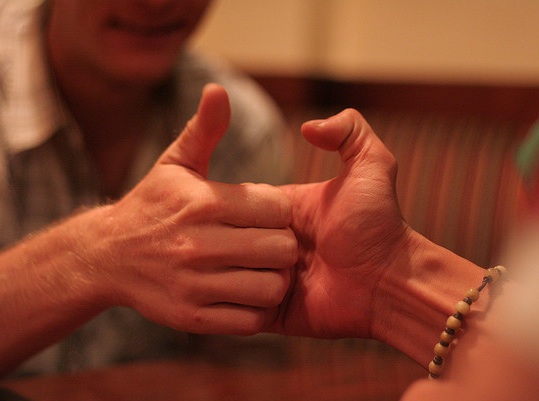
Compete! Challenge the next person you see to a thumb war!
Let us know how it goes and why you enjoy competition…
Rub your head and pat your tummy! Just kidding, but really, your ability to do two things at once is something you can work on to improve your movement in and out of the boat. Checkout today’s Daily Challenge and read part 2 of Judith Vogel’s post on Agility and Rowing.
Daily Challenge 4/25:
Read the following post about Agility and Rowing, perform 10 Agility Jumps, and share your experience.
Agility and Neuromuscular Training as it Relates to Rowing
The ability to change directions, powerfully and almost instantaneously, is a key component to the rowing stroke. There are two parts of a rowing stroke in which an athlete is required to rapidly change directions; the catch and the finish. Time spent during these transition points not only affects the rhythm of the stroke but it also disrupts boat speed. Research could demonstrate in which ways agility training decreases time spent changing direction which, when applied to the rowing stroke, will allow the athlete to better establish a stroke rhythm as well as attain greater boat speed.
The conventional definition of agility is that it is determined by an athlete’s ability to de-accelerate, change direction, and accelerate once again in a short amount of time. Agility training has been utilized in many power-based sports to increase a player’s ability to change direction rapidly. A quick search of the Internet will result in a myriad of dodging and lateral sequences for sports such as football, soccer, hockey, and tennis.
It is thought that cyclical endurance sports do not require such training as there are few, to no, points in which an athlete requires such dramatic changes in speed and direction. In actuality the transition points of the stroke, the catch and the finish, are enormously complex combinations of horizontal and vertical movements. The athlete is additionally required to complete this sequence of movements in a very short period of time while, maintaining balance in a narrow boat and sequencing their movements with other athletes. The success of the transition points depends on the athlete’s ability to coordinate their movements and control their center of mass.
In rowing, there are two transition points within the stroke, which demand a very precise sequencing of movement over a very small amount of time. These transition points are the catch and the finish. Rowing takes place on a medium, water, which is unforgiving to very sudden changes in speed. With the aim of maintaining or consistently increasing hull speed over the course of a race, any delay in the transition points results in a dramatic loss in speed.
The rhythm of the agility exercises describes the rhythm of the “place” of the blade and the “press” against the foot stretchers to initiate the drive. The blade requires a bit of time to lock onto the water. Depending on the number of rowers and the size / speed of the boat, the relationship between the place and press will differ. If we were to consider rowing in an eight, the different rhythms would mimic the following scenarios.
Exaggerated slow rhythm – rowing by pairs in an eight, at a 16spm
Normal rhythm – rowing all eight at a 24spm
Exaggerated quick rhythm – race pace in an eight
The rhythm ties into the catch placement by allowing the athlete to coordinate blade placement with the location of pressure on their feet. To avoid a debate about whether the rower should lift their heels off of the foot plate at the catch, or not, we should all at least agree that the pressure on the feet moves from the heels towards (or to include) the balls of the feet as the athlete approaches the catch. As the athlete feels the pressure move towards the balls of the feet, they place the blade into the water. The objective is to place the blade into the water before the athlete feels the pressure on the balls of the feet. This gives them time to arrive at the catch with the blade fully buried. The athlete can then press off of the footplates knowing that the blade is fully buried in the water.
The same rhythm can also be applied to the finish, with the first beat corresponding to the tap down and the second beat corresponding to the athlete arriving at the arms away position. The slower rhythms will match a slower boat speed and the higher rhythms will match the quicker boat speeds.
The application of land-based motor skill development exercises gives the athlete the opportunity to build an understanding of the rhythm required during the transition points in a stable environment.


 Daily Challenge 5/22: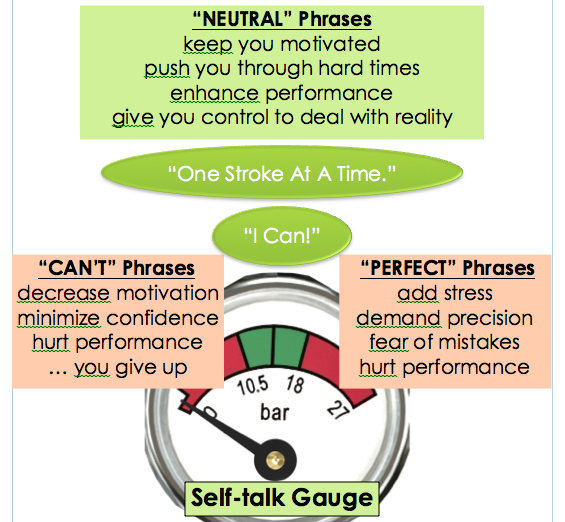


 While the thrill of intrinsic motivation should be what drives us, we should not forget about the power of the opponent or the teammate in competition. We can push ourselves as individuals, but the opportunity to push ourselves against others will only make us better. I’m a competitive guy and I like being pushed and challenged and testing my abilities against others. There’s honesty in giving it all you have against others, especially knowing they’re doing the same.