Performing an appropriate warmup for the workout that is set out each day can make or break a performance. Below is the warmup we use fairly consistently in classes at the Renegade Rowing Club. It’s a good 10min warmup to focus on control, connection, and recovering to strength. Checkout how slow the Renegade Rowing Club approaches the catch in the beginning. Executing this drill with control will allow you to really focus on putting technique changes into effect and hitting that catch with good timing and connection.
Please share what you do for a warmup when rowing is involved in the workout. What is your focus?
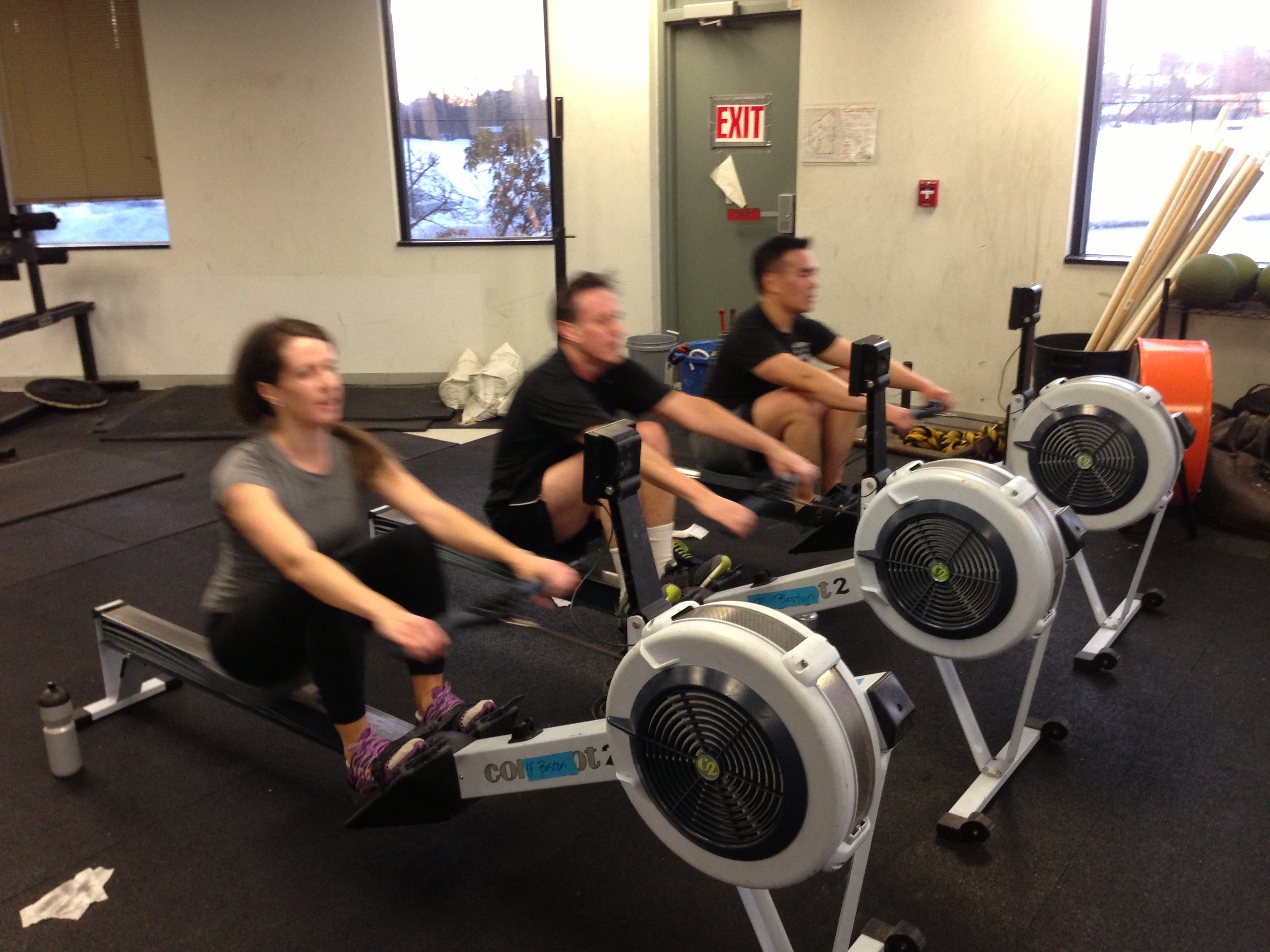
From time to time it can be beneficial to look at yourself on camera. No we don’t care about the aesthetics or the fashion. We’re looking to gain feedback and a mental picture. We’re looking for just one or two cues that might give us a smoother, more powerful stroke. What’s going right? What’s going wrong? What can we do better?
You should be asking yourself, “What do I look like now? How do I move now? What could use some extra focus and improvement next time?” Don’t dwell on to many things at a time, just find one or two things that might make your life on the erg or in the boat a little better. Go work on them. Then reassess in a couple of weeks.
The Renegade Rowing Club has agreed to help everyone by taking a look at their strokes. If you’d like feedback similar to this, post a 20 second clip of you rowing to YouTube and share it with us in the comments of this post. I’ll do my best to give you a couple of things to work on!
For each of the following videos I’ll be ranking each rower on their posture, control, and connection. I’ll use a five point scale where 1 = poor and 5 = perfect. When dealing with posture we’re looking for the torso to be stacked and strong at all times. When talking about control we are looking at the smoothness of the recovery and how the seat moves toward the catch. Does it rush forward for the next stroke? Is there control in the last few inches of the slide to change direction without pushing the boat backwards? Last and most important, connection, are the seat and handle connected and moving together into and out of the catch as if connected by a belt.
Take a look and share what you might focus on next time you row!
Posture: 3, Control: 3, Connection: 2
Feedback: Nice job getting the body over. Don’t let the seat stop at the catch. Be ready to push with the legs the second you hit the catch and keep the seat and hands connected.
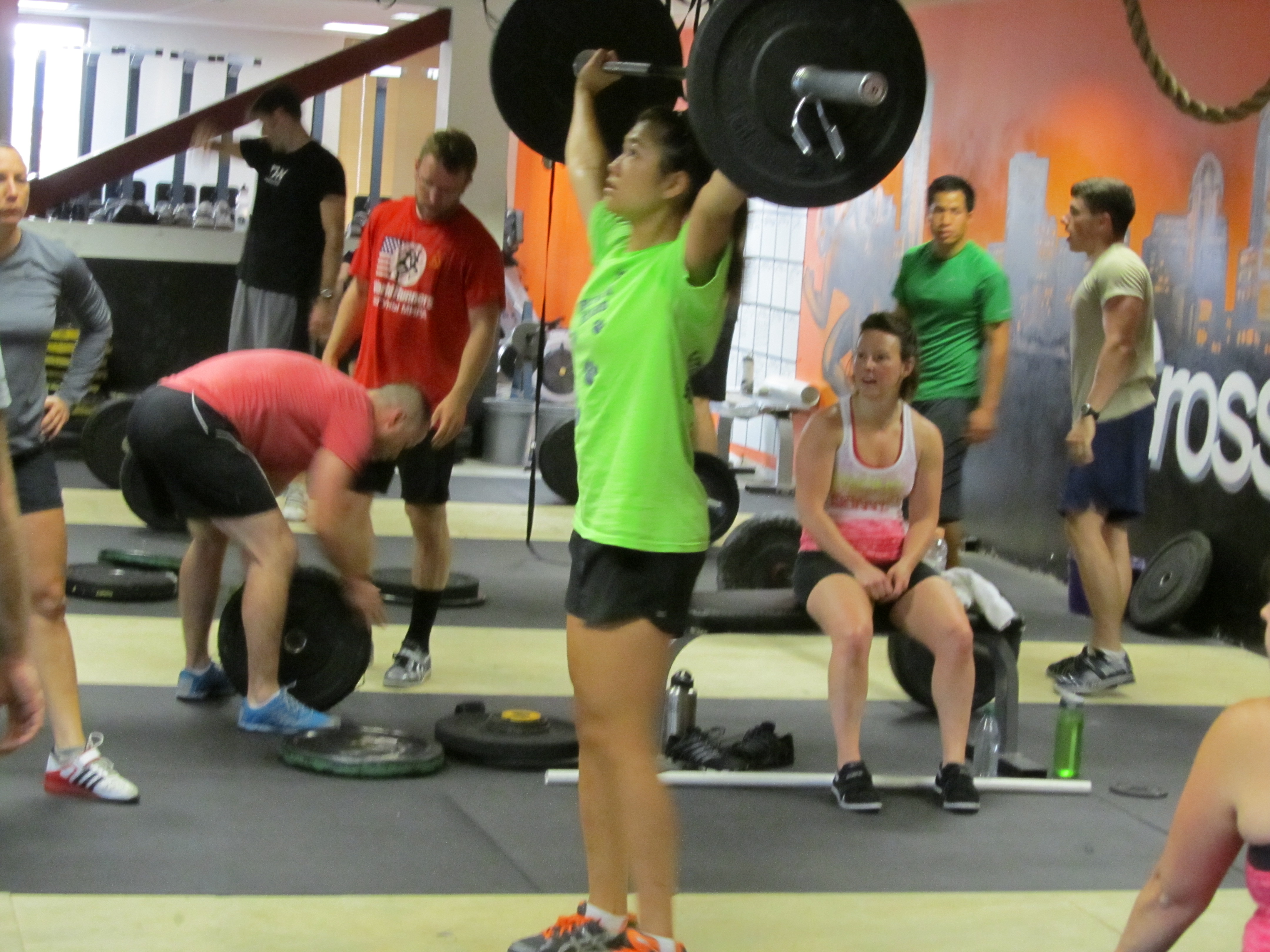
What do you think about using Olympic Lifting in training to be a Rower or using Rowing to be a better Olympic Lifter? Both require speed and power and incorporate similar movement patterns. However, in rowing you sit down and are in contact with three surfaces. In Olympic Lifting you are only in contact with two. In Olympic lifting the goal is to transfer forces vertically and in rowing the goal is to transfer forces horizontally. Where do you see the most benefit in training with both? Are there downfalls?
One skill, concept, and idea that I keep coming back to is Connection. Coaching people in the gym and on the water allows me to see many different movement patterns and levels of ability. Athletes that grasp this idea of connection from one joint to another and one external object to another are able to learn faster, create more power, and transfer skills to other movements. Learning to connect the hips to the hands as you initiate a movement or connect your feet to your hands at the catch, both in rowing and snatching, is invaluable. Once this skill is perfected the possibilities are endless.
Recently I introduced the snatch to the BC Men’s Crew Team. While we only worked with PVC pipes to begin with and 45# bars in the workout, the importance of generating speed through the middle of the drive and being turned on at the catch became apparent. Those that had explosive hip extension from rowing and knew how to create speed on the oar through the middle of the drive in the boat had a lot more success transferring that skill to the barbell.
Using the Clean and the Snatch to generate speed on the drive through good connection is a lot of fun. Rowers become athletes and are empowered to push harder by learning new movements and finding power they never knew they had. It’s also a lot of fun seeing olympic lifters and other athletes learn to row because it helps them to find more connection and speed in their lifts.
Post your thoughts to comments! Any experience transferring skills from one sport to another?
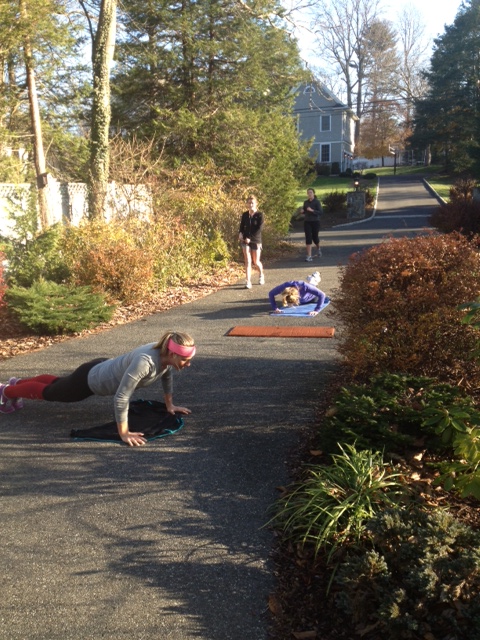
Thanksgiving is one of my favorite days of the year. It’s a day of hanging out with family and friends while enjoying good food and football. Many people do Turkey Trots or get up and walk the beach together before digging into a bountiful feast. Hopefully you’ve got something planned. If you don’t, try the Gobble Gauntlet with your friends. Get outside and be active before relaxing for the rest of the day.
During the holidays you may be traveling or away from an erg, so be sure to stay active and get creative with your workouts. Today is supposed to be a rest day, but this can count as active rest especially if you’re doing it for fun with friends and family. Keep a consistent pace and keep pushing. This is a good one to work on your endurance.
Get some ratio at the Renegade Rowing Club starting December 2nd!
If you’re interested in joining the Renegade Rowing Club to train for the Renegade Rowing League and CRASH-B’s please email Coach Pat. The club starts training Friday, December 4th at 6:30am at CrossFit Boston.
Deciding what to eat day-to-day can be challenging. Choosing the best thing to eat – a meal that will give you energy to perform without making you feel too full, sick, or hungry – can be even more challenging. Every workout is different, so how you fuel for each one will be different too. You probably wouldn’t eat the same breakfast before a 2K test as you would before a 10 mile run. Read on for some basic pre-workout meal guidelines and some ideas for before a workout.

 Renegade Rowing