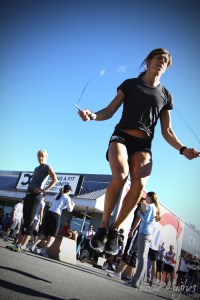
Rowing WOD 6/22: 2 x 2k w/ 4min Rest

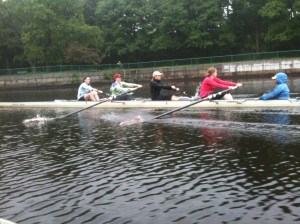
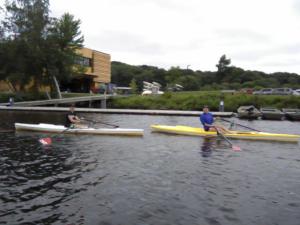
Ever think about doing a Rowing WOD on the water?

Rowing WOD 6/22:

2 x 2k w/ 5min rest

1st 2k: 

  • 750m @ Race Pace
  • 250m @ 18 spm (paddle light)
  • 750m @ Race Pace
  • 250m @ 18 spm (paddle light)

Rest 4min

2nd 2k:

  • 750m @ Race pace
  • 500m @ 18 spm (paddle light)
  • 750m @ Race Pace

Today’s Rowing WOD is a great way to test out the race pace you’d like to hold on your next 2k.  Set the monitor for 2,000m of work and 4 minutes of rest.  During the first 750m hold your ideal race pace and really execute with intensity.  Then paddle out for the next 250m .  At the 1000m mark build back up and row the next 750m at race pace.  Finish with a  paddle to recover.  The second 2k will be executed similarly.

To see your consistency during the race pace portions set the monitor to record split lengths of 250m.  This is done on the screen when you enter the work and rest.  After the workout go into the memory and check it out.

Post your goal 500m Split and how you executed the 750m portions to achieve it.

Rowing WOD 6/20: 4RFT – 750m Row, 15 Push Ups

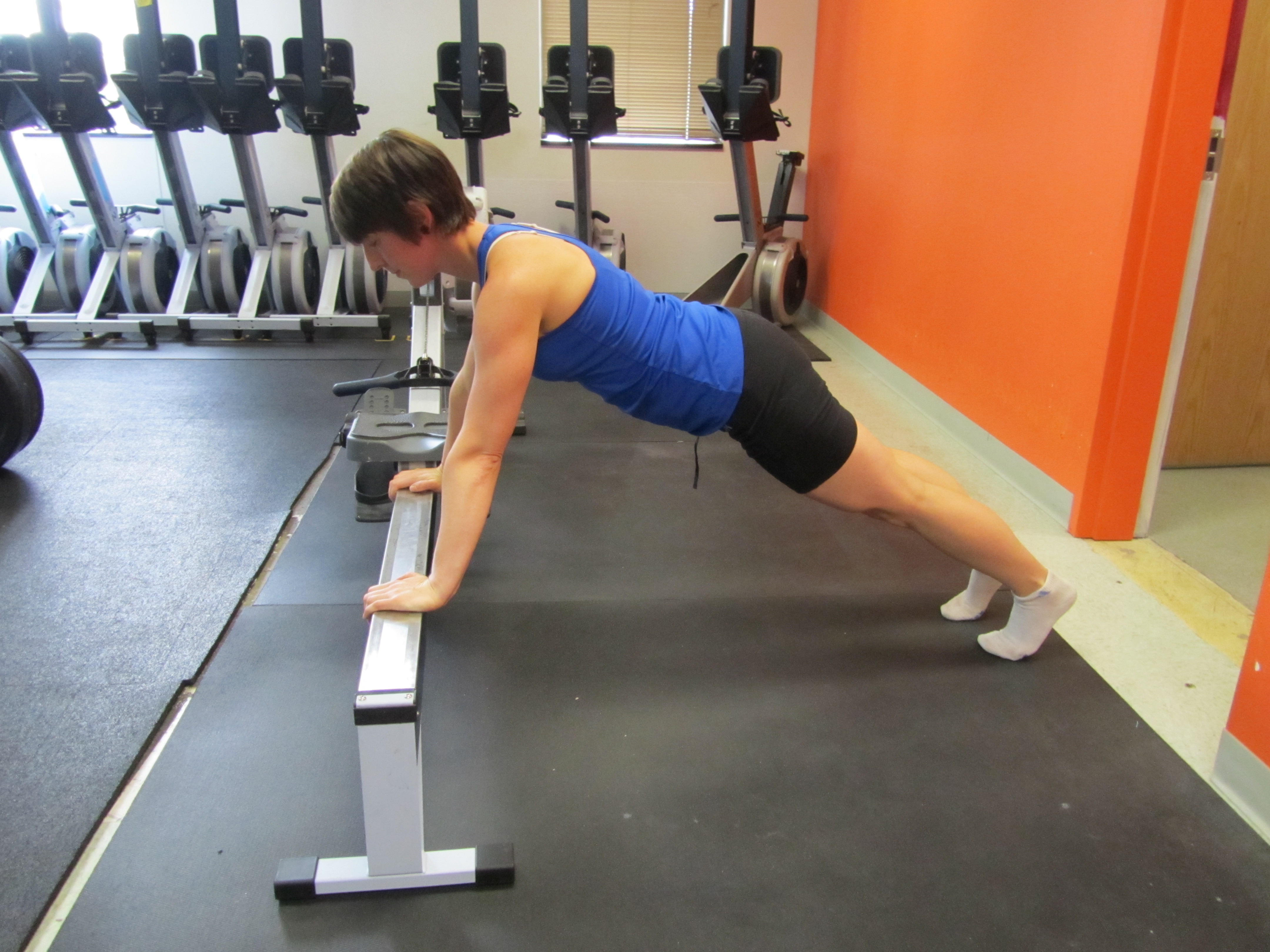
Kathryn demos the erg push up!

Rowing WOD 6/20:

4 Rounds For Time

750m Row

15 Push Ups

Whenever we need to transfer energy from our feet to our hands it requires connection through our core and major joints of the hips and shoulders.  Today’s Rowing WOD provides an opportunity to strengthen and develop that shoulder area for better connection through the drive whether you’re rowing or lifting.  Have a game plan and technical focus for each 750m piece.  Ensure you’re engaging those lats!

Chest Touches!

For the push ups, stay connected and keep good form.  If you can go unbroken do it!  If you get fatigued and need to scale, try elevating your hands on the erg.

Post your time and experience to comments!

Rowing WOD 6/18: 3×10′ Hills w/ 4′ Rest

Rowing WOD 6/18:

Look out for the Renegade Rowing League coming soon!

3x10min Hills w/ 4min Rest

4′ @24 spm

3′ @26 spm

2′ @28 spm

1′ @30 spm

Rowing is a beautiful sport in that you create the resistance and determine how fast the boat moves.  That being said, keep in mind that you get out what you put in for things like CrossFit and Rowing.  Ease into this workout for the first four minutes by finding your rhythm and breathing.  However, as the stroke rating goes up make sure you’re putting in the effort to bring the 500m split down and keep consistent pressure.

Set the monitor for 10 minutes of work and 4 minutes of rest.  During each ten minute piece follow the prescribed rating shifts.

Post your average split for each piece.

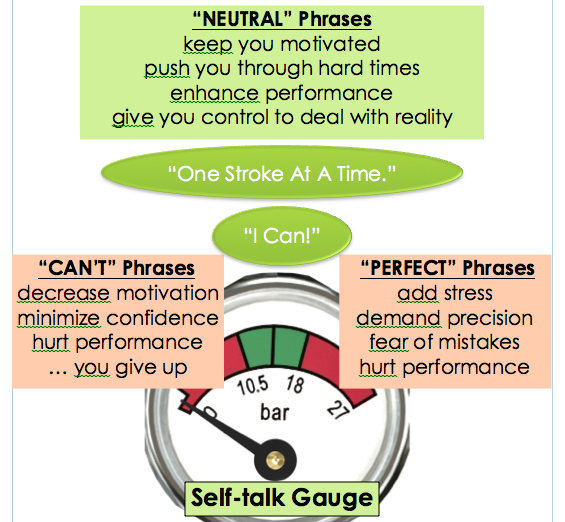
What are you talking about? – Performance and Self Talk – DC 5/22

Performance

Performance is the beautiful moment in sport when an athlete gets to put it all together.  Performance is the combination of mind and body, of physical and mental preparation.  Performance is when an athlete gets to challenge the skills they’ve learned in order to feel total immersion in the activity.  Those who perform best experience a narrow focus of attention on the present and no fear of failure.  Exceptional performance feels like complete control, the slowing of time, and the feeling of everything being automatic and effortless.  To perform well athletes must have control over emotion, thoughts, and arousal.  They must exist in a state of high self-confidence, be physically and mentally relaxed, and highly energized.  Some of the tools we’ll use to improve performance include concentration and self-talk.

Self Talk

Self-talk is that “voice inside your head” otherwise known as your thoughts.  The mind controls the body and being aware of what that voice is saying can improve performance.

Daily Challenge 5/22:

Check Yourself!  During your work today, whether it be in the gym, a meeting, or at home, make sure you’re using positive self talk and not adding undue stress to your performance.

Post your thoughts to comments.  How does self talk affect your performance?

Deliberate Practice and Intent – Daily Challenge 5/9

Deliberate Practice

Practice is the single most important factor in the control of learning.  Some might think the more we practice the more we learn, but if there is no quality or substance in that practice then learning is slow and tedious.  It has been suggested that at least 10 years of effortful practice under optimal training conditions is required to reach international-level performance (Ericsson, 1996, 2003; Ericson et al., 1993).  Optimal conditions require a well-defined task of appropriate difficulty for the athlete, information feedback, and sufficient opportunities for repetition and correction of errors.  Deliberate practice is a training activity that contains all of these elements (Williams, 2010).

Intent

Deliberate practice isn’t enough to enable athletes to learn a skill correctly.  For a practice to be effective the athletes must be motivated to learn.  Athletes must practice with the intent to improve.  Rowing Fitness allows for this by providing daily competition so that athletes come to practice constantly motivated to improve their performance.  Deliberate practice and the motivation to improve through daily competition is what Rowing Fitness seeks to provide and teach.

Daily Challenge 5/9:
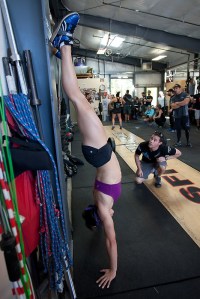
Pick a goat and put in 10 minutes of deliberate practice.

A goat can be any skill in fitness, rowing, or life that is currently a challenge or weakness for you.  Try to focus on one or two aspects of that goat that you can control and improve.
Share what goat you’re working on and what your focus and motivation was during the 10 minutes!

References

Ericsson, K. A. (2003). Development of elite performance and deliberate practice: An update from the perspective of the expert performance approach. In J. L. Starkes & K. A. Ericsson (Eds.), Expert performance in sports: Advances in research on sport expertise (pp. 49-83). Champaign, IL: Human Kinetics.

Ericsson, K. A. (1996). The acquisition of expert performance: An introduction to some of the issues. In K. A. Ericsson (Ed.), The road to excellence: The acquisition of expert performance in the arts and sciences, sports, and games (pp. 1-50). Mahwah, NJ: Erlbaum.

Ericsson, K. A., Krampe, R. T., & Tesch-Romer, C. (1993). The role of deliberate practice in the acquisition of expert performance. Psychological Review, 100, 363-406.

Williams, J. M. (2010). Applied sport psychology (J. M. Williams, Ed., 6th ed.).  Boston, MA: McGraw Hill.